Zinc Citrate vs. Zinc Oxide: Why Absorption Rates Matter for APIs
The global zinc supplement market is growing as people become more aware of the fitness benefits of zinc. Experts suggest the market will grow at a CAGR of 9.40% between 2023 and 2030 [1]. As regulatory scrutiny and clinical transparency increase, API selection now directly influences formulation credibility and long-term market performance.
Understanding zinc citrate vs zinc oxide, absorption variability, gastric pH sensitivity, and elemental concentration differences has measurable implications for compliant nutraceutical development. Bioavailability data and pharmacokinetic consistency have become central considerations for procurement and formulation teams operating in regulated environments.
In this blog, clinical evidence, chemical distinctions, and sourcing strategy are examined to guide performance-driven zinc API decisions.
View our Zinc Citrate API page to support consistent absorption-focused formulation performance.
Key Takeaways:
- Elemental zinc percentage does not equate to predictable systemic absorption in finished nutraceutical formulations.
- Gastric pH significantly affects zinc oxide absorption, increasing variability in certain populations.
- Organic zinc salts demonstrate more consistent pharmacokinetic profiles under controlled human studies.
Quick Answer: Zinc citrate demonstrates more consistent absorption than zinc oxide, making API selection critical for compliant nutraceutical performance.

Chemical and Structural Differences Between Zinc Citrate and Zinc Oxide
In zinc citrate vs zinc oxide, chemical structure determines solubility behaviour, elemental yield, and formulation suitability beyond simple percentage claims.
Here are some of the chemical and structural differences between zinc oxide and zinc citrate:
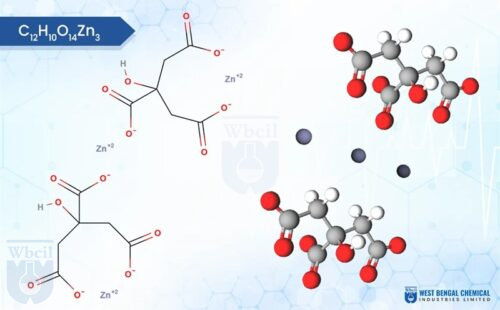
- Molecular Composition and Weight: Zinc citrate is a coordination salt of citric acid with the formula C₁₂H₁₀O₁₄Zn₃ and a molecular weight of approximately 574 g/mol [2]. Zinc oxide, on the other hand, is an inorganic compound with the formula ZnO and a molecular weight of 81.4 g/mol. Zinc oxide contains about 80% elemental zinc, whereas zinc citrate contains roughly 31% elemental zinc, which affects label calculations but not necessarily absorption performance.
- Solubility Profile: Zinc citrate is slightly soluble in water and disperses better in aqueous systems. Zinc oxide is practically insoluble in water but dissolves in dilute acids, which makes gastric pH critical for absorption.
- Organic vs Inorganic Zinc Salts: Organic salts such as zinc citrate contain carbon-based ligands that influence dissociation behaviour. Inorganic salts like zinc oxide lack such ligands and rely heavily on acid-mediated dissolution.
- Elemental Content vs Functional Value: A higher elemental percentage does not necessarily translate into higher uptake. A recent study suggests that zinc bisglycinate is 43.4% is more bioavailable than zinc gluconate [3].
- Pharmacopoeia and Procurement: Both forms are available in USP, BP, and Ph Eur grades with defined CAS numbers, which procurement teams must verify for regulatory compliance and formulation consistency.
Also read: Unlocking the Benefits of Zinc Bisglycinate- Superior Bioavailability for Immune and Skin Health.
Zinc Citrate Bioavailability vs Zinc Oxide: Clinical Evidence Overview
Clinical comparisons between zinc salts show measurable differences in systemic absorption, which directly influence API selection in regulated nutraceutical products.
Here are four clinical evidences to ascertain the difference between the two:
1. Stable Isotope Absorption Study
A controlled double-isotope tracer study in 15 healthy adults compared 10 mg elemental zinc from zinc citrate and zinc oxide. Fractional absorption reached 61.3% for zinc citrate versus 49.9% for zinc oxide, with statistical significance (P < 0.01) [4]. Notably, three participants showed minimal or no measurable absorption from zinc oxide, highlighting inter-individual variability. These findings are directly relevant to zinc citrate pharmacokinetics and API consistency in sensitive populations.
2. Comparative Bioavailability Review
Organic salts such as zinc citrate and zinc gluconate exhibit more consistent absorption than zinc oxide under comparable dosing conditions. Formulation and dissolution behaviour are key determinants of uptake. This aligns with observed differences in zinc oxide pharmacokinetics under variable gastric conditions.
3. Higher Fractional Absorption
Industry reporting summarised the stable isotope findings and reinforced that zinc citrate showed superior fractional absorption over oxide forms. While not a primary trial, the coverage reflects translational relevance for nutraceutical development. Procurement teams must consider clinical reproducibility, not elemental percentage alone.
4. Nutrition Insight Analysis
Zinc citrate has statistically higher absorption than zinc oxide in controlled trials, with 61.3% [5]. Variability observed with oxide introduces compliance and performance risk in finished formulations. For API buyers, predictable systemic exposure supports formulation reliability and regulatory confidence.
Also read: Why Zinc is a Must-Have for Skin Glow and Immune Defence: Powered by WBCIL Innovation.
Impact of Gastric pH on Zinc Oxide Pharmacokinetics
In zinc citrate vs zinc oxide, gastric acidity plays a decisive role in dissolution behaviour, which directly affects systemic exposure and formulation reliability.
- Acid-Dependent Dissolution: Zinc oxide is practically insoluble in water and dissolves only in dilute acid, which makes gastric pH critical for absorption. When acid levels drop, dissolution slows, and systemic availability decreases. This directly influences reported zinc oxide bioavailability in variable patient groups.
- Effect of Intragastric pH: A controlled intragastric pH study showed that zinc oxide AUC fell to 66 µg·h/dL at high gastric pH, compared with 364 µg·h/dL at low pH, resulting in a significant reduction in systemic exposure. It demonstrates strong acid dependence.
- Impact of Acid Suppression: A PubMed study confirmed that inhibition of gastric acid secretion significantly reduces zinc absorption, with monitoring at 60-minute intervals [7]. Elderly individuals on PPIs and patients with altered gastric function represent high-risk groups.
- Formulation Implications: In contrast, organic salts demonstrate reduced pH sensitivity and reflect broader chelated zinc benefits. For formulators evaluating applications and technologies, acid dependency risk must guide API selection decisions.
Next, let’s evaluate zinc citrate vs zinc oxide, which gives a comprehensive overview for API formulators.

Zinc Citrate vs Zinc Oxide: Comparative Guide for API Formulators
For zinc citrate vs zinc oxide, procurement decisions work best with a side-by-side view of performance, not elemental zinc alone.
Here is a tabular representation of zinc citrate and zinc oxide comparisons for
| Parameter | Zinc Citrate | Zinc Oxide |
| Solubility | Slightly soluble; the organic salt form can disperse better in some aqueous systems. | Insoluble in water; dissolution depends on acid, which adds variability. |
| Elemental zinc content | 31.3% (typical) | 80% elemental zinc (typical) |
| Fractional absorption rate | 61.3% (median) in a controlled human study | 49.9% (median) in the same study, with lower absorption overall |
| Gastric pH dependency | Less dependent on high acidity versus oxide forms, per comparative evidence summaries | Strong pH dependence due to poor water solubility; absorption can vary across users |
| Procurement and formulation fit | Better option when absorption consistency and oral formats matter; align supplier choice with GMP grade and dossier support | Legit role in topical use and high-volume fortification, where cost drives choice over absorption |
The following CoA checklist can help procurement teams for industrial operations:
| CoA Parameter | Why It Matters |
| Assay (% Zn content) | Confirms label claim and dosing accuracy |
| Heavy Metals (Pb, Cd, As, Hg) | Ensures regulatory compliance |
| Microbial Limits | Critical for nutraceutical safety |
| Particle Size Distribution | Affects dissolution and uniformity |
| Loss on Drying / Moisture | Impacts stability and shelf life |
For compliant formulations, API evaluation must extend beyond price and elemental concentration to include documented quality, stability alignment, and GMP-grade availability.
Sourcing Pharma-Grade Zinc Citrate and Zinc Oxide APIs
To characterise zinc citrate vs zinc oxide, sourcing decisions must prioritise documented quality, regulatory compliance, and pharmacokinetic reliability over raw material price alone. Procurement teams should evaluate suppliers offering pharma-grade zinc citrate API and pharma-grade zinc oxide API with complete CoA documentation, validated analytical methods, and batch-to-batch consistency under WHO-GMP systems.
Elemental zinc percentage is critical alongside impurity profile, particle size distribution, moisture control, and stability data aligned with ICH climatic requirements. For regulated nutraceutical formulations, dossier transparency and pharmacopoeial compliance (USP, BP, Ph Eur) directly influence approval timelines and audit readiness.
As part of structured supplier qualification, reviewing the technical specifications and stability credentials of WBCIL products can support informed API selection for compliant and performance-driven formulations.
Strategic Considerations for Zinc API Procurement
Zinc API procurement must balance elemental strength, clinical absorption evidence, regulatory compliance, and long-term stability performance rather than focusing solely on cost. For zinc citrate vs zinc oxide, the selection impacts systemic exposure predictability, formulation effectiveness, and consistency across diverse consumer groups with variable gastric physiology. With established quality systems and controlled API manufacturing expertise, WBCIL serves as a reliable B2B partner for compliant and performance-driven zinc formulations.

1. https://www.databridgemarketresearch.com/reports/global-zinc-supplement-market
2. https://pubchem.ncbi.nlm.nih.gov/compound/Zinc-Citrate#section=Depositor-Supplied-Synonyms
3. https://www.mdpi.com/2072-6643/16/24/4269
4. https://pmc.ncbi.nlm.nih.gov/articles/PMC3901420/
5. https://www.nutritioninsight.com/news/study-zinc-citrate-shows-superior-absorption-compared-to-zinc-oxide.html
6.https://pubmed.ncbi.nlm.nih.gov/1894892/
Yes, studies show that zinc citrate is absorbed better than zinc oxide in healthy adults. One controlled study found 61.3% absorption for zinc citrate compared with 49.9% for zinc oxide. This means zinc citrate may provide more reliable systemic availability in oral supplements.
Zinc citrate generally shows more consistent absorption than zinc oxide. Zinc oxide needs strong stomach acid to dissolve before it can be absorbed. Because of this, zinc oxide bioavailability can vary more between individuals.
In controlled human research, zinc oxide absorption rate was reported at about 49.9%. Absorption may drop further in people with low stomach acid levels. This variability is important when evaluating the comparative bioavailability of zinc salts in APIs.
Organic salts such as zinc citrate and zinc gluconate are often better absorbed than zinc oxide. They dissolve more predictably in the digestive system. For pharma and nutraceutical applications, this makes them strong candidates when consistent performance is required.
Both forms can cause mild nausea if taken at higher doses. Zinc oxide depends more on stomach acid for dissolution, which may increase the risk of irritation in some individuals. Zinc citrate solubility at stomach pH supports more predictable dissolution and may reduce variability in gastric response.