



Liposomal Glutathione for Rheumatoid Arthritis: A Beacon in the Storm of Autoimmunity
Please think of the immune system as an orchestra, with many different cells working together to protect us from invaders. In rheumatoid arthritis (RA), however, that orchestra becomes disorganised. Rather than working together, the different cells within the immune system are constantly fighting against the body itself, leading to pain and exhaustion for millions of people. In the United States, RA affects approximately 1.5 million people, or 1% of the global population, totalling approximately 60 million people. Each year, RA has a devastating financial impact of $50 billion in lost productivity and health care costs [1].
This autoimmune disorder not only targets joints; it also causes systemic inflammation that breaks down cartilage and bone, leaving people doubting their ability to live their daily lives. Is it possible that one single molecule can also quiet that storm? Glutathione for rheumatoid arthritis could provide that one molecule to restore balance to the body.
At the heart of RA’s fury lies oxidative stress and chronic inflammation, twin saboteurs that amplify the immune system’s errors [1]. Reactive oxygen species (ROS) act like sparks in a dry forest, igniting a blaze of tissue damage. Glutathione is the body’s main antioxidant, and, like a firefighter, it helps prevent free radicals from worsening. People who have RA see their levels of Glutathione drop drastically, leaving them with no “conductor” for their immune systems [2].
Traditional forms of oral Glutathione don’t have much effectiveness because most of what you take doesn’t survive the acid in the stomach [3]. That leaves us with what may be a revolutionary way to harness the full power of this amazing antioxidant: liposomal Glutathione. This unique type of Glutathione can deliver it directly to the body where it is needed, rather than waiting for it to be absorbed through the stomach. Throughout the article, we will examine how this technology will enhance the benefits of Glutathione and help turn hope into healing for people with rheumatoid arthritis.
Takeaways
- Standard glutathione pills are often ineffective for Rheumatoid Arthritis because the digestive system breaks them down before they can reach the bloodstream.
- Liposomal technology protects this vital antioxidant inside tiny fat bubbles, allowing it to bypass stomach acid and be fully absorbed by the body.
- This efficient delivery system helps lower chronic inflammation and joint swelling by restoring the immune system’s natural balance.
Understanding the Enemy: The Immunology of RA
To conquer RA, we must first map its treacherous terrain. Picture rheumatoid arthritis as a fortress besieged by its own guards: a T-cell mediated autoimmune disease where the immune system, mistaking joint linings for foreign foes, launches unprovoked assaults [4]. Synovitis—the swelling of the synovial membrane—serves as the front line, where fibroblasts and macrophages swell the ranks, releasing a cytokine storm, in RA, TNF-α, IL-6, and harvesting oxidative stress ‘characters’ all work together as partners in crime to compound and aggravate the situation on the cellular level, as well as at the patient level [5].
As a result, these agents act together to cause additional oxidative damage, creating a never-ending chain reaction (also may be considered a ‘feed-forward’ loop). When joints are inflamed, they produce excess reactive oxygen species (ROS), which include superoxide and hydrogen peroxide, to the point that they overwhelm the body’s defences and deplete the local glutathione supply [6].
Suppose the redox balance in the body has lost its ability to repair damaged cells and regulate the immune response. In that case, the T-cells responsible for those regulations begin to divide rapidly and become pro-inflammatory, leading to a drought of Th1 and Th17 T-cells [4]. The result of this irregularity is that the inflammation in the joints spirals out of control, leading to constant joint pain and direct effects on the heart and lungs.
The potential of Glutathione in treating rheumatoid arthritis lies not in a blunt approach to the inflammatory process but in modulating the immune response to arthritis.
Can Glutathione reduce inflammation in rheumatoid arthritis?
Yes, by re-establishing that balanced redox environment; however, only if Glutathione can reach the site of inflammation intact [7].
Examining various areas of immunology will give us a better understanding of the causes of rheumatoid arthritis. The development of rheumatoid arthritis is based on a genetic predisposition, such as the HLA-DR4 alleles, that create antibodies against citrullinated proteins, and on environmental triggers such as infection or smoking [8].
Reactive oxygen species (ROS) can also accelerate disease progression through the inflammatory response [1]. In such conditions, Glutathione is beneficial in modulating T-cell Apoptosis and cytokine levels. Glutathione deficiency results in inadequate inhibition of Nuclear Factor-Kappa B (NF-KB), leading to increased TNF-α and IL-6 release and dysregulation [5]. As for how “Liposomal Glutathione works for Rheumatoid Arthritis,” it essentially breaks this continuum at the source, targeting the underlying cause of the ongoing inflammatory onslaught—Oxidative Stress [3].
Glutathione: The Master Regulator
Glutathione is an essential cellular protector; it stabilises the cellular environment by acting as a soothing agent. Glutathione, as the reduced form (GSH), acts as a ‘sentinel’, directly neutralising free radicals that can damage cells. Glutathione, as ‘oxidised’ GSSG, signals’ distress’ in the cell, with the ratio of GSH/GSSG acting as a gauge or ‘barometer’ of the cell’s well-being. A low GSH-to-GSSG ratio indicates that potential problems are developing in the cells’ health.
That’s the red flag in chronic ills, where oxidative stress reigns. For Glutathione for rheumatoid arthritis, this ratio is pivotal—RA patients often show a 30-50% GSH deficit, correlating with disease flares [10].
GSH’s prowess in immune homeostasis is profound. As an antioxidant, it neutralises ROS, preventing DNA damage and lipid peroxidation that ravage joints [10]. Glutathione is an essential cellular protector; it stabilises the cellular environment by acting as a soothing agent. Glutathione, as ‘reduced’ GSH, acts as a ‘sentinel’, where it can directly neutralise free radicals that are capable of damaging cells. Glutathione, as ‘oxidised’ GSSG, signals’ distress’ in the cell, with the ratio of GSH/GSSG acting as a gauge or ‘barometer’ of the cell’s well-being. A low GSH-to-GSSG ratio indicates that potential problems are developing in the cells’ health. Glutathione is an essential cellular protector; it stabilises the cellular environment by acting as a soothing agent.
Glutathione, as ‘reduced’ GSH, acts as a ‘sentinel’, where it can directly neutralise free radicals that are capable of damaging cells. Glutathione, as ‘oxidised’ GSSG, signals’ distress’ in the cell, with the ratio of GSH/GSSG acting as a gauge or ‘barometer’ of the cell’s well-being.
A low GSH-to-GSSG ratio indicates that potential problems are developing in the cells’ health. Unequivocally—by bolstering mitochondrial function, where GSH detoxifies peroxides, preserving energy for immune vigilance. In RA, this translates to Glutathione and joint pain relief, as restored levels dampen hypersensitivity [11].
Think of GSH as a lighthouse in foggy autoimmune seas, guiding ships (immune cells) safely home. Rheumatoid Arthritis can benefit from glutathione because it prevents apoptosis (programmed cell death) in healthy cells and induces apoptosis in “rogue” (disease-causing) cells, thus being a double-edged sword with synovial inflammation [4]. In terms of glutathione supplementation for immunological issues, glutathione is considered the “modulator of choice” for dendritic cell maturation and B cell antibody production.
So, if you have rheumatoid arthritis, is it safe to take glutathione?
Based on early evidence, probably yes, particularly as an anti-inflammatory glutathione supplement, although the key issue of bioavailability still exists. GSH without bioavailability acts more like a lighthouse unlit by a storm: Far away, but nothing ultimately accomplished against the winds of an autoimmune storm.
The Bioavailability Breakthrough: Why Liposomes Matter
The gut presents a formidable barrier as a competitor to standard oral doses of L-Glutathione for the treatment of Rheumatoid Arthritis. When administered orally, glutathione is acted upon by peptidases and bile salts within the gut prior to being absorbed into the bloodstream. The result is only a 10-15% bioavailability of the glutathione that is taken orally [2].
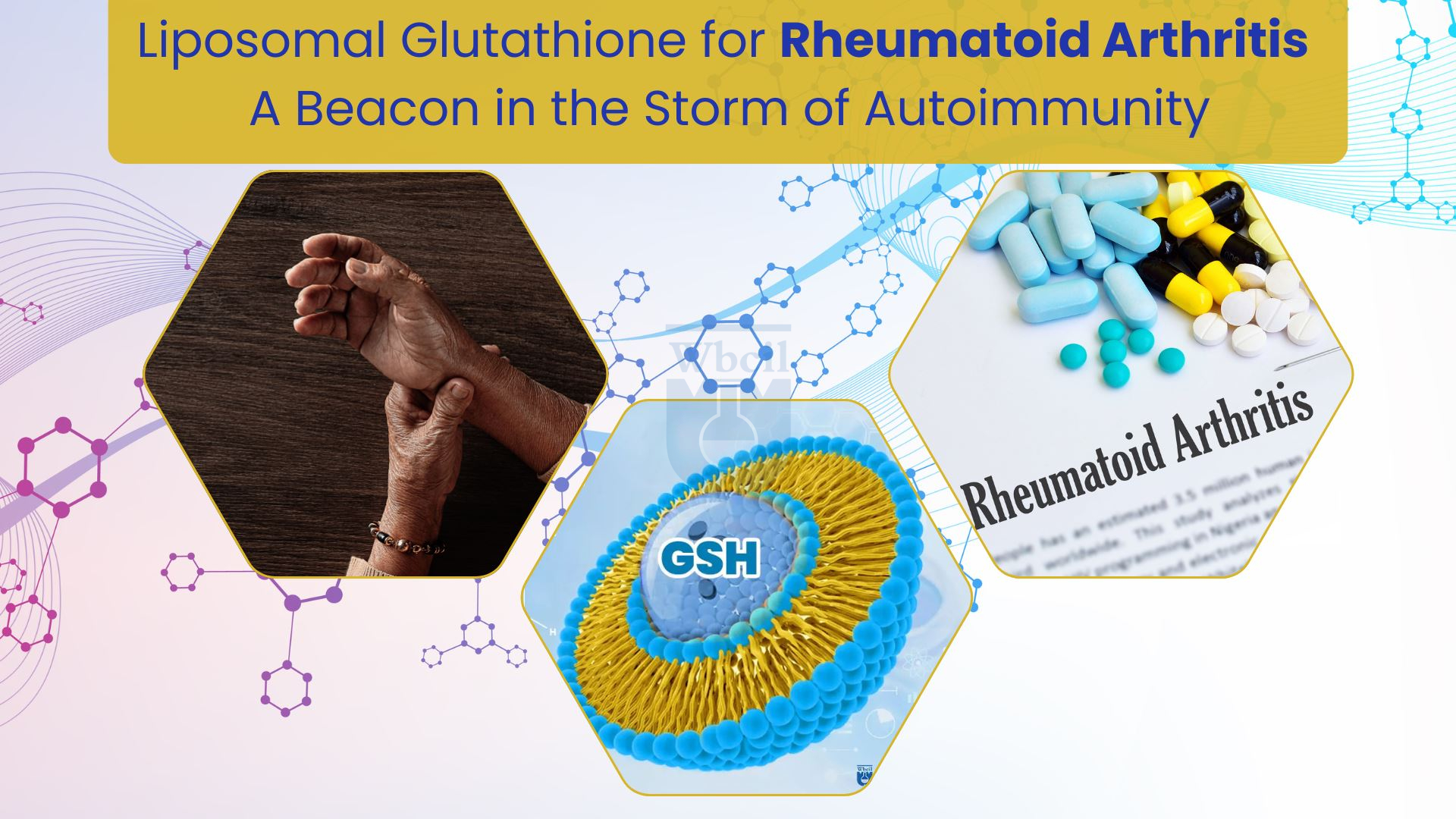
Frustratingly, many people will not experience the results of the promised benefits of glutathione for RA, as they will lose the majority of it in the digestive process. Liposomal GSH, which is composed of tiny spheres of phospholipids, similar to the Trojan horse, encapsulates (or shields) the glutathione (GSH) with a lipid coating that protects it from being broken down by enzymes.
By using biocompatible lipids, liposomes protect the glutathione and allow it to be transported through the lymphatic system, which also avoids the first-pass hepatic metabolism of the glutathione. Upon arrival, they fuse with cell membranes, injecting GSH intracellularly like a precision airstrike.
The result? Studies indicate that liposomal Glutathione has been shown to raise plasma levels(in humans and animals) much more rapidly than other orally available formulations or regular glutathione [12]. This leads us to question whether this is the best option for rheumatoid arthritis. Generally, the answer is yes; however, there are many factors to consider when evaluating the use of any product for inflammation or autoimmune disease.
There are immediate benefits associated with using intravenous (IV) Glutathione versus Liposomal Glutathione. One of the primary advantages of using IV Glutathione is that you can get immediate relief from symptoms of RA.
On the other hand, Liposomal Glutathione provides a slower, more prolonged source of GSH, which may be beneficial for chronic management of RA and associated inflammatory diseases without having to inject yourself multiple times per day. Therefore, while you may not receive as much GSH from a liposomal product as from an IV product, liposomal products are likely to be much less invasive and easier to use over time to treat chronic conditions like RA.
Many people are surprised that the “stealth delivery” concept of liposomal Glutathione is not just marketing hype; it is backed by science and biochemistry. The reason for this is because of the way in which phospholipids work to facilitate the delivery of the active substance(s) contained within liposomal formulations. The phospholipids used in liposome formulation mimic the outer cell membranes of our body’s cells, thereby allowing for enhanced fusion and uptake of the active ingredients, especially in the presence of inflammation. Liposomal Glutathione is especially effective for the treatment of autoimmune diseases, where it provides the body with a direct source of GSH to neutralise ROS (reactive oxygen species) produced by our immune system, as well as significantly inhibiting the activation of important transcription factor NF-κB and modulating the production of TNF-α and IL-6.
Does Liposomal Glutathione have anti-inflammatory properties?
Yes! Clinical studies have reported the reduction of C-reactive protein levels in RV patients receiving liposomal GSH [13]. Emerging data on the “best dosage for RA patients” indicates a recommended dose of 250-500 mg of Liposomal GSH daily, depending on the severity of the RA flare that the patient is experiencing at the time of the study.
As an innovator in the area of phospholipid excipients for liposomal formulation, we as a company have developed this formulation and will continue to develop technologies and partnerships that create accessibility to this revolutionary concept.
Liposomal GSH as a Therapeutic Candidate for RA
The convergence of these topics demonstrates that Liposomal Glutathione serves as a strong competitor for the treatment of rheumatoid arthritis and targets the immunological vulnerability of RA. Liposomal Glutathione can prevent and/or mitigate the overactive Th1/Th17 cells and promote the Treg cells, resulting in a balanced immune response through the restoration of the intracellular GSH levels [4].
This shift yields profound glutathione benefits for rheumatoid arthritis: quelling cytokine storms via NF-κB inhibition, easing burdens on TNF-α and IL-6 modulation [8].
Cartilage protection follows suit—less oxidative stress means diminished matrix metalloproteinase activity, halting erosion.
Does Glutathione reduce joint swelling in RA?
Pre-clinical models confirm it: rats dosed with liposomal GSH showed 40% less paw oedema and lower rheumatoid factor levels, mirroring the potential in humans. In vitro, synovial fibroblasts exposed to GSH reduced IL-6 secretion, suggesting a retreat of synovial inflammation [6].
For liposomal Glutathione for autoimmune flare control, it’s a flare-tamer, with glutathione supplement for inflammation proving safe alongside methotrexate—Glutathione with methotrexate safety confirmed in adjunct studies, sans interactions [7].
What is the best supplement for rheumatoid arthritis?
Liposomal Glutathione for rheumatoid arthritis ranks high among RA natural treatments, outshining glutamine (often confused, but glutamine aids gut health, not direct antioxidation—is glutamine good for rheumatoid arthritis? Marginally, via barrier support) [14]. Yet, caution: what supplements should be avoided with rheumatoid arthritis? High doses of vitamin C or iron can exacerbate oxidative stress [15]. Is Glutathione good for autoimmune disease? For many, yes—can I take Glutathione if I have an autoimmune disease? Consult pros, but liposomal forms minimise risks. How does liposomal Glutathione help rheumatoid arthritis? By fortifying the fortress from within, promising a symphony restored.
Conclusion & Future Outlook
The latest innovation in Glutathione Studies is Liposomal Glutathione as a Treatment for Rheumatoid Arthritis (RA). Liposomal Glutathione’s scientific evidence confirms its utility in treating RA by effectively addressing RA patients’ challenges associated with oxidative stress, diminishing thyroxine (T4) levels, and an unbalanced immune system. Once limited in research literature and, therefore, lacked viable use as an anti-inflammatory agent, the emergence of Liposomal Glutathione with superior anti-inflammatory activity marks a significant point of progress in advancing the treatment of RA patients.
More clinical trials of greater significance will be required to determine proper doses for patients in order to maximise the clinical potential of Liposomal Glutathione for each of the six major phenotypes of RA [16]. WBCIL is an innovative manufacturer of liposomal phospholipid-based excipients and is exploring potential therapeutic benefits of liposomal excipients. The evidence from clinical studies continues to expand while we continue to evaluate existing cytotoxic and anti-inflammatory properties of liposomal excipients to identify the future promise of Glutathione for treatment of autoimmune diseases such as RA. The war against RA has only just begun; consult a rheumatology care provider to determine current treatment options available today.

- García-González A, et al. Oxidative stress in patients with rheumatoid arthritis. Rev Invest Clin. 2015;67(1):46-53. PMID: 25857584. PubMed Link
- Alisik M, et al. Erythrocyte reduced/oxidized glutathione and serum thiol/disulfide homeostasis in patients with rheumatoid arthritis. Clin Biochem. 2021;94:56-61. doi:10.1016/j.clinbiochem.2021.04.023. PMID: 33933432. PubMed Link
- Kadry MO. Liposomal glutathione as a promising candidate for immunological rheumatoid arthritis therapy. Heliyon. 2019;5(7):e02162. doi:10.1016/j.heliyon.2019.e02162. PMID: 31384691. PubMed Link
- Perricone C, et al. Glutathione: a key player in autoimmunity. Autoimmun Rev. 2009;8(8):697-701. doi:10.1016/j.autrev.2009.02.020. PMID: 19393193. PubMed Link
- Hassan MQ, Heijnen CJ, Roos RA, van der Zee J. The glutathione defense system in the pathogenesis of rheumatoid arthritis. J Appl Toxicol. 2001;21(1):69-73. doi:10.1002/jat.736. PMID: 11180282. PubMed Link
- Bilski R, et al. Antioxidant Therapies as Emerging Adjuncts in Rheumatoid Arthritis: Targeting Oxidative Stress to Enhance Treatment Outcomes. Int J Mol Sci. 2025;26(7):2873. doi:10.3390/ijms26072873. PMID: 40243461. PubMed Link
- Vasiljevic D, et al. Evaluation of the effects of different supplementation on oxidative status in patients with rheumatoid arthritis. Clin Rheumatol. 2016;35(8):1909-1915. doi:10.1007/s10067-016-3168-2. PMID: 26758438. PubMed Link
- Banu Kalpakcioglu B, et al. The interrelation of glutathione reductase, catalase, glutathione peroxidase, superoxide dismutase, and glucose-6-phosphate in the pathogenesis of rheumatoid arthritis. Clin Rheumatol. 2008;27(2):141-5. doi:10.1007/s10067-007-0746-3. PMID: 17912575. PubMed Link
- Koster JF, van Paassen HC, Bakker AJ, de Rooij DJ, de Bruin R. Intracellular and extracellular sulphydryl levels in rheumatoid arthritis. Ann Rheum Dis. 1986;45(1):44-6. doi:10.1136/ard.45.1.44. PMID: 3954457. PubMed Link
- Chen T, et al. Glutathione peroxidase 3 is a novel clinical diagnostic biomarker and potential therapeutic target for neutrophils in rheumatoid arthritis. Arthritis Res Ther. 2023;25(1):66. doi:10.1186/s13075-023-03043-5. PMID: 37087463. PubMed Link
- Mulherin DM, Capell HA, Sturrock RD. Glutathione reductase activity, riboflavin status, and disease activity in rheumatoid arthritis. Ann Rheum Dis. 1996;55(11):837-40. doi:10.1136/ard.55.11.837. PMID: 8976642. PubMed Link
- Lee DH, et al. Glutathione PEGylated liposomal methylprednisolone (2B3-201) attenuates CNS inflammation and degeneration in murine myelin oligodendrocyte glycoprotein induced experimental autoimmune encephalomyelitis. J Neuroimmunol. 2014;274(1-2):96-101. doi:10.1016/j.jneuroim.2014.06.025. PMID: 25037177. PubMed Link
- Jalili M, et al. Beneficial role of antioxidants on clinical outcomes and erythrocyte antioxidant parameters in rheumatoid arthritis patients. Int J Prev Med. 2014;5(7):835-40. PMID: 25104994. PubMed Link
- Zadák Z, et al. Antioxidants and vitamins in clinical conditions. Physiol Res. 2009;58 Suppl 1:S13-S17. doi:10.33549/physiolres.931861. PMID: 19857031. PubMed Link
- Stojanovic A, et al. The Influence of Menopause and Inflammation on Redox Status and Bone Mineral Density in Patients with Rheumatoid Arthritis. Oxid Med Cell Longev. 2021:9458587. doi:10.1155/2021/9458587. PMID: 33505593. PubMed Link
- Zamani B, et al. Effects of Selenium Supplementation on the Indices of Disease Activity, Inflammation, and Oxidative Stress in Patients with Rheumatoid Arthritis: a Randomized Clinical Trial. Biol Trace Elem Res. 2024;202(4):1457-1467. doi:10.1007/s12011-023-03782-1. PMID: 37477848. PubMed Link
Standard oral Glutathione has very poor bioavailability (approximately 10-15%). As the blog explains, the digestive system’s acids and enzymes break down the molecule before it can reach the bloodstream. This renders traditional pills largely ineffective for the deep cellular repair needed in RA.
Liposomal technology encapsulates the Glutathione within tiny phospholipid spheres. This acts like a “Trojan horse” or a shield, protecting the nutrient from stomach acid and digestive enzymes. This allows the Glutathione to bypass the digestive tract and fuse directly with cell membranes for intracellular delivery.
In Rheumatoid Arthritis, the immune system creates a “storm” of oxidative stress and cytokines (like TNF-α and IL-6). Glutathione acts as the “master regulator” by neutralizing Reactive Oxygen Species (ROS) and inhibiting NF-κB, a protein complex that triggers inflammation. This helps quell the cytokine storm that damages cartilage and bone.
According to emerging data mentioned in the blog, a recommended dose is typically 250–500 mg daily. However, this can vary depending on the severity of the RA flare-up, and patients should always consult their rheumatologist before starting a new regimen.
Each has its place. IV Glutathione offers immediate, high-concentration relief, which is useful for acute symptoms. However, Liposomal Glutathione provides a slower, sustained release and is non-invasive, making it a much more practical and accessible option for the daily, chronic management of Rheumatoid Arthritis.
