-
Product Name:
Liposomal Vitamin C
-
Molecular Formula:
C6H8O6
-
Molecular Weight:
176.12 g/mol
-
CAS No.:
50-81-7
-
HSN Code:
29369000
-
CID Code:
54670067
-
Shelf Life:
3 years
- USP
- Insights
- MSDS
- White Paper
USP of Liposomal Vitamin C
- Mimics cell membranes for better compatibility
- Superior absorption and delivery to cells
- Minimal GI irritation by bypassing stomach
- Avoids liver overload
- Replenishes vitamin C stores faster
- Over 90% encapsulation efficiency
- Highly stable with low leakage rate
Insights Liposomal Vitamin C
- Appearance: Light brown powder
- Solubility: Water-dispersible (liposomal form)
- Stability: Highly stable under GMP storage conditions
- Formulation Type: Powder, Oral Liquid Suspension, Capsules, sachets, Gummies
- Particle Size: 100-220 nm
- pH: 6.0-7.5
- storage temp: 20°C
- Storage Conditions: Store in a cool, dry place, away from light
- Odor: Mild, slightly earthy odor
- Packaging: Food-safe HDPE drums, glass bottles, or sachets
MSDS of Liposomal Vitamin C
Download MSDS PDF- Product Name: Liposomal Vitamin C (Liposomal Ascorbic Acid)
- Product Code: ASCLI50
- Catalog Codes: SLC1141, SLC4720, SLC4438, SLC1645
- CAS#: 471-34-1
- RTECS: FF9335000
- TSCA 8(b) inventory: Liposomal Vitamin C (Liposomal Ascorbic Acid)
- Chemical Name: Liposomal Vitamin C powder
- Eye Contact: Check for and remove any contact lenses. In case of contact, immediately flush eyes with plenty of water for at least 15 minutes. Cold water may be used. WARM water MUST be used. Get medical attention.
- Skin Contact: Wash with soap and water. Cover the irritated skin with an emollient. Get medical attention if irritation develops.
- Serious Skin Contact: Not available.
- Inhalation: If inhaled, remove to fresh air. If not breathing, give artificial respiration. If breathing is difficult, give oxygen. Get medical attention.
- Serious Inhalation: Not available.
- Ingestion: Do NOT induce vomiting unless directed to do so by medical personnel. Never give anything by mouth to an unconscious person. Loosen tight clothing such as a collar, tie, belt or waistband. Get medical attention if symptoms appear.
- Serious Ingestion: Not available.
- Flammability of the Product: Non-flammable.
- Auto-Ignition Temperature: Not applicable.
- Flash Points: Not applicable.
- Flammable Limits: Not applicable.
- Products of Combustion: Not available.
- Fire Hazards in Presence of Various Substances: Not applicable.
- Explosion Hazards in Presence of Various Substances:
Risks of explosion of the product in presence of mechanical impact: Not available.
Risks of explosion of the product in presence of static discharge: Not available. - Fire Fighting Media and Instructions: Not applicable.
- Special Remarks on Fire Hazards: Will ignite and burn fiercely in contact with fluorine
- Engineering Controls: Use process enclosures, local exhaust ventilation, or other engineering controls to keep airborne levels below recommended exposure limits. If user operations generate dust, fume or mist, use ventilation to keep exposure to airborne contaminants below the exposure limit.
- Personal Protection: Splash goggles. Lab coat. Dust respirator. Be sure to use an approved/certified respirator or equivalent. Gloves.
- Personal Protection in Case of a Large Spill: Splash goggles. Full suit. Dust respirator. Boots. Gloves. A self-contained breathing apparatus should be used to avoid inhalation of the product. Suggested protective clothing might not be sufficient; consult a specialist BEFORE handling this product.
- Exposure Limits: TWA: 10 (mg/m3) from ACGIH (TLV) [United States] Inhalation Total. TWA: 10 STEL: 20 (mg/m3) [Canada] Inhalation Total. TWA: 5 (mg/m3) from OSHA (PEL) [United States] Inhalation Respirable. TWA: 15 from OSHA (PEL) [United States] Inhalation Total. Consult local authorities for acceptable exposure limits.
- Physical state and appearance: Off-white powder
- Odor: Characteristic Odour.
- Color: Off-white
- Boiling Point: Not available.
- Critical Temperature: Not available.
- Vapor Pressure: Not applicable.
- Vapor Density: Not available.
- Volatility: Not available.
- Odor Threshold: Not available.
- Water/Oil Dist. Coeff.: Not available.
- Ionicity (in Water): Not available.
- Dispersion Properties: Not available.

Description of Liposomal Vitamin C
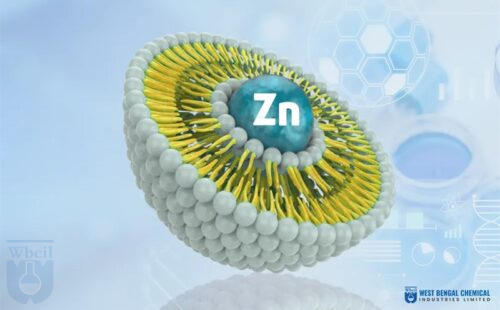
Liposomal vitamin C delivers higher absorption and improved cellular uptake compared to conventional vitamin C. Encapsulation within phospholipid vesicles enables direct entry into cells through endocytosis, bypassing SVCT transporter limitations that restrict standard ascorbic acid absorption.
Structurally similar to human cell membranes, these vesicles protect vitamin C from oxidation and degradation. Unlike traditional vitamin C, which saturates at ~200 mg, liposomal vitamin C supports higher systemic availability. WBCIL is among the preferred liposomal vitamin C manufacturers for nutraceutical brands seeking consistent quality and reliable batch performance.
Clinical evidence based on leukocyte vitamin C levels indicates improved intracellular delivery compared to conventional ascorbic acid, supporting enhanced biological availability.
Available Forms:
Available as powder and liquid colloidal suspension, suitable for capsules, tablets, sachets, oral liquids, and functional applications. Encapsulation efficiency exceeds >90%, validated through HPLC across batches, ensuring consistent delivery performance.
Liposomal Technology & Delivery Science
WBCIL’s advanced liposomal systems enhance nutrient delivery, improve absorption, and ensure stable, targeted release through scientifically validated formulation approaches. The formulation uses high-purity, non-GMO sunflower-derived phospholipids to ensure stability, consistency, and compatibility across dosage formats.
Higher Absorption
Liposomal vitamin C is better absorbed than regular vitamin C because it bypasses SVCT transporter saturation, which occurs at ~200 mg. Instead, it enters cells through endocytosis, resulting in higher plasma concentration and improved intracellular delivery.
Nanoscale Liposomal Structure for Stability
WBCIL’s liposomes are engineered at 100–220 nm with PDI ≤0.25 and encapsulation efficiency above >90%. This structure protects ascorbic acid from oxidation and ensures stability across gastrointestinal conditions and multiple dosage formats.
Clinically Supported Bioavailability Advantage
Clinical data show that liposomal vitamin C achieves up to 1.77x higher bioavailability than conventional forms. Analytical validation through HPLC, DLS, FTIR, and stability studies ensures reproducible performance across batches.
Liposomal Vitamin C Vs Traditional Vitamin C
WBCIL maintains controlled vesicle size and validated encapsulation efficiency across batches, ensuring consistent delivery performance across formulations.
| Parameter | Liposomal Vitamin C | Traditional Vitamin C |
|---|---|---|
| Absorption | Endocytosis-based | Transporter-dependent |
| Absorption Limit | No saturation | Saturates at ~200 mg |
| Bioavailability | Up to 1.77x higher | Limited |
| Stability | Protected in liposomes | Easily oxidised |
| GI Tolerance | Better tolerated | Dose-related irritation |
OEM, Private Label & Bulk Ingredient Supply
For bulk supply and OEM manufacturing, WBCIL offers a reliable solution for nutraceutical brands seeking consistent quality and scalable production.
Global Manufacturing Capability
WBCIL is among the preferred liposomal vitamin C manufacturers for nutraceutical brands requiring consistent quality, scalability, and regulatory compliance. With supply across 30+ countries, WBCIL supports global supplement and contract manufacturing companies.
Quality & Regulatory Strength
Each batch is validated by HPLC, DLS, and FTIR, ensuring controlled vesicle size and >90% encapsulation efficiency, with certified, traceable raw materials and full regulatory documentation including CoA, stability data, and global compliance.
OEM & Private Label Solutions
WBCIL provides manufacturing support for capsules, powders, liquids, sachets, and gummies, with flexible MOQs and custom formulations. The process ensures controlled particle size, validated encapsulation efficiency, and consistent batch-to-batch performance.
Engineering Precision in WBCIL’s Liposomal System
WBCIL’s liposomal vitamin C delivers consistent stability and absorption across formulations. Nutraceutical brands widely use it as a reliable alternative to branded liposomal ingredients for bulk supply.
| Parameter | Conventional Liposomes | WBCIL Liposomes |
|---|---|---|
| Phosphatidylcholine Content | 40-70% PC, variable purity lecithin | >90% phosphatidylcholine (PC), non-GMO sunflower lecithin |
| Vesicle Size | 300-800 nm, broad distribution | 100-220 nm, controlled |
| Polydispersity Index (PDI) | >0.4 (inconsistent distribution) | ≤0.25 (uniform vesicle size) |
| Encapsulation Efficiency | 50–70% | >90% |
| Zeta Potential | ±10–20 mV | ≥±30 mV |
| Stability | Moderate, oxidation-prone | High, oxidation-protected |
| Manufacturing Process | Solvent/heat-based | Patented solvent-free GMP process |
Sourcing Liposomal Vitamin C from WBCIL
WBCIL provides a structured sourcing framework for nutraceutical brands, combining manufacturing consistency with regulatory and documentation support for global markets.
- Manufacturing Legacy: 64+ years of pharmaceutical and nutraceutical expertise.
- Patented Technology: Solvent-free liposomal process ensuring higher stability and encapsulation.
- Global Presence: Serving 4,000+ clients across 30+ countries.
- Analytical Validation: HPLC, DLS, and FTIR tested for consistent performance.
- Regulatory Strength: WHO-GMP, cGMP, ISO, HACCP, FSSAI compliant.
- Documentation Support: CoAs, stability data, and dossiers aligned with FDA, EMA, and CDSCO requirements.
Yes, liposomal vitamin C is better absorbed because it bypasses transporter saturation and is taken up by cells via endocytosis, leading to higher plasma levels and improved cellular delivery.
The phospholipid bilayer protects vitamin C from oxidation and degradation during gastrointestinal transit, ensuring that a greater amount of the active ingredient reaches systemic circulation.
WBCIL offers 64+ years of expertise, global certifications, analytical validation, and scalable supply, making it a preferred partner for OEM and bulk requirements.
Liposomal vitamin C can achieve up to 1.77x higher bioavailability compared to conventional vitamin C, depending on formulation quality.
WBCIL maintains vesicle size at 100-220 nm and encapsulation efficiency above >90%, ensuring higher consistency compared to many standard liposomal products.
WBCIL is recognised as a leading liposomal vitamin C manufacturer, supplying global nutraceutical brands with consistent quality, validated delivery systems, and scalable bulk and OEM capabilities.