Anti-Aging at the Cellular Level: The Role of Liposomal CoQ10
Coenzyme Q10 for anti-aging is no longer a marketing phrase. It is a bioenergetic necessity. It represents one of the most scientifically grounded interventions for restoring cellular vitality as we grow older.
Yet here lies the paradox: while coenzyme Q10 for anti-aging is indispensable, raw CoQ10 behaves like “brick dust”-lipophilic, crystalline, and notoriously difficult to dissolve, absorb, or formulate. The molecule that could support mitochondrial longevity is chemically stubborn.
This is precisely where liposomal delivery and WBCIL Anti-Aging Ingredients redefine the equation-bridging potential and potency.
This is precisely where WBCIL’s anti-aging ingredients and liposomal technology redefine the equation by bridging potential and potency.
Check WBCIL Liposomal CoQ10 for Advanced Delivery Technology & Improved Performance
Introduction: The Mitochondrial Clock
Aging is not just about wrinkles. It is not merely collagen breakdown or pigmentation irregularities. At its core, aging is a bioenergetic slowdown-a mitochondrial clock that ticks quietly inside every cell. And when mitochondria slow down, everything else follows. ATP production declines. Reactive oxygen species increase. Repair mechanisms weaken.
By the age of 50, endogenous CoQ10 levels drop by more than 50%. That reduction is not cosmetic. It is cellular. The role of liposomal CoQ10 becomes critical in this context because CoQ10 sits at the heart of mitochondrial energy metabolism [1]. Without adequate CoQ10, the electron transport chain falters. As levels decline, cells shift from optimal function to survival mode. That is why coenzyme Q10 for anti-aging must be viewed through the lens of cellular energy and not just by surface-level appearance.
Key Takeaways
- Liposomes solve the solubility challenges of Coenzyme Q10 in cosmetics.
- The role of phospholipids in CoQ10 delivery enables membrane fusion and enhanced transport.
- Enhancing CoQ10 bioavailability in nutraceuticals improves systemic efficacy. Improved CoQ10 skin penetration supports dermal mitochondrial health.
- WBCIL’s anti-aging ingredients ensure oxidative protection and long-term stability.

The Bioenergetic Decline: Why CoQ10 is Non-Negotiable
Inside mitochondria, CoQ10 operates within the Electron Transport Chain (ETC). It shuttles electrons between Complex I/II and Complex III, enabling ATP synthesis [1]. This electron transport is not optional. It is life-sustaining.
When CoQ10 levels decline:
- ATP synthesis slows.
- Oxidative stress increases.
- Cellular repair weakens.
- Collagen degradation accelerates.
Low CoQ10 creates a dual problem: energy depletion and free radical accumulation. This explains why the application of coenzyme Q10 for anti-aging is increasingly central to both nutraceutical and dermatological strategies [1, 2.
The demand for liposomal CoQ10 for mitochondrial health supplements reflects a shift in consumer understanding that aging is not just about skin; it is about mitochondrial resilience.
The “Brick Dust” Challenge: Solubility Paradox
Here is the formulation dilemma.
Raw CoQ10 is hydrophobic, highly crystalline, and its melting point is high, and solubility in water is negligible.
The solubility challenges of coenzyme Q10 in cosmetics are well documented as it often leads to-
- Recrystallization within emulsions over time
- A noticeable gritty or sandy texture in creams
- Phase separation or instability during storage
- Inconsistent dispersion across the formulation matrix
This makes formulating stable anti-aging creams with CoQ10 extremely challenging.
In oral supplements, the problem persists as well. Poor aqueous solubility translates to low intestinal absorption. Thus, standard powders often show inconsistent cellular uptake and subsequent bioavailability.
Therefore, it is quite evident that without a delivery system, bioavailability of CoQ10 remains limited.
The Liposomal Solution: Engineering Bioavailability
The turning point lies in delivery engineering.
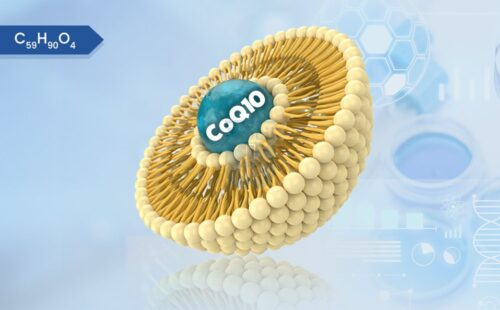
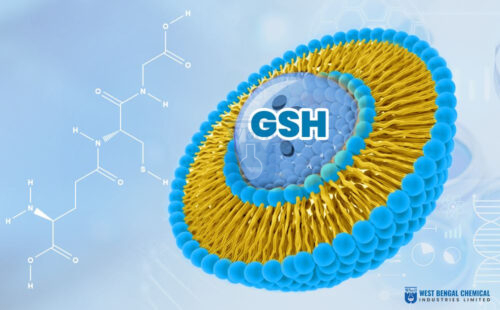
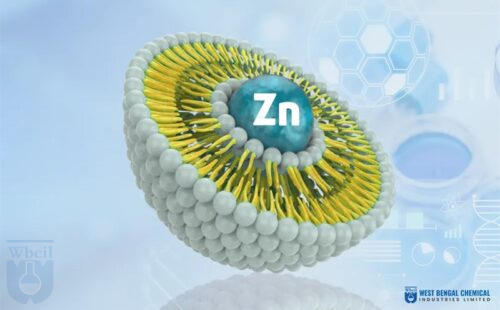
The liposomal CoQ10 absorption mechanism can be described as a “Trojan Horse” strategy. Liposomes are vesicles composed of phospholipid bilayers that encapsulate hydrophobic molecules within their membrane structure.
The role of phospholipids in CoQ10 delivery is pivotal. Phospholipids mimic natural cell membranes. This structural similarity allows liposomes to fuse with the membranes of intestinal or dermal cells.
Liposomes, with their inherent ability to interact with surrounding water through their polar heads, instead of fighting solubility, bypass it.
The result? Enhanced systemic transport!
Studies indicate that enhancing CoQ10 bioavailability in nutraceuticals through liposomal systems can increase absorption by 5–10 times compared to conventional powders. In one such clinical trial conducted by Jager et al., liposomal formulation significantly increases plasma exposure of CoQ10 (Cmax (peak level): ↑ 31.3% vs standard and AUC₀–24 (overall exposure): ↑ 22.6% vs standard) when compared to conventional for administered at a same dose of 100 mg [3].
Thus, liposomal CoQ10 improves absorption because liposomes:
shield CoQ10 in GI tract
- Increase aqueous dispersibility
- Promote transmucosal uptake
This directly improves the bioavailability of CoQ10, making coenzyme Q10 for anti-aging formulation clinically meaningful rather than theoretically promising.
The role of liposomal CoQ10 is therefore not cosmetic packaging; it is a pharmacokinetic transformation.
Dermatological Frontier: Deep Skin Penetration
A frequent question that arises:
Is liposomal CoQ10 suitable for topical cosmetic formulations?
Yes! BUT the answer lies in size and structure.
Nanometric liposomes (100–300 nm) are small enough to navigate between corneocytes in the stratum corneum. While intact penetration to the dermis remains limited, these vesicles enhance localized delivery to the viable epidermis.
Improved CoQ10 skin penetration supports mitochondrial protection in fibroblasts exposed to UV-induced oxidative stress.
This is critical in photoaging.
By enhancing CoQ10 skin penetration, liposomes protect collagen integrity and reduce lipid peroxidation.
The use of coenzyme Q10 for anti-aging topical formulations has evolved from acting merely as a surface-level antioxidant to functioning as an intracellular defender that supports mitochondrial integrity within skin cells.
Stability Science: The WBCIL Advantage
Formulation science does not end with encapsulation. Stability determines shelf life.
WBCIL optimizes zeta potential (>-30 mV) to prevent vesicle aggregation. This controlled electrostatic repulsion maintains dispersion stability and the long-term stability of CoQ10.
Encapsulation shields CoQ10 (both ubiquinone and ubiquinol forms) from direct exposure to oxygen and light. This improves chemical stability and preserves functional integrity, ensuring efficient delivery of CoQ10 inside cells.
Thus, when engineered under controlled manufacturing conditions, liposomal dispersions exhibit long-term physical and oxidative stability.
This ensures that coenzyme Q10 maintains its potency from manufacturing to consumer use.
Manufacturing Excellence: Your API Partner
WBCIL stands as a specialized liposomal CoQ10 API manufacturer operating under WHO-GMP standards.
Available formats include:
- Liquid liposomal dispersions (ideal for serums and creams)
- Free-flowing liposomal powders (for capsules and sachets)
- Each batch undergoes rigorous quality control for particle size distribution, encapsulation efficiency, and oxidative stability.
By integrating liposomal technology with pharmaceutical-grade standards, WBCIL ensures consistent performance of coenzyme Q10 across applications.
Conclusion: The Future is Encapsulated
The era of sprinkling “fairy dust” actives into formulations is over.
Today, efficacy depends on delivery science.
Formulations containing coenzyme Q10 for anti-aging treatment must overcome solubility barriers, absorption limits, and oxidative instability to deliver results.
The role of liposomal CoQ10 is to transform a stubborn molecule into a bioavailable, skin-penetrating, mitochondria-supporting active.
By protecting against oxidation, liposomal technology enhances CoQ10 skin penetration and improves the bioavailability of CoQ10, elevating coenzyme q10 for anti-aging formulations from hopeful to effective.
For brands seeking performance and not mere promises, partnering with a proven liposomal CoQ10 API manufacturer is strategic.
At WBCIL, encapsulation is not an add-on. It is an engineered precision. Since, the future of coenzyme Q10 for anti-aging is not powdered. It is encapsulated.
Contact WBCIL today to access pharma-grade liposomal CoQ10 and unlock next-generation anti-aging excellence.

- https://doi.org/10.3390/antiox10040520
- https://doi.org/10.3390/biology8020028
- https://www.frontiersin.org/journals/nutrition/articles/10.3389/fnut.2025.1605033/full
Yes. Liposomes enhance CoQ10 skin penetration and improve dispersion stability in creams and serums.
Encapsulation significantly reduces oxidative degradation by shielding CoQ10 within phospholipid bilayers.
When properly engineered, liposomal CoQ10 APIs demonstrate strong physical and oxidative stability over extended storage.
By encapsulating in liposomes, the absorption of hydrophobic coQ10 becomes easier. The phospholipid vesicles facilitate vesicle fusion with enterocytes, promoting higher intestinal transport and improving systemic uptake.
WBCIL is a WHO-GMP compliant Liposomal CoQ10 API Manufacturer offering stable, high-performance encapsulated CoQ10 solutions.