



Magnesium Acetate for Industrial & Chemical Applications
Industries across the globe rely on efficient, reliable compounds to optimise their processes, and magnesium acetate for industrial uses is one such compound. Its proven results and diverse applications make it an invaluable resource in chemical synthesis, de-icing, and wastewater treatment. A recent study suggests that the hydration of magnesium oxide can increase by up to 84% when magnesium acetate is used, compared to 66% in water alone 1. In this blog, we will explore the role of magnesium acetate in industrial applications, with best practices to extract the most out of the compound.
Key Takeaways:
● Magnesium acetate for industrial uses enhances chemical reactions, improves de-icing processes, and supports efficient wastewater treatment with minimal environmental impact.
● Selecting the appropriate form, such as the anhydrous and tetrahydrate form of magnesium acetate, is crucial for optimising the performance in specific industrial tasks.
● Industrial-grade magnesium acetate offers consistent quality, ensuring reliable performance across diverse sectors such as textiles, chemicals, and other sectors.
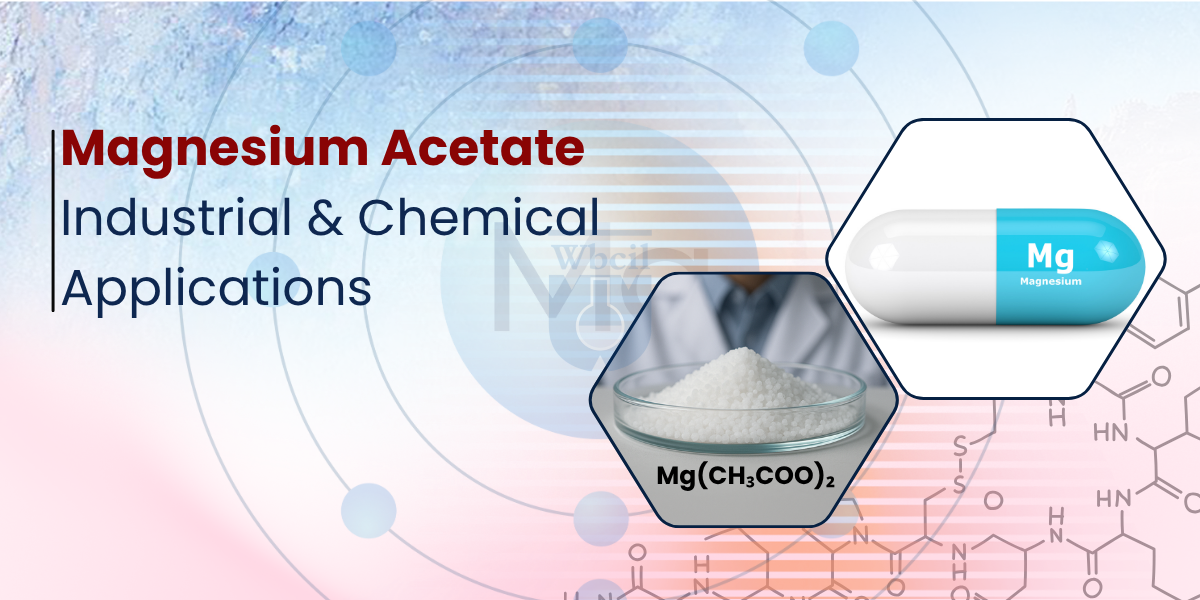
Understanding Industrial-Grade Magnesium Acetate
Magnesium acetate for industrial uses is a versatile compound which is useful for applications such as textile production, chemical synthesis, and more. A recent study suggests that the presence of magnesium acetate at concentrations up to 0.5 M increased the hydration rate from 38.4% to 64.7% in 30 minutes 2.
Here are some of the key considerations:
● Magnesium acetate is commercially available in two major forms, which include magnesium acetate tetrahydrate and magnesium acetate anhydrous, each having its unique characteristics. The anhydrous form is considered for conditions with lower moisture content, and the tetrahydrate is ideal for water-based applications due to its high solubility.
● The tetrahydrate form of magnesium, with its exceptional hydration properties, makes it a suitable choice for wastewater treatment and textile dyeing.
● Industrial-grade magnesium acetate requires strict adherence to quality control and provides a Certificate of Analysis (CoA).
● The presence of water in magnesium acetate tetrahydrate can influence its chemical reactivity and stability in various processes. However, the anhydrous form ensures a consistent reactivity and other chemical applications.
● Magnesium acetate has a major role in catalysing the efficiency of a reaction. The compounds can modify reaction kinetics, such as the use of magnesium acetate for the textile industry, and other magnesium APIs for industrial uses.
Now, let’s understand some of the core industrial applications for magnesium acetate.
Top 5 Industrial Applications of Magnesium Acetate
Magnesium acetate for industrial uses depends on the properties such as solubility and non-toxicity.
Here are some applications of magnesium acetate for industrial uses:
1. Textile Processing:
Magnesium acetate acts as a mordant, which helps in the dyeing process of fabrics, maintaining the colour of the final products. In addition, it helps ensure the integrity of fabrics during the dyeing process.
2. Food Preservation and Safety
Magnesium acetate acts as a major preservative in the food industry as it helps improve the shelf life of food products, regulating acidity levels. Moreover, it ensures that food products remain safe and align with the food safety standards while maintaining product quality.
3. Pharmaceutical Applications
Industrial-grade magnesium acetate acts as a stabilising agent for dialysis solutions. The application of the compounds further facilitates critical chemical reactions and forms active drug ingredients.
4. Wastewater Treatment and Pollution Control
In wastewater treatment, magnesium acetate helps enhance the overall purification process and acts as a coagulant, improving the removal of contaminants. It makes the compound a critical neutralising agent for industrial effluents. Additionally, magnesium acetate for industry & chemical facilities is useful in reducing harmful emissions and enhancing overall stability.
5. Therapeutic Applications
Magnesium acetate has the potential to relieve muscle cramps and enhance sleep quality. The use of magnesium acetate for therapeutic contexts suggests that the compound extends nervous system support and offers stress-relief properties. Therefore, both industry and academic partners must work cohesively to drive innovation.
Best Practices for Using Magnesium Acetate in Industrial Processes
Magnesium acetate is a versatile compound offering benefits for industrial processes. However, to maximise its overall efficacy, it is critical to maintain proper handling, storage, and usage for optimal results and safety in various applications.
Here are some of the practices you must follow to get the most out of magnesium acetate:
● Proper Dosage and Solubility: Ensure appropriate concentration of magnesium acetate, especially for chemical reactions such as esterification or polymerisation. Moreover, for water-based applications, the tetrahydrate dissolves quickly than other complexes.
● Storage in Dry Conditions: Industrial facilities store anhydrous magnesium acetate in a moisture-free environment, as slight exposure to moisture can disrupt the efficiency and potency of the chemical. Keeping in sealed containers in dry conditions is critical for appropriate containerisation of magnesium acetate.
● Compatibility with Other Chemicals: It is important to check the compatibility of magnesium acetate with other chemicals before mixing. Without proper calibration and checking the compatibility, the overall efficiency of magnesium acetate can be drastically reduced.
● Appropriate Handling: When you use magnesium acetate as a catalyst or a chelating agent, it is important to avoid inhalation of the dust. Moreover, it is important to use personal protective equipment (PPE) to maintain safe handling of chemicals
Why Choose WBCIL as your Magnesium Acetate Supplier?
West Bengal Chemicals Industries Limited (WBCIL) is a trusted manufacturer of high-quality industrial-grade magnesium acetate, produced at its state-of-the-art facility and certified to CGMP, WHO, and ISO standards. With a commitment to consistency, WBCIL provide detailed certificates of analysis (CoA) for every batch, ensuring the purity of magnesium acetate. Partnering with WBCIL guarantees reliable, bulk supply and expert technical support, tailored to meet different industrial requirements such as chemicals, textiles, deicing, and more.
Final Thoughts
Magnesium acetate for industrial uses plays a crucial role across various industries, offering enhanced efficiency in chemical processes, environmental benefits, and more. Appropriate selection of the right form and quality assurance through a reliable supplier enables organisations to maximise the performance of magnesium acetate.
WBCIL, a WHO-GMP certified manufacturer for high-quality magnesium acetate, ensures quality and reliability in every batch. The chemical is a useful buffer agent for laboratory uses and exhibits corrosion inhibitor properties. Moreover, its compounds are beneficial cofactors in fertilisers and act as catalysts for various industrial applications. With a strong commitment to quality, WBCIL is well-positioned to support

Magnesium acetate is used as a catalyst in chemical reactions like esterification and polymerisation. It also serves in de-icing, textile dyeing, and wastewater treatment applications due to its solubility and environmental benefits.
Magnesium acetate is less corrosive compared to traditional salts like magnesium chloride and sodium chloride, making it safer for surfaces. It is often preferred in de-icing applications as it reduces corrosion on concrete and metal infrastructure.
Yes, calcium magnesium acetate (CMA) is an effective deicer that works at lower temperatures than traditional salts, reducing environmental impact. It is biodegradable, non-corrosive, and less harmful to vegetation and water sources.
Magnesium acetate is environmentally friendly as it is biodegradable and less toxic than traditional de-icers. It reduces the harmful effects on soil, water, and plant life, making it a preferred choice for eco-conscious applications.
Yes, magnesium acetate is used in wastewater treatment due to its ability to act as a chelating agent. It helps remove heavy metals and impurities, enhancing the efficiency of the purification process.