-
Product Name:
Liposomal Hyaluronic Acid
-
Molecular Formula:
(C14H21NO11)n
-
Molecular Weight:
406.08 g/mol
-
CAS No.:
9004-61-9
-
CID Code:
86763295
-
Shelf Life:
3 years - 20°C powder
-
ATC Code (WHO)
D03AX05, M09AX01, R01AX09, S01KA01
-
DrugBank ID
DB08818
-
UNII No.
S270N0TRQY
- USP
- Insights
USP of Liposomal Hyaluronic Acid
- Hyaluronic Acid (HA) encapsulated in liposomes increases absorption and stability, allowing deeper cellular delivery than traditional methods.
- Liposome-encapsulated form penetrates the skin to the dermal layers, unlike traditional HA which only stays at the surface of skin.
- Provides a more extended time release of moisture;
- HA formulated using liposomal technology has higher bioavailability, allowing lower doses.
- Improved tolerability reduces irritation, ideal for sensitive skin vs. non-liposomal HA.
Insights Liposomal Hyaluronic Acid
- Appearance: Off white powder
- Solubility: Partially water-dispersible.
- Stability: Highly stable under GMP storage conditions, with low leakage rate.
- pH: 5.0–7.0.
- Storage Temp: 15–25°C.
- Storage Conditions: Store in a cool, dry place, protected from direct light and humidity.
- Odor: Characteristic odor.
- Packaging: Food-safe HDPE drums and HDPE bags with inner poly liner.

Description of Liposomal Hyaluronic Acid
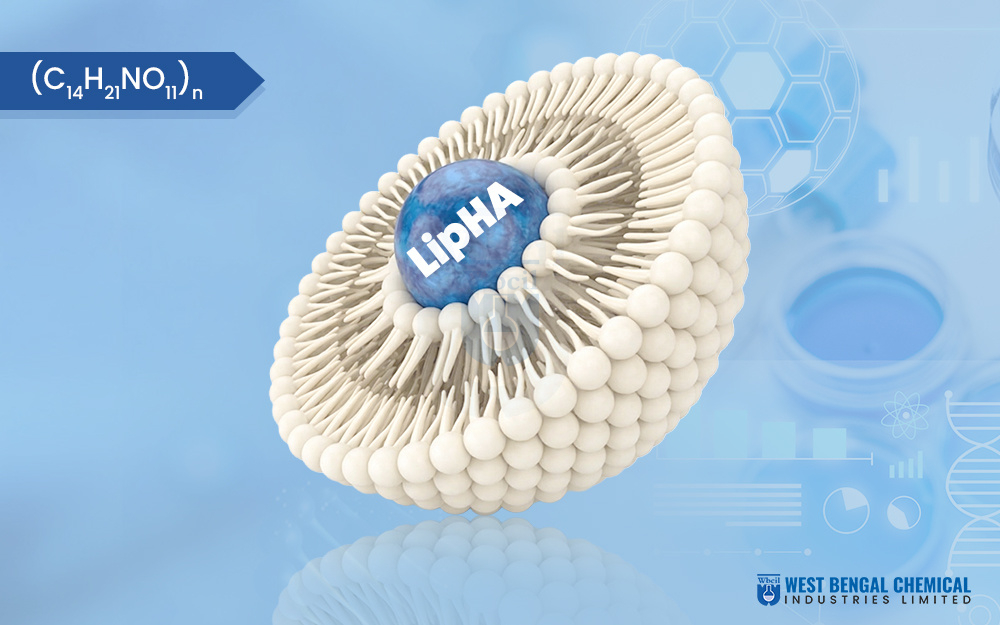
Liposomal hyaluronic acid (HA) integrates the hydrophilic polysaccharide into or onto phospholipid. This vesicular construct overcomes the poor stratum corneum penetration of native high-MW HA by enabling deformability, intercellular lipid interaction, follicular routing, and controlled epidermal/dermal delivery, while preserving HA’s exceptional water-binding capacity (up to 1000-fold its weight) for superior hydration and viscoelastic film formation on skin.
The final liposomal formulation usually an off-white powder, practically odorless, and low to moderate hygroscopicity. Negative zeta potential supports long-term colloidal integrity against aggregation. This nanotechnology markedly elevates topical efficacy, boosting skin barrier repair, moisture retention, anti-aging effects, and anti-inflammatory modulation in cosmeceutical applications.
Key Benefits of Liposomal Hyaluronic Acid
- Compared with conventional forms of hyaluronic acid, liposomal hyaluronic acid offers the advantage of greater levels of hydration and greater ability to penetrate through skin to provide moisture to even deeper layers of the skin.
- It has improved bioavailability and slow-release properties, resulting in more efficient absorption and utilisation by the body’s cells and tissues.
- The formulation provides deep moisturisation to the skin while retaining a normal appearance and tone, as well as restoring elasticity to provide a firmer look.
- In addition, liposomal hyaluronic acid can support joint health by providing better overall lubrication and lessening discomfort to a greater degree than traditional hyaluronic acid.
- Advanced Wound Care: Doctors use moisture-rich environments to heal wounds. This liposomal form can be used in medical-grade hydrogels to penetrate deep into the tissue, speeding up recovery for burns or chronic ulcers.
- Drug Delivery Systems: The liposomal shell can serve as a carrier to deliver other sensitive dermatological drugs through the skin barrier more effectively.
- “Beauty-from-Within” Capsules: It acts as a premium ingredient in oral beauty supplements, helping consumers hydrate their skin from the inside out for a “plump” look.
- Menopause Support: It helps manage the dryness and loss of skin elasticity often associated with hormonal changes in women.
This is the primary fit for the product, leveraging the “deep penetration” and “elasticity” claims.
- Deep-Penetrating Serums: It is perfect for high-end anti-ageing serums that claim to reach the dermis (deeper layers) rather than just sitting on the surface like standard moisturisers.
- Instant Firming Creams: Formulators can use it in “lifting” products that restore skin bounce and elasticity, helping to smooth out fine lines visibly.
- Sensitive Skin Repair: Because it is gentle and deeply hydrating, it works well in recovery creams for people with compromised skin barriers (like after chemical peels).