Liposomal Curcumin in Brain Cancer: A New Approach to Targeting Chemo-Resistance in Glioblastoma
Glioblastoma (GBM) remains one of the critical malignant brain cancers, often resisting even the most advanced standard treatments. However patients with such a condition, treatment resistance is not just a clinical term but a deeply personal challenge.
Researchers increasingly recognise that delivery limitations, not just drug potency, shape therapeutic outcomes. Curcumin has drawn attention for its multi-pathway activity, yet its clinical relevance depends heavily on effective delivery systems.
In this blog, we examine how liposomal curcumin fits into current scientific, translational, and formulation-focused discussions around glioblastoma care.
Key Takeaways
● Glioblastoma resistance starts from biological complexity along with adaptive survival pathways that limit the effectiveness of conventional treatments.
● Liposomal delivery systems enhance curcumin stability, bioavailability, and brain exposure, which is critical to tackle brain cancer.
● Preclinical studies suggest liposomal systems enable platforms rather than standalone therapeutic replacements.
What Science Tells About Curcumin and Glioblastoma
Curcumin has been widely studied for its potential role in brain cancer, particularly liposomal curcumin in brain cancer, because it can influence multiple molecular signalling pathways that drive glioblastoma growth and treatment resistance. In preclinical models, curcumin modulated key pathways and prolonged tumour-free survival by up to 38% in mice with glioblastoma when compared with controls [1].
Here is an in-depth explanation of the science behind liposomal curcumin’s efficacy against glioblastoma.
- Multi-pathway modulation: Curcumin modulates several dysregulated signalling cascades in glioblastoma cells, including Rb, p53, MAPK, PI3K/Akt, JAK/STAT, Shh, and NF-κB, thereby reducing proliferation and boosting cell death.
- Cell cycle arrest: In GBM cell lines such as DBTRG and U251, curcumin induced cell cycle arrest (G1/S or G2/M) by altering regulators such as p21 and p53, and increased pro-apoptotic proteins like BAX relative to anti-apoptotic Bcl-2.
- Reduced migration and invasion: Through suppression of STAT3 and downstream targets like c-Myc and MMP-9, curcumin decreased glioblastoma cell migration and invasive behaviour, which are key traits in aggressive brain cancer progression.
- Oxidative stress and autophagy: Curcumin triggers intracellular responses, including ROS production and autophagy, which can promote tumour cell death in models where survival pathways are overloaded.
- Prolonged survival in animal models: In intracranial glioblastoma mouse studies, curcumin treatment increased tumour-free survival by up to 15% compared with untreated controls [1].
Next, let’s understand how resistance towards glioblastoma treatment is prevelant leading to catastrophic outcomes.
Why Glioblastoma Treatment Resistance Happens?
Glioblastoma shows resistance to standard care due to factors such as a protective blood–brain barrier and redundant cellular survival mechanisms that block effective drug action. Such efficacy highlights the potential of liposomal technology to improve brain delivery. This resistance includes up to a 19-fold improvement in bioavailability with certain curcumin formulations compared with standard curcumin [2].
- Blood–brain barrier and reduced drug penetration: The BBB and blood–brain tumour barrier prevent many chemotherapy agents from reaching effective concentrations inside tumour tissue, limiting drug cytotoxicity.
- Efflux transporters and drug exclusion: Efflux pumps like P-gp and BCRP in tumour endothelial cells actively remove drugs from tumour cells, lowering intracellular drug levels.
- DNA repair and resistance enzymes: Upregulation of DNA repair enzymes such as MGMT neutralises chemotherapeutic DNA damage and is a major driver of temozolomide resistance in GBM.
- Cellular heterogeneity and cancer stem cells: Diverse tumour cell types and stem-like subpopulations in the GBM may resist therapy and repopulate the tumour.
- Redundant signalling and survival pathways: Multiple overlapping signalling pathways (e.g., PI3K/Akt, Wnt/β-catenin, Hippo) can compensate for inhibitory signals. It explains the resistance mechanisms targeted by liposomal curcumin in brain cancer research, allowing tumour cells to evade apoptosis and maintain growth.
Also read: Defining API Quality at WBCIL
How Liposomal Curcumin Improves BBB Penetration
According to recent research, almost 15% of all major intracranial neoplasms are glioblastomas, also known as glioblastoma multiforme [3]. Liposomal curcumin in brain cancer uses nanocarrier systems to overcome the limited blood–brain barrier penetration of conventional curcumin, thereby boosting delivery to glioma tissues.
Blood–Brain Barrier Limits Conventional Curcumin Delivery
The blood–brain barrier (BBB) restricts entry of drugs into the central nervous system, limiting curcumin’s therapeutic potential in brain tumours. Conventional curcumin is hydrophobic, rapidly metabolised, and shows poor BBB penetration, leading to negligible accumulation in glioma sites in vivo.
Nanocarrier technology encapsulates curcumin within lipid structures that shield it from rapid clearance and improve distribution in systemic circulation. By addressing these pharmacokinetic barriers, liposomal systems support liposomal curcumin for glioblastoma treatment strategies.
Nanocarriers Enhance Circulation & Stability
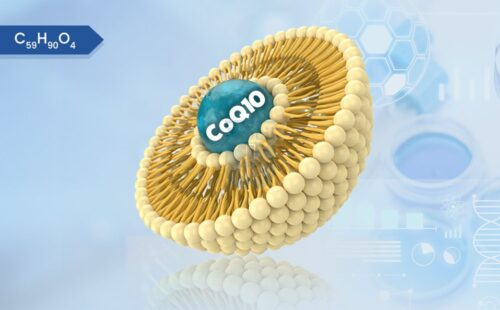
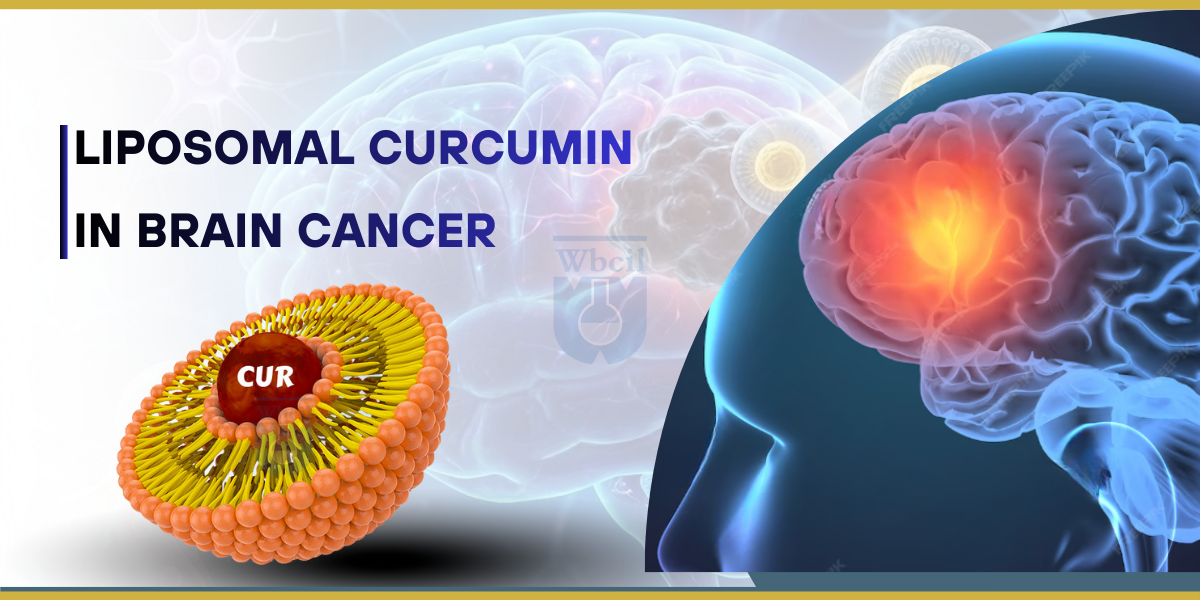
Nanocarrier platforms like liposomal drug delivery provide a hydrophilic exterior and lipid core that encapsulate curcumin. The systems increase systemic circulation times and promote greater plasma exposure compared with free curcumin, which otherwise suffers from very low bioavailability and rapid clearance.
Surface modifications with targeting ligands such as peptides or transferrin can further facilitate receptor-mediated transcytosis across the BBB. This engineered surface interaction increases accumulation in the brain parenchyma and glioma microenvironment compared to non-formulated curcumin.
Nanoliposomal Curcumin for Glioblastoma Multiforme
Nanoliposomal curcumin for glioblastoma multiforme refers to formulations where curcumin is integrated into nanoscale liposomes that improve biodistribution and target engagement. These nanocarriers have shown higher in vivo accumulation in tumour tissue and improved pharmacokinetic profiles, resulting in better therapeutic indices than free curcumin.
Preclinical models have demonstrated that such nanocarriers can achieve meaningful tumour delivery and retention, which is critical for therapy, given the aggressive nature of GBM. This enhanced delivery supports the rationale for advancing nanoliposomal systems toward clinical evaluation.
Mechanisms of BBB Transit by Liposomal Delivery
Liposomal and other nanoformulations can traverse the BBB via receptor-mediated transport mechanisms and exploit tumour vasculature permeability, known as the enhanced permeability and retention (EPR) effect. These approaches enable curcumin to bypass stringent endothelial tight junctions that normally block hydrophobic drugs.
Once across the barrier, encapsulated curcumin is released in or near tumour cells, improving intratumoural concentrations and exposure duration compared with free curcumin. Such directed delivery enhances the likelihood of curcumin-mediated modulation of survival pathways in glioblastoma cells.

Now, with a clear idea regarding the efficacy of liposomal curcumin in brain cancer treatments, let’s explore some of the preclinical studies.
Preclinical Evidence: Liposomal & Nano Curcumin for Glioblastoma
In a controlled preclinical condition, liposomal curcumin in brain cancer has higher tumour uptake and survival benefits than free curcumin, with responses showing 8 µM concentrations in glioblastoma models [4]. Key preclinical findings suffice for:
- Potent apoptosis induction: Mannose-modified curcumin liposomes at 8 µM mark higher apoptosis in C6 glioblastoma cells and glioma stem cells than free curcumin, confirming enhanced cytotoxicity.
- Cellular uptake: Liposomal formulations showed significantly greater intracellular accumulation in C6 glioma cells, supporting improved delivery efficiency driven by surface-engineered application technology.
- Improved survival in vivo: In intracranial glioma-bearing mice, treatment with functional curcumin liposomes prolonged survival and reduced tumour progression against untreated controls.
- Enhanced BBB interaction: Mannose-functionalised liposomes improved transport across in vitro BBB models, directly supporting better liposomal curcumin blood-brain barrier permeability.
- Validated liposome platform relevance: Building on established liposome history, the study reinforces the rationale for pharmaceutical oncology relying on characterised nanocarriers and a pharmaceutical-grade liposomal curcumin API for reproducible preclinical outcomes.
Clinical Trials & Translational Research on Liposomal Curcumin
In a clinical study, researchers are assessing liposomal curcumin in brain cancer combined with radiotherapy (RT) and temozolomide (TMZ) in patients with gliomas [5]. The trial aims to determine the maximum tolerated dose and assess safety, tolerability, and early efficacy of weekly intravenous liposomal curcumin alongside standard chemoradiation. About 30 participants will be enrolled and followed for at least 34 weeks to capture safety and preliminary clinical outcomes
Why Choose WBCIL’s Liposomal Curcumin?
WBCIL’s deep expertise in advanced active pharmaceutical ingredient manufacturing makes its WBCIL Oncology API solutions ideal for brands and researchers seeking reliable, high-performance liposomal ingredients. With over 60 years of manufacturing excellence and WHO-GMP, ISO, and HACCP certifications, WBCIL products are designed for quality, stability, and global compliance.
WBCIL leads in pharmaceutical-grade liposomal curcumin API and other liposomal technologies that enhance bioavailability and support complex delivery systems needed in modern therapeutic formulations. When you partner with WBCIL, you benefit from rigorous quality control, scalable production and a proven track record of delivering APIs and fine chemicals that meet stringent industry standards for safety and efficacy.
Final Thoughts
Scientific interest in advanced delivery systems continues to grow as researchers reassess why promising molecules fail in clinical trials. The evolving data around liposomal curcumin in brain cancer highlights the importance of formulation science alongside molecular biology.
Readers exploring this space should focus on evidence quality, delivery mechanisms, and translational intent rather than isolated efficacy claims.
For professionals, asking informed questions about manufacturing standards, reproducibility, and clinical alignment adds long-term value. This perspective becomes especially relevant when engaging with experienced manufacturers quietly contributing to this research ecosystem, such as WBCIL.

- https://pmc.ncbi.nlm.nih.gov/articles/PMC7998496/
- https://www.ncbi.nlm.nih.gov/books/NBK570704/
- https://www.mdpi.com/2072-6643/18/2/194
- https://www.dovepress.com/the-functional-curcumin-liposomes-induce-apoptosis-in-c6-glioblastoma–peer-reviewed-fulltext-article-IJN
- https://www.centerwatch.com/clinical-trials/listings/NCT05768919/study-of-liposomal-curcumin-in-combination-with-rt-and-tmz-in-patients-with-newly-diagnosed-high-grade-gliomas
Liposomal curcumin helps address chemo-resistance by targeting multiple survival pathways involved in glioblastoma progression. Its improved delivery increases tumour exposure, potentially enhancing sensitivity to standard treatments.
Liposomal curcumin offers better stability and bioavailability than free curcumin, which is rapidly metabolised. This allows greater exposure of the brain and tumour in glioblastoma research models.
Nanotechnology encapsulates curcumin in carriers that protect it from degradation and improve transport across brain barriers. This leads to more consistent delivery to glioma tissue.
Liposomal curcumin is studied as an adjuvant because it may modulate resistance pathways that reduce temozolomide effectiveness. It supports treatment response without replacing standard therapy.
Yes, early-phase clinical trials are evaluating intravenous liposomal curcumin in combination with standard chemoradiation for high-grade glioma. The studies focus on safety and translational feasibility.