Activating Vitamin C Collagen Synthesis: The Oral Liposomal & Hyaluronic Acid Working Together
The Topical Anti-Aging Paradox
We slather our faces in $200 topical serums hoping the active molecules somehow bypass the stratum corneum—a biological fortress that evolved over millions of years to keep foreign substances out. It’s a frustrating cosmetic paradox. While topical skincare has its place in epidermal barrier protection, true structural remodelling of the skin happens much deeper, in the dermal matrix. You cannot rub youth onto the surface of your skin; you have to build it from the blood up.
The true biological drivers of youthful resilient skin are not found in topical occlusives but in systemic cellular nutrition. At the absolute core of this internal anti-aging engine is vitamin C collagen synthesis.
But standard oral supplementation has failed to achieve the plasma concentrations needed to trigger meaningful dermal repair. Today, advanced pharmaceutical engineering is rewriting the rules of nutricosmetics. By using targeted lipid-encapsulation and pairing it with specific molecular weights of hyaluronan, formulators are achieving unprecedented clinical outcomes.
In this deep exploration, we will investigate the biochemistry of dermal scaffolding, decode how oral liposomal vitamin C supports collagen cross-linking in skin, and explain why pairing it with hyaluronic acid creates the ultimate nutraceutical formulation to address skin ageing.
As a leading vitamin C API manufacturer, West Bengal Chemical Industries Limited (WBCIL) is at the forefront of providing the bioavailable raw materials necessary to make these next-generation formulations a reality.
Key Takeaways:
- The Structural Prerequisite: Optimal vitamin C collagen synthesis is the biological rate-limiting step for skin firmness; it acts as a crucial electron donor for the prolyl hydroxylase enzymes that cross-link and strengthen collagen fibers.
- The Bioavailability Breakthrough: Using liposomal technology bypasses the saturable intestinal transporters that limit standard ascorbic acid and allows for passive absorption and direct intracellular delivery to dermal fibroblasts.
- The Ultimate Synergy: The best ingredient stack for skin firmness, hydration, and elasticity pairs liposomal vitamin C (to build the collagen scaffolding) with specific molecular weights of oral hyaluronic acid (to plump the extracellular matrix with water), creating a comprehensive inside-out anti-aging effect.

The Biochemistry of Vitamin C Collagen Synthesis
To understand why skin sags, wrinkles and loses its bounce, we must look at the extracellular matrix (ECM). The ECM is an energetic 3D network that consists of collagen fibres, elastin, and water-binding glycosaminoglycans (like hyaluronic acid). The fibroblasts are the cellular factories responsible for producing these materials.
But fibroblasts cannot work without their main trigger: ascorbic acid. Without sufficient vitamin C, collagen synthesis breaks down, and the skin falls apart at a microscopic level.
Collagen Cross-Linking Mechanisms Vitamin C Cofactor Role
Let’s look at the collagen cross-linking mechanisms vitamin C cofactor plays in the dermis. Collagen is built as a precursor called procollagen, which consists of three polypeptide chains wrapped in a triple helix. For this helix to be stable, the amino acids proline and lysine must be hydroxylated (adding an oxygen and hydrogen atom). [1]
This hydroxylation is catalyzed by two specific enzymes: prolyl hydroxylase and lysyl hydroxylase. The biochemical catch is that these enzymes depend on ascorbic acid to function. Vitamin C acts as an electron donor and keeps the iron component of these enzymes in its active reduced state. [3]
If a patient lacks intracellular ascorbate, the triple helix forms loosely. The collagen fibres cannot cross-link , which results in weak, disorganised, and degraded dermal tissue. This means that driving efficient vitamin C collagen synthesis is the single most essential rate-limiting step in preventing and reversing skin ageing. What’s more, as an antioxidant, vitamin C for collagen protection neutralises Reactive Oxygen Species (ROS) generated by UV exposure and prevents metalloproteinase enzymes from breaking down existing healthy collagen. [2]
The Delivery Bottleneck: Liposomal Vitamin C vs Regular Vitamin C for Collagen Production
If vitamin C collagen synthesis is the goal why not just swallow a cheap 1000mg ascorbic acid tablet?
The answer lies in pharmacokinetics. The human body regulates standard, water-soluble vitamin C absorption through Sodium-Dependent Vitamin C Transporters (SVCT1) in the intestines. When you consume a high dose of standard vitamin C, these transporters saturate. The unabsorbed ascorbate is flushed into the colon and causes osmotic diarrhea, while blood plasma levels plateau. [4]
When you analyze liposomal vitamin C vs regular vitamin C for collagen production, the data heavily favours the lipid-encapsulated form.
Liposomal Vitamin C for Skin Health
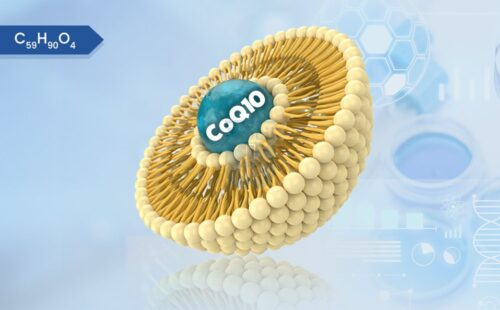
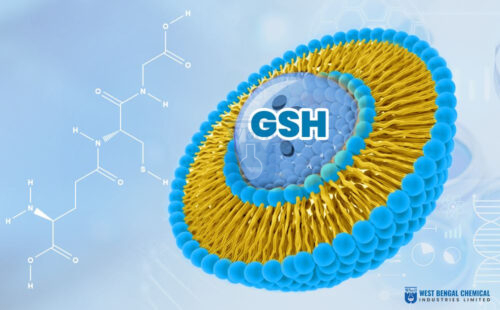
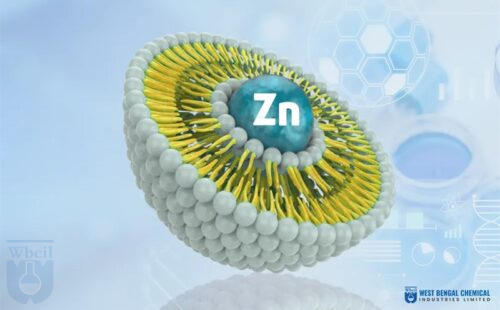
By wrapping ascorbic acid inside a phospholipid bilayer (a liposome), we bypass the saturable SVCT1 transporters. The liposome acts as a “biological Trojan Horse,” absorbing through the intestinal wall and into the lymphatic system.
When researchers ask how oral liposomal vitamin C supports collagen cross-linking in skin, the answer lies in its intracellular permeability. Because the liposome’s exterior mimics the human cell membrane, it can fuse with dermal fibroblasts and deposit the ascorbic acid payload straight into the cytoplasm, where the prolyl hydroxylase enzymes reside. [5]
This advanced delivery system ensures that the raw materials needed for vitamin C collagen synthesis reach the target tissue, making liposomal vitamin C for skin health an essential tool for formulators.
The Hydration Matrix: Enter Oral Hyaluronic Acid
While optimising vitamin C collagen synthesis provides the rigid structural “steel rebar” of the skin, the dermis also needs a plumping “concrete” to hold it all together. This is the role of Hyaluronic Acid (HA). [1]
HA is a massive, water-loving glycosaminoglycan capable of binding up to 1,000 times its weight in water. In the skin, it influences turgor, hydration, and a fluid environment that allows fibroblasts to migrate and function.
HA was thought to be too large to be absorbed. However, modern pharmacokinetics has proven otherwise. High-molecular-weight HA is cleaved by intestinal bacteria into shorter-chain fragments, which are absorbed into the bloodstream and distributed to the skin, where they bind to CD44 receptors on fibroblasts and stimulate endogenous HA production.
Looking at the oral hyaluronic acid for skin hydration clinical evidence from double-blind, placebo-controlled studies shows that daily ingestion of specific molecular weights of HA increases stratum corneum moisture content, reduces transepidermal water loss (TEWL), and diminishes the depth of crow’s feet wrinkles within 8 to 12 weeks. [3] [5]
The Synergistic Matrix: Best Ingredient Stack to Support Skin Firmness, Hydration, and Elasticity
The real breakthrough occurs when these two molecules work together. The benefits of combining oral hyaluronic acid and liposomal vitamin C represent a textbook example of biological synergy.
If you take HA, your skin may hold more water, but it will lack structural strength. If you stimulate collagen production through vitamin C, your skin will build collagen but in a dehydrated, brittle ECM environment that blocks fibroblast movement.
From a clinical perspective, pairing them creates the best ingredient combination for skin firmness, hydration and elasticity. The liposomal ascorbate drives the collagen production through vitamin C to build a tight cross-linked structural web while the oral HA floods that web with moisture pushing the tissue outward to smooth wrinkles and create a youthful, glass-like bounce. [6]
This dual-action mechanism is why making both hydration and vitamin C collagen synthesis a priority is essential in premium nutricosmetics.
Designing the Product: Nutraceutical Formulation Strategy to Support Anti-Aging Skin
Building a successful product takes more than just mixing powders. A strong nutraceutical formulation strategy to support anti-aging skin must account for ingredient stability, gastric survival, and molecular weight distribution.
The Formulation Reality
- API Protection: Standard ascorbic acid is unstable in the presence of moisture and oxygen. Using a stable, dry liposomal pellet or a high-quality liquid liposomal dispersion ensures the vitamin meets shelf-life expectations without oxidising to inactive dehydroascorbic acid. [5]
- Molecular Weight Selection: Formulators must source oral HA with an optimized Dalton (Da) range to ensure intestinal absorption while still providing the biological signalling required to stimulate the CD44 receptors. [7]
- Synergistic Co-factors: To boost vitamin C collagen synthesis even more, formulators often include zinc bisglycinate or specific amino acids (like proline and glycine) to provide the raw substrates the fibroblasts need to build the collagen triple helix. [9]
If your brand promotes inside-out anti-aging validating and stabilizing your vitamin C collagen synthesis pathway is the most crucial formulation step.
Sourcing from the Best: WBCIL Nutraceutical Ingredient Manufacturer
A formulation is as effective as the purity and stability of its Active Pharmaceutical Ingredients (APIs). When you develop advanced skin-health products, partnering with a world-class WBCIL nutraceutical ingredient manufacturer gives you an operational advantage.
As a trusted vitamin C API manufacturer, West Bengal Chemical Industries Limited (WBCIL) specializes in the complex physical chemistry required to make these products work. We do not just supply raw unstable powders. We engineer high-bioavailability solutions.
Our proprietary liposomal technologies guarantee tight particle size distribution, optimal zeta potential (to prevent vesicle aggregation), and verified encapsulation efficiencies. When you source from WBCIL, you are providing a guarantee that the payload necessary for aggressive vitamin C collagen synthesis survives the supply chain, survives the stomach, and reaches your consumer’s dermal fibroblasts.
With strict WHO-GMP certifications, full regulatory DMF support, and in-house customised R&D capabilities, WBCIL empowers brands to launch clinical-grade beauty supplements that deliver visible, undeniable results.
Conclusion: Designing the Future of Beauty
The future of anti-ageing is not a cream; it is an engineered intracellular delivery system. By understanding that the ECM requires both structural scaffolding and deep hydration, we can move beyond superficial treatments.
Combining the intense hydrating power of oral HA with the structural remodelling forced by liposomal vitamin C collagen synthesis is the definitive strategy to reverse dermal aging. Don’t leave your brand’s efficacy to chance or poor absorption rates. Engineer your nutricosmetics with precision, and partner with the API manufacturer that understands the chemistry of youth.[7]

- Regulation of Collagen Synthesis by Ascorbic Acid
- Effect of Vitamin C and Its Derivatives on Collagen Synthesis and Cross-Linking by Normal Human Fibroblasts
- Ascorbic Acid Enhances the Expression of Type 1 and Type 4 Collagen and SVCT2 in Cultured Human Skin Fibroblasts
- Evaluation and Clinical Comparison Studies on Liposomal and Non-Liposomal Ascorbic Acid and Their Enhanced Bioavailability
- Liposomal-Encapsulated Ascorbic Acid: Influence on Vitamin C Bioavailability and Capacity to Protect Against Ischemia–Reperfusion Injury
- Liposomal Delivery Enhances Absorption of Vitamin C into Plasma and Leukocytes: A Double-Blind, Placebo-Controlled, Randomized Trial
- Oral Hyaluronan Relieves Wrinkles and Improves Dry Skin: A 12-Week Double-Blinded, Placebo-Controlled Study
- Oral Administration of Hyaluronic Acid to Improve Skin Conditions via a Randomized Double-Blind Clinical Test
- Oral Sodium Hyaluronate Improves Skin Hydration, Barrier Function, and Signs of Aging: A Randomized, Double-Blind, Placebo-Controlled Trial
- Liposomal Delivery: A New Paradigm for Vitamin C Supplementation