Meeting Global Pharma Manufacturing Standards
Introduction: The High-Stakes Game of Global Compliance
There is a brutal irony at the heart of modern pharmaceutical manufacturing. Global markets demand cheaper drugs. Simultaneously, the FDA, EMA, and MHRA are raising the bar on pharma manufacturing standards higher than ever before. This is the Quality Paradox–and every API plant in the world is caught in the middle of it.
The cost of getting it wrong is not an abstract number. A single warning letter from the FDA can freeze exports, trigger a stock collapse, and end careers overnight. A batch recall does not just pull product from shelves–it erodes the clinical trust that took decades to build.
As a WHO-GMP API manufacturer, compliance is not a checkbox. It is the most vital factor.
At West Bengal Chemical Industries Limited (WBCIL), we have spent 60 years navigating this tension. What follows is not a marketing brochure. It is a technical account of how robust pharma manufacturing standards become a genuine competitive advantage rather than a bureaucratic obstacle.
Key Takeaways:
- Operational Integration: Transition from “paper GMP” to a data-driven Pharmaceutical Quality Management System (PQMS) that embeds Quality by Design (QbD) and real-time data into every production decision.
- Analytical Mastery: Utilize advanced tools like Dynamic Light Scattering (DLS) and Zeta Potential to bridge the gap between complex chemical formulations and stringent clinical stability requirements.
- Strategic Compliance: Treat rigorous global standards (FDA, EMA, WHO-GMP) as a competitive advantage that transforms regulatory hurdles into a guarantee of long-term clinical predictability.

The Core Pillar: The Pharmaceutical Quality Management System (PQMS)
Most manufacturers treat their pharmaceutical quality management system as a documentation exercise. Thick binders. SOPs nobody reads. A quality head who shows up three days before an audit and disappears afterward. This approach works–until it doesn’t.
A functional PQMS is not about filing papers.
It is the backbone of the entire facility. It decides how a batch decision gets made at 2 AM. It has the authority to reject a borderline intermediate, and what the data trail looks like six months after shipment.
The modern pharmaceutical quality management system integrates process analytical technology (PAT) directly into manufacturing lines. Real-time data from in-line sensors replaces the traditional end-of-batch testing model. This shift is not optional under current ICH Q10 expectations–it is the direction all serious pharma manufacturing standards are moving.
The 5 P’s of Pharma: How They Intersect at WBCIL
People, Process, Products, Premises, and Procedures- forms the skeleton of any credible pharmaceutical quality management system. At WBCIL, each factor is interconnected.
- People: Continuous training programs, role-based competency assessments, and a culture where line operators are empowered to raise deviations without fear of blame.
- Process: Validated manufacturing routes with defined Critical Process Parameters (CPPs) and established process capability indices.
- Products: API specifications maintained at >=99.5% purity (w/w), with impurity profiles mapped against ICH Q3A thresholds.
- Premises: Cleanroom environments classified to ISO 7/8 standards, with real-time environmental monitoring logged against alert and action limits.
- Procedures: Living SOPs reviewed annually and version-controlled within the electronic quality management system.
The failure of any one pillar cascades into the others. A poorly trained operator running an unvalidated process in a contaminated facility is a regulatory catastrophe waiting to happen–regardless of how polished the paperwork looks.
Navigating the Regulatory Alphabet Soup: MHRA, EMA, and ISO
International pharmaceutical trade requires fluency in multiple regulatory languages. For a WHO-GMP API manufacturer supplying both European and UK markets post-Brexit, understanding these distinctions is not academic–it is operationally critical.
ISO Standards in Pharma: Where They Fit
ISO 9001 (Quality Management Systems) and ISO 14001 (Environmental Management Systems) establish general organizational frameworks that serve as stepping stones toward full GMP compliance. A manufacturer holding ISO 9001 certification has demonstrated systematic quality thinking, which makes GMP implementation faster and more robust. They are not substitutes for GMP–but they are essential complements.
The Difference Between ISO 17025 and GMP
This distinction matters enormously in supplier qualification audits and is frequently misunderstood. ISO 17025 is a standard for testing and calibration laboratories. It ensures that the lab producing analytical data–whether for raw material testing or finished product release–operates with technical competence, appropriate equipment calibration, and rigorous measurement uncertainty analysis. It says nothing about how the product was manufactured.
GMP (Good Manufacturing Practice), by contrast, governs the entire production ecosystem: facility design, personnel qualifications, process validation, change control, deviation management, and batch release. A laboratory can be ISO 17025 accredited and still be embedded within a manufacturing site that has catastrophic GMP failures. The two frameworks are complementary, not interchangeable. Any serious pharmaceutical quality management system requires both.
The WBCIL Standard: Mastering WHO-GMP for API Plants
Meeting WHO-GMP standards for API plants requires more than passing an inspection. It requires engineering the facility and the culture so that compliance is the default outcome–not the result of a pre-audit scramble.
WBCIL’s approach to GMP compliant API manufacturing is built on Quality by Design (QbD) principles, as defined in ICH Q8(R2).
Under QbD, the quality target product profile (QTPP) is defined first. Every subsequent process decision–solvent selection, reaction temperature windows, crystallization conditions–is traced back to that QTPP. The Critical Quality Attributes (CQAs) of the API drive process parameter selection, not the other way around.
Advanced Analytical Tools in the Quality Loop
Traditional pharma manufacturing standards relied on end-of-process testing to determine batch acceptability. Modern GMP guidelines in Pharma industry expect real-time quality monitoring integrated into the process itself. At WBCIL, two analytical platforms are central to this approach:
- Dynamic Light Scattering (DLS): Used for particle size distribution analysis of API intermediates and final forms. DLS provides number-weighted and volume-weighted size distributions, critical for predicting dissolution behavior and bioavailability. Batch-to-batch consistency in D90 values (+/-10%) is a validated specification for relevant product lines.
- Zeta Potential Analysis: Particularly relevant for liposomal and nanoparticulate API systems, zeta potential measurements (target range: -30 mV to -50 mV for stable colloidal dispersions) provide real-time stability indicators that correlate directly with shelf-life performance.
These are not optional additions. They are embedded in the control strategy, documented in the process validation reports, and referenced in the dossiers submitted to regulatory agencies.
With 16 patents and 60 years of pharmaceutical and chemical manufacturing experience, WBCIL brings a depth of process knowledge that cannot be replicated by newer entrants to the API manufacturing space.
From Lab to Scale: The Scientific Evolution of Liposomal and Mineral APIs
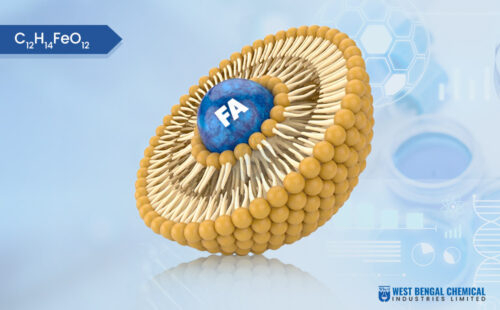
Liposomal drug delivery systems represent one of the most technically demanding areas in pharmaceutical manufacturing. The GMP guidelines in Pharma industry for these systems are stringent precisely because the product’s therapeutic performance is inseparable from its physicochemical characteristics. A liposome is not just a carrier–it is the drug product.
The Charge-Dependent Cytotoxicity Problem
Cationic liposomes, while efficient at cellular uptake, carry an inherent toxicity risk driven by their surface charge. Charge-dependent cytotoxicity is a well-documented phenomenon: at zeta potential values exceeding +20 mV, cellular membrane disruption becomes a liability rather than a delivery mechanism.
WBCIL addresses this through precision formulation engineering–titrating lipid composition and PEGylation density to achieve the target zeta potential range while maintaining encapsulation efficiency >=85% (w/w of active compound).
This is not theoretical. The formulation parameters are fixed through a formal Design of Experiments (DoE) study during development, with the design space defined and submitted as part of the regulatory filing. The result is a manufacturing process that can be scaled from pilot to commercial without changing the fundamental quality profile of the product–exactly what current pharma manufacturing standards demand.
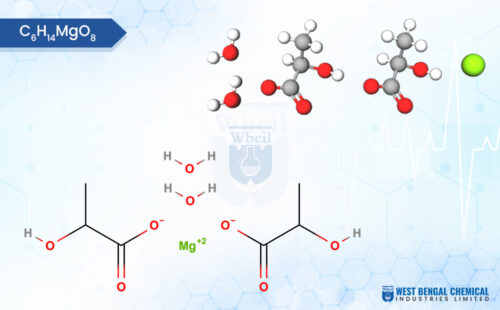
For mineral APIs–iron complexes, zinc salts, magnesium compounds–the challenges are different but equally demanding. Polymorphic form control is critical: the same API molecule in a different crystal structure can have a dissolution rate varying by a factor of three or more. WBCIL’s crystallization process development includes systematic polymorph screening using XRPD and DSC, with the target form locked and monitored throughout commercial production.
Conclusion: The Future Is Validated
There is a phrase that circulates quietly among regulatory professionals: ‘Paper GMP is no GMP.’ It refers to companies that build impressive quality documentation systems while their manufacturing reality drifts silently away from the written process. Modern analytical testing–LC-MS, DLS, real-time spectroscopy–makes this gap visible. The nightmare audit scenario is not fictional. It happens, repeatedly, to manufacturers who treated pharma manufacturing standards as a documentation project rather than an operational imperative.
The payoff for doing it right is not just regulatory approval. It is clinical predictability. When a formulator partners with a WHO-GMP API manufacturer operating at this level, they are not purchasing a powder. They are purchasing a guarantee: that the API delivered in Month 18 of a three-year supply contract will perform identically to the API used in Phase III clinical trials. That guarantee is the foundation of a drug development program.
WBCIL’s pharmaceutical quality management system is built to deliver that guarantee–consistently, transparently, and with the data trail to prove it. In a regulatory environment where pharma manufacturing standards are only getting tighter, that is not just compliance. That is competitive advantage.
Partner with WBCIL’s R&D Team
Ready to explore next-generation API delivery systems built on validated, GMP-compliant platforms? Contact WBCIL’s technical team to discuss your active ingredient requirements.

- https://database.ich.org/sites/default/files/Q8%28R2%29%20Guideline.pdf
- https://database.ich.org/sites/default/files/Q10%20Guideline.pdf
- https://database.ich.org/sites/default/files/Q9%28R1%29_Guideline_Step4_2023_0126.pdf
- https://health.ec.europa.eu/medicinal-products/eudralex/eudralex-volume-4_en
- https://www.fda.gov/drugs/pharmaceutical-quality-resources/current-good-manufacturing-practice-cgmp-regulations
- https://cdn.who.int/media/docs/default-source/medicines/norms-and-standards/guidelines/production/trs957-annex2-active-pharmaceutical-ingredients.pdf
- https://database.ich.org/sites/default/files/Q3A%28R2%29%20Guideline.pdf
- https://www.iso.org/standard/66912.html
- https://www.iso.org/standard/62085.html
- https://www.gov.uk/government/publications/guidance-on-gxp-data-integrity
- https://pubmed.ncbi.nlm.nih.gov/22409244/
- https://www.ncbi.nlm.nih.gov/pmc/articles/PMC3553255/
- https://www.sciencedirect.com/topics/pharmacology-toxicology-and-pharmaceutical-science/polymorphism
- https://www.ncbi.nlm.nih.gov/pmc/articles/PMC4616215/
- https://www.malvernpanalytical.com/en/learn/knowledge-center/technical-notes/TN101104DynamicLightScatteringIntroduction
The 5 P’s–People, Process, Products, Premises, and Procedures–form the foundation of any pharmaceutical quality management system. They ensure that from the technician’s training to the cleanroom’s air pressure differential, every variable is controlled, monitored, and documented. A failure in any one P creates risk across all others.
The industry primarily relies on pharma manufacturing standards such as WHO-GMP, ICH guidelines (Q8, Q9, Q10, Q11), and country-specific requirements from the FDA (USA), EMA (EU), and MHRA (UK). ISO 9001 and ISO 14001 provide complementary quality and environmental management frameworks, while ISO 17025 governs laboratory competence specifically.
ISO 17025 is a standard for testing and calibration laboratories, ensuring technical competence, calibration traceability, and measurement uncertainty management. GMP covers the entire manufacturing operation–personnel, premises, processes, documentation, and batch release. Both frameworks are necessary; neither is sufficient alone.
The MHRA (Medicines and Healthcare products Regulatory Agency) is the UK’s independent regulatory body, operating since Brexit outside the EU framework. The EMA (European Medicines Agency) supervises medicines regulation across EU member states. Both maintain high pharma manufacturing standards, but their jurisdictions, submission pathways, and inspection programs differ. Post-Brexit mutual recognition of GMP inspections is governed by separate bilateral agreements.
WBCIL meets these standards through a fully integrated pharmaceutical quality management system built on QbD principles. This includes real-time monitoring of Critical Quality Attributes using DLS and Zeta Potential analysis, formal process validation with defined design spaces, 100% batch traceability from raw material to dispatch, and a WHO-GMP certified facility subject to regular regulatory inspections. Compliance is engineered into the process–not applied at the end of it.