-
Product Name:
Magnesium Lactate
-
Molecular Formula:
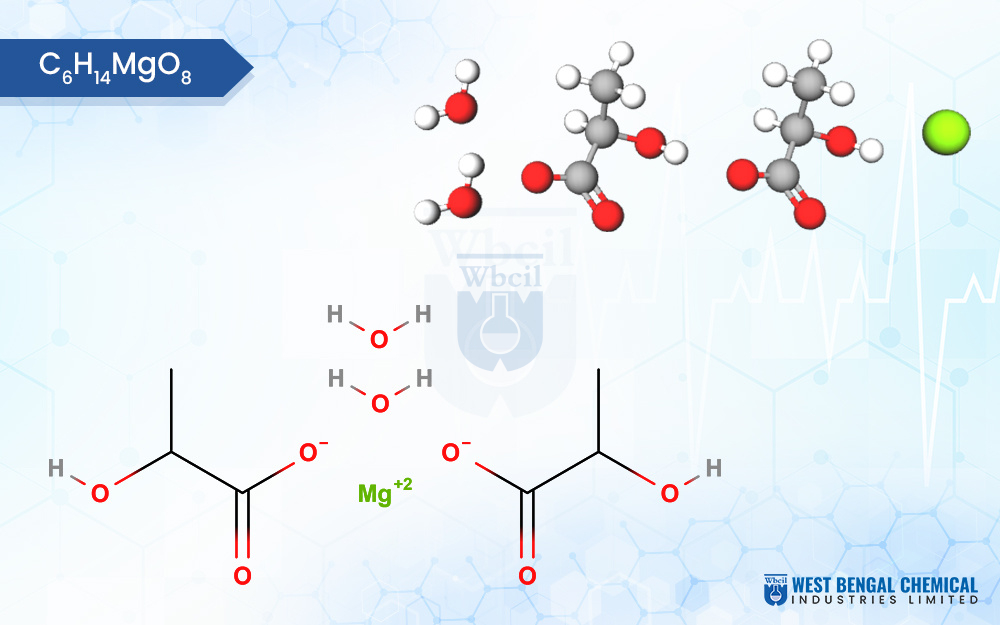
C6H14MgO8
-
Molecular Weight:
238.48 g/mol
-
CAS No.:
179308-96-4
-
HSN Code:
4477551
-
CID Code:
71587589
-
Shelf Life:
3 years
-
UNII No.
IRT310VU4Z
- USP
- IUPAC Names
- Synonyms
- Insights
USP of Magnesium Lactate
- Compared to oxide or other inorganic forms, absorbed more easily by the intestines
- no laxative side effects. Great for people with I.B.S.
- It binds with lactic acid; an energy source that your muscles and heart use.
- It breaks down quickly in the body even when the amount of hydrochloric acid in the stomach (or use of antacids) is low.
- Because it is food-based, it does not leave the metallic aftertaste associated with taking chloride.
IUPAC Names of Magnesium Lactate
magnesium;bis(2-hydroxypropanoate);dihydrate
Synonyms of Magnesium Lactate
- Magnesium lactate dihydrate
- 179308-96-4
- Magnesium dl-lactate dihydrate
- Magnesium lactate dihydrate, dl-
- UNII-IRT310VU4Z
- Magnesium, bis(2-(hydroxy-kappao)propanoato-kappao)-, dihydrate, (t-4)
- L(+) LACTIC ACID, MAGNESIUM SALT
- magnesium;2-hydroxypropanoate;dihydrate
Insights Magnesium Lactate
- Appearance: White to off-white powder or granules.
- Solubility: Soluble in water (~84 g/L); slightly soluble in alcohol.
- Stability: Stable under normal conditions; avoid heat, light, strong oxidizers.
- pH: 6.5–8.5 (5% aqueous solution).
- Storage Temp: Room temperature.
- Storage Conditions: Tightly closed containers in cool, dry, well-ventilated area; away from incompatibles.
- Odor: Odorless.

Description of Magnesium Lactate
Among many other uses, magnesium lactate is used in the pharmaceutical and food industries as an easily absorbed mineral source. Magnesium lactate is a chemical substance that constitutes the magnesium salt of lactic (the acid of lactic acid), the chemical name for organic compound containing the three carbons, α-hydroxypropionic acid). The most common form of magnesium lactate is dihydrate (two water molecules) containing molecular formula of C6H10MgO6.2H2O and a molecular weight of 240.45 g/mol. In appearance, magnesium lactate is a white to off-white, crystalline/solid powder or granule.
When it is fully dried, it does not display any distinctive smell or aroma; however, it may have a faint pleasant aroma caused by trace amounts of lactic acid. The taste of magnesium lactate is slightly bitter. Moderately hygroscopic, magnesium lactate will absorb water vapor in the air to some extent; therefore, it should be stored in an airtight container to preserve its free-flowing nature. Magnesium lactate is moderately soluble in water with higher temperatures producing a solution having a pH between 5.0-8.5.
- Gentle alternative for patients: For patients who can’t tolerate standard magnesium salts.
- Treatment of Hypomagnesemia: Frontline oral treatment for restoring magnesium levels in patients with chronic deficiencies.
- Gentle Electrolyte Replacement: Because it’s easier on the gut, it is the preferred choice for long-term electrolyte maintenance in sensitive patients.
- Buffered Gastric Formulations: Its specific pH range (6.5–8.5) makes it an excellent buffering agent in medications designed to reduce stomach acidity.
- Sustained-Release Delivery: Manufacturers use its stable powder form to create time-release tablets that prevent the “spike and drop” of mineral levels in the bloodstream.
- High-Absorption Supplements: It is marketed as a “stomach-friendly” magnesium source for daily capsules and tablets.
- Post-Workout Recovery: Its high-water solubility allows it to dissolve instantly into recovery shakes to help athletes combat muscle fatigue.
- Fortified Functional Foods: Since it is odorless and stable, it’s added to breakfast cereals and nutrition bars without altering the flavor profile.
- Sleep and Stress Aids: It is frequently blended with botanicals in “calm” supplements to support nervous system regulation.
- Magnesium lactate is a hidden gem in skincare, acting as both a skin-conditioner and a stabilizer.
- Skin Barrier Enhancement: It helps synthesize the lipids that keep moisture locked in, making it a staple in high-end moisturizing serums.
- Soothing Sensitive Skin: Its anti-inflammatory properties help reduce redness in products formulated for rosacea or eczema-prone skin.
- Mineral-Rich Cleansers: It provides essential cations to the skin during cleansing, preventing the “stripped” feeling caused by harsh surfactants.
- Exfoliation Buffers: Often paired with lactic acid, it helps stabilize the pH of chemical exfoliants to prevent skin irritation.
- Beyond human health, the stability and purity of this compound make it useful in specialized manufacturing.
- Animal Health & Nutrition: It is integrated into premium pet foods to support bone density and cardiovascular health in aging animals.
- Food Preservation: It acts as a natural acidity regulator and flavor enhancer in the dairy and beverage processing industries.
- Fermentation Booster: In industrial biotechnology, it provides a vital magnesium source for microbes used in large-scale fermentation.