Engineering Zeta Potential for Precision Bioavailability
The “Zeta” Factor -Why Surface Charge is the Steering Wheel of Bioavailability
For years, we believed that nanoparticle design was all about size. Smaller meant better. Faster absorption. Deeper penetration. Greater impact. But now, something far more powerful has stepped into the spotlight-cationic vs anionic nanoparticles. In fact, cationic vs anionic nanoparticles is fast becoming one of the most decisive conversations in nanomedicine and advanced mineral delivery.
Here’s the shift in thinking: size may open the door, but surface charge decides where the particle actually goes.
This is where zeta potential comes into play. In simple terms, zeta potential is the electrical “atmosphere” surrounding a nanoparticle. It defines how that particle behaves in biological environments, like how it interacts with mucus, blood proteins, cell membranes, and immune cells. Think of it as the steering wheel of bioavailability. Without controlling it, even the most advanced nanoparticle system can lose direction.
Whether a nanoparticle sticks to intestinal walls, slips past immune surveillance, or penetrates tissue layers often comes down to its charge profile.
At West Bengal Chemical Industries Limited (WBCIL), this understanding shapes everything. We don’t just encapsulate minerals/ vitamins or other actives within liposomes. We engineer electrical identity. Through WBCIL’s nanoparticle formulation expertise, surface charge becomes a programmable feature tuned for absorption, circulation, and biological compatibility.
By choosing between positive, negative, or balanced (neutral) charges, formulators can actively dictate whether a mineral adheres to mucosal surfaces, bypasses immune clearance, or penetrates deep into tissues. And that changes everything about delivery efficiency.
Key Takeaways
- Charge is the Steering Wheel: While size matters, the Zeta Potential (surface charge) is what dictates whether a nutrient adheres to membranes or circulates freely in the bloodstream.
- Strategic Polarity: Cationic particles act as “cellular magnets” for rapid mucosal adhesion, while anionic particles serve as “long-distance travelers” to evade immune detection and improve systemic transport.
- The Protein Corona Myth: New research proves that a nanoparticle’s original electrical identity influences its biological fate even after being coated by blood proteins, making Quality by Design (QbD) essential.

The Cationic Advantage – The “Cellular Magnet”
Most human cell membranes carry a negative charge. This arises from phospholipids and sialic acid residues embedded in the membrane. That single biological fact sets the stage for one of the most powerful mechanisms in nanomedicine, i.e. electrostatic attraction.
This is where positively charged nanoparticles become cellular magnets.
When a cationic nanoparticle approaches a negatively charged cell surface, natural electrostatic interactions with cell membranes occur. The attraction pulls the nanoparticle closer, increases surface adhesion, and often triggers endocytosis – a process where the cell actively engulfs the particle.
This mechanism forms the foundation of cationic nanoparticles drug delivery. By engineering a controlled positive charge, scientists can dramatically increase cellular uptake without relying solely on passive diffusion.
The Mucoadhesive Advantage
One of the most exciting applications of cationic systems lies in oral delivery.
The gastrointestinal tract is lined with mucin, a negatively charged glycoprotein network that acts as both protector and gatekeeper. Normally, many nutrients pass through too quickly, limiting absorption. Choosing between cationic vs anionic nanoparticles is a decisive decision here.
Cationic particles bind gently to the mucosal layer, creating mucoadhesion. This extends the residence time of nutrients at the absorption site.
This is why cationic liposomes for gene delivery are so effective. They stick long enough to maximize transport yet release their payload in a controlled manner.
The Safety Trade-Off
Of course, biology always demands balance.
Excessive positive charge can destabilize cell membranes, leading to irritation or cytotoxicity. This phenomenon, known as charge dependent cytotoxicity, is a well-documented challenge in nanoparticle engineering. Apart from this many studies have shown, cationic liposomes stick to the mucus layer instead of penetrating the cell [1-5].
That’s why precision matters. Through quality by design for zeta potential, WBCIL fine-tunes surface charge within safe biological thresholds -maximizing absorption while preserving cellular integrity.
In the world of cationic vs anionic nanoparticles, this balance defines success.
New Research Frontiers -Surface Charge Overrides the “Protein Corona”
For years, scientists believed that once nanoparticles entered the bloodstream, their surface charge became irrelevant. The assumption was that proteins instantly coated the particles, forming what’s called a protein corona, thus effectively masking the original charge.
But recent research has flipped this belief on its head.
Multiple PubMed-indexed studies now show that the original surface charge continues to influence nanoparticle fate even after protein corona formation on nanoparticles occurs [6].
This means the electrical identity of a particle still dictates where it travels, how it interacts with cells, and how long it circulates.
In practical terms, this makes quality by design for zeta potential not just important, but absolutely critical.
For formulators, this is a game-changer. It confirms that cationic vs anionic nanoparticles decisions made during manufacturing directly determine clinical outcomes.
At WBCIL, this insight reinforces why electrical profiling happens at the earliest formulation stage, not as an afterthought.
WBCIL’s Engineering Excellence -Precision in Mineral Delivery
The science of surface charge finds its true expression in manufacturing.
WBCIL’s commitment is reflected by its 16 patents. At WBCIL, engineering electrical identity is as critical as selecting the right mineral salt. This is where WBCIL nanoparticle formulation expertise truly shines.
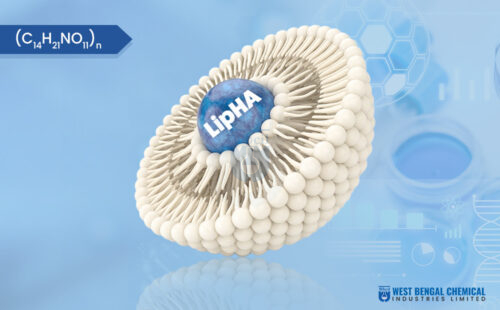
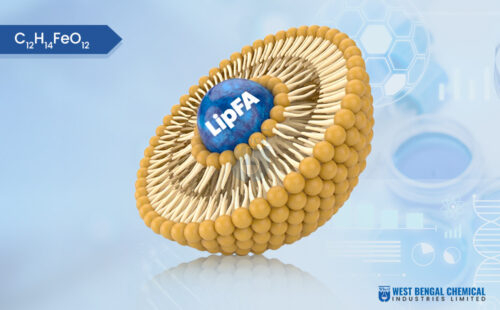
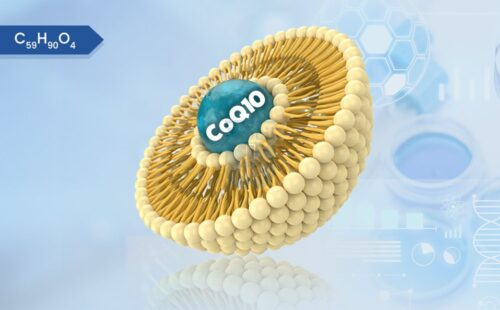
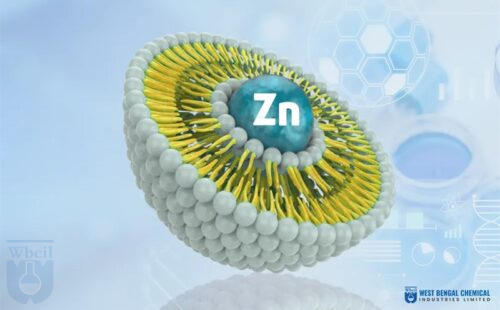
Our liposomal systems are highly negative (<-30 mV). This intelligent design supports colloidal stability of nanocarriers, ensuring consistent particle dispersion, minimal aggregation, and reliable bioavailability.
Customized Liposomal Systems
WBCIL produces both cationic and anionic nanoparticles through advanced liposomal engineering.
For example:
- Cationic systems are used where enhanced mucosal adhesion and cellular uptake are needed.
- Anionic systems are chosen for prolonged circulation, immune modulation, and systemic mineral transport.
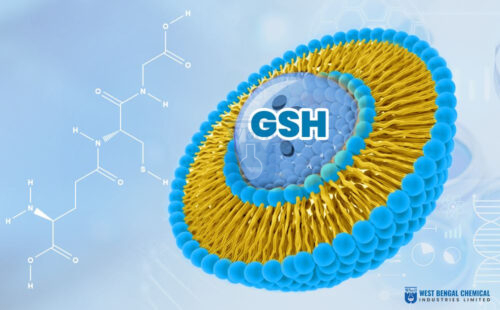
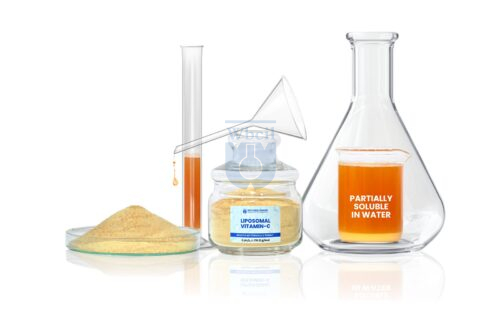
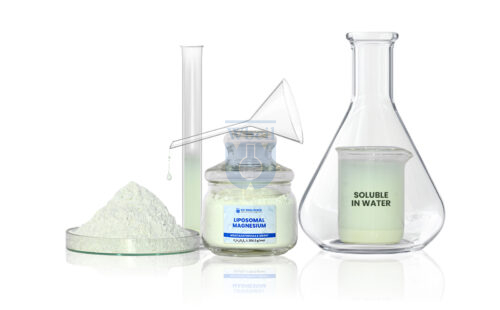
- This customization allows formulations such as liposomal magnesium, iron, vitamin C and glutathione to bypass gastrointestinal distress while maintaining superior absorption.
API-Grade Manufacturing Control
What truly separates WBCIL is batch-to-batch consistency. Maintaining stable zeta potential across large-scale production is a complex challenge that only pharmaceutical-grade systems can manage.
This precision becomes even more critical when balancing cationic vs anionic nanoparticles, where even minor deviations in surface charge can dramatically alter absorption, stability, and safety profiles.
Through continuous monitoring, dynamic light scattering, and real-time zeta analysis, WBCIL ensures unmatched quality-by-design for zeta potential, guaranteeing consistent performance in every lot.
Conclusion -Balancing the Scales of Absorption
So, where does this leave us?
In the debate of cationic vs anionic nanoparticles, there is no universal winner.
- Cationic for rapid mucosal adhesion and expected enhanced cellular uptake
- Anionic for prolonged circulation and immune targeting
- Neutral or zwitterionic for stealth and long-term stability [6, 7]
The real mastery lies in choosing the right charge for the right biological target.
This is where modern formulation science is headed. Not bigger doses. Not stronger actives. But smarter delivery. In the evolving science of mucus penetration and nanoparticle design, understanding the delicate balance between adhesion and mobility is as important as particle size or dosage. This is precisely why mastering cationic vs anionic nanoparticles is no longer optional -it is the foundation of intelligent formulation and next-generation mineral delivery.
At WBCIL, we believe that future-ready brands must move beyond generic supplement thinking. Through WBCIL nanoparticle formulation expertise, we provide the scientific backbone that enables precision delivery of liposomal actives. Because in 2026, the brands that lead will be those that understand the electric language of biology.
To support this level of delivery-system engineering, WBCIL operates LipoEdge -its knowledge platform dedicated to advancing liposomal science. LipoEdge functions as a dynamic interface between laboratory research and industrial-scale formulation, offering deep insights into cationic vs anionic nanoparticles and how surface charge selection directly influences absorption, circulation, and cellular uptake.
For formulators and product developers, LipoEdge transforms theoretical liposomal science into actionable formulation intelligence, accelerating development timelines while ensuring performance predictability.
Revolutionize your formulation with charge-optimized APIs. Partner with WBCIL’s R&D for next-generation delivery. https://www.wbcil.com/

Zeta potential defines a nanoparticle’s surface charge, and formulators care because it directly controls stability, absorption, circulation time, and biological targeting.
Their strong attraction to negatively charged cell membranes boosts uptake, but excessive interaction can disrupt membranes, leading to dose-dependent cytotoxicity.
Acidic stomach pH increases protonation (more positive charge), while neutral intestinal pH reduces charge intensity, altering adhesion, stability, and absorption behavior.
Neutral or zwitterionic systems often offer the best balance, providing stealth, stability, and low immune recognition without compromising absorption.
Yes. Optimized surface charge improves colloidal stability, preventing aggregation and extending shelf-life significantly.