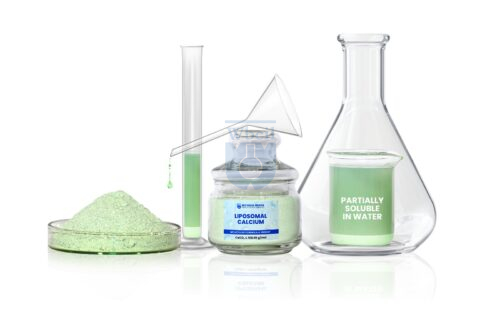
How WBCIL Integrates DC Grades, Pellets, and Liposomal Technologies
In the world of pharmaceutical manufacturing, there is a fundamental truth that every formulator, procurement head, and R&D director eventually confronts: the molecule that heals must first survive the journey. It must endure gastric acid, evade enzymatic degradation, navigate the intestinal wall, and arrive at the target tissue in a form the body can actually use.
That is not a chemistry challenge alone — it is an engineering problem.
For over six decades, West Bengal Chemical Industries Limited (WBCIL) has been solving exactly that problem. What began as a modest mineral salt manufacturer in the post-Independence pharmaceutical landscape has transformed into a globally recognized innovator in pharma manufacturing excellence — a company that does not merely produce chemicals, but engineers delivery itself.
This post tells that story: the struggle, the discovery, and the transformation.
Key Takeaways:
- WBCIL has evolved from a basic mineral supplier into a high-tech innovator that solves the “Absorption Gap” by engineering molecular architectures like chelates and liposomes to ensure nutrients survive the digestive journey.
- By integrating Direct Compression (DC) grades for manufacturing efficiency, pellets for controlled release, and nanoscale liposomal encapsulation, WBCIL provides a comprehensive toolkit for superior bioavailability and patient compliance.
- With over 60 years of heritage, 16+ granted patents, and a presence in 75+ countries, WBCIL stands as a WHO-GMP certified leader capable of delivering pharmaceutical-grade precision at a global scale.

The Struggle: India’s ‘Absorption Gap’ and the Limits of Traditional Powders
Cast your mind back to the 1960s. India’s pharmaceutical sector was nascent, largely import-dependent, and working with a basic toolkit. The dominant delivery format for mineral nutrients — iron, zinc, magnesium, calcium — was the simple salt powder. Ferrous sulphate. Calcium carbonate. Zinc sulphate. These were the workhorses of nutritional therapy.
But they came with a deeply frustrating set of problems that the industry quietly called the ‘Absorption Gap.’
The Three Failures of Traditional Mineral Salts
- High Hygroscopicity: Simple salt powders would absorb atmospheric moisture, clump, degrade, and lose potency during storage. For manufacturers, this meant unpredictable shelf life and batch failures. For patients, it meant unreliable dosing.
- Metallic Aftertaste and GI Irritation: The ionic forms of minerals like iron are intrinsically harsh. Ferrous sulphate, the standard iron supplement of the era, was notorious for causing nausea, constipation, and a metallic taste that made patients skip doses. Compliance was dismal.
- Poor Bioavailability: Even when consumed, traditional mineral salts faced a brutal gauntlet in the GI tract. Gastric acid degraded them. Dietary phytates and tannins bound to them. The body absorbed, at best, a fraction of what was consumed.
The Discovery: From Chelation to Controlled Release
The pivot did not happen overnight. It began with a question that WBCIL’s early scientists kept returning to: what if we could change not just the mineral, but the molecular architecture around it?
The First ‘Aha!’ Moment: Chelation Chemistry
The first breakthrough came through chelation — the process of bonding a mineral ion to an organic ligand (typically an amino acid like glycine) to form a stable, ring-like molecular complex.
Unlike ionic salts, chelated minerals are electrically neutral, resistant to precipitation in the GI tract, and absorbed via peptide transporters rather than the narrow, competitive ionic channels that limit simple salt absorption.
This was not just a marginal improvement. It was a paradigm shift. Chelated iron, for instance, is gentler on the gut lining, virtually tasteless, and significantly more bioavailable than ferrous sulphate. For WBCIL, mastering chelation technology became the first chapter of a much longer R&D story.
DC Grades: Solving the Tablet Manufacturer’s Headache
As WBCIL deepened its technical capabilities, a second challenge emerged — not from the patient’s body, but from the factory floor. Tablet manufacturers were struggling with a practical crisis: how do you compress a hygroscopic, poorly flowing mineral salt into a clean, uniform tablet at high speed without constant batch failures?
The answer was Direct Compression (DC) Grade formulation — and it became one of WBCIL’s most significant commercial innovations.
What Are DC Grades?
DC (Direct Compression) Grade materials are specially engineered forms of APIs and excipients designed to be compressed directly into tablets — without the need for wet granulation.
- Traditional process: API → Wet Granulation → Drying → Milling → Blending → Compression (4-6 steps)
- DC Grade process: DC Grade API → Blending → Compression (2-3 steps)
- Result: Faster production cycles, lower energy costs, reduced equipment cleaning time, and improved batch-to-batch consistency.
WBCIL’s DC grade portfolio addresses the core formulation challenges head-on:
- Optimized Particle Size Distribution: Engineered for uniform flow through hopper systems and die cavities.
- Enhanced Compressibility: Modified crystal structure or surface coating allows binding under compression without crumbling or capping.
- Low Hygroscopicity: Surface-treated to resist moisture uptake during blending and storage.
- Consistent Bulk Density: Reduces segregation in blends, ensuring content uniformity across tablet batches.
For a tablet manufacturer sourcing from WBCIL, DC grades translate directly into reduced production time, fewer failed batches, and lower cost per unit — a compelling value proposition in any procurement conversation.
Pellet Technology: The Multi-Particulate Leap
The third discovery came when WBCIL’s R&D teams began exploring pellet technology — specifically, the shift from monolithic tablets to multi-particulate systems. This was driven by a clinical need: certain APIs, particularly iron and magnesium compounds, were causing localized GI irritation due to high concentration at a single absorption site in the gut.
Pellets — small, spherical particles typically 0.5 to 2mm in diameter — solved this problem elegantly by distributing the dose across a larger surface area of the gastrointestinal tract.
WBCIL’s pellet technology capabilities include:
- Sustained Release (SR) Pellets: Coated with polymer membranes (ethylcellulose, Eudragit) to control drug release over 12-24 hours, reducing dosing frequency.
- Enteric-Coated Pellets: pH-sensitive coatings protect the API in the stomach and release it only in the intestine, protecting both the API and the gastric lining.
- Immediate Release (IR) Pellets: For rapid onset applications where speed of absorption is clinically critical.
- Combination Pellets: Multiple API pellets in a single capsule, enabling fixed-dose combinations without chemical incompatibility.
The clinical outcome of pellet-based iron supplements, for instance, has been documented in improved patient compliance — particularly in pediatric and geriatric populations who struggle most with traditional iron side effects. This is pharma manufacturing excellence as it should be understood: not just process efficiency, but patient outcomes.

The Transformation: Engineering Delivery at the Nanoscale
If chelation was WBCIL’s foundation and DC grades were its industrial maturity, then liposomal technology represents its highest expression — the point at which the company moved from pharmaceutical manufacturing into the realm of nanomedicine.
What Is Liposomal Technology? The ‘Trojan Horse’ of Drug Delivery
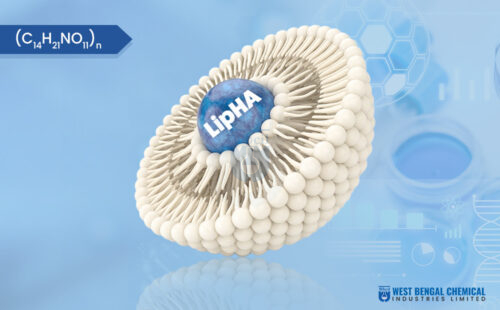
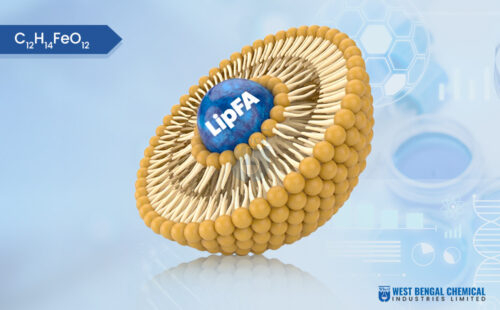
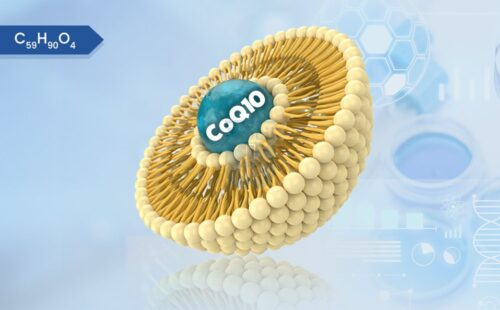
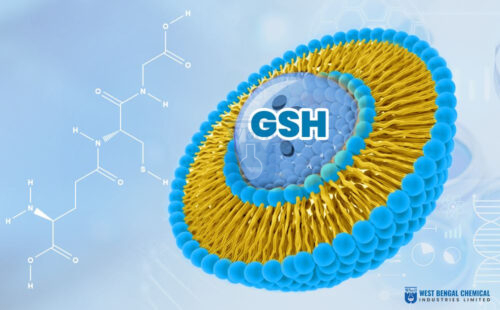
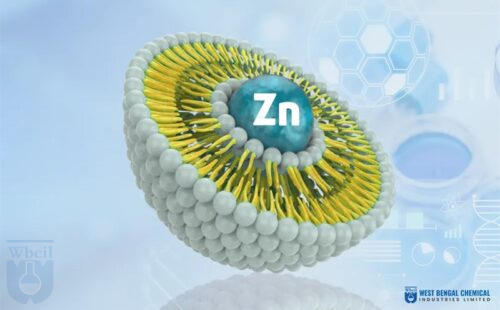
A liposome is a spherical vesicle composed of one or more phospholipid bilayers — essentially, a tiny bubble made of the same material as a cell membrane. This structural similarity to biological membranes is not incidental. It is the entire point.
When an API is encapsulated inside a liposome, it gains extraordinary protective capabilities. The lipid bilayer shields the drug from gastric acid. It evades enzymatic degradation in the gut. Because liposomes fuse naturally with cell membranes, they can bypass the first-pass effect — the liver’s process of metabolizing orally administered drugs before they reach systemic circulation. And they can be engineered to target specific tissues, releasing their cargo where it is most needed.
WBCIL’s Liposomal Precision: 100-200nm Where It Matters
WBCIL’s liposomal manufacturing process achieves particle sizes in the 100-200nm range — a specification that is not arbitrary. At this scale, liposomes are small enough to be internalized by cells via endocytosis, yet large enough to encapsulate meaningful drug payloads. The company’s quality systems maintain particle size distribution below 300nm, with polydispersity index (PDI) values that reflect genuine nanoscale uniformity.
This level of precision requires not just equipment, but deep formulation expertise: selecting the right phospholipid composition, controlling the hydration and extrusion processes, and maintaining stability through the supply chain. WBCIL has built this expertise over years of R&D investment — and protected it with intellectual property.
WBCIL Credentials at a Glance
✓ 60+ Years of Pharmaceutical Manufacturing Heritage
✓ 16+ Granted API Patents
✓ WHO-GMP Certified Manufacturing Facilities
✓ Exports to 75+ Countries Across 6 Continents
✓ ISO-Certified Quality Management Systems
✓ DC Grades, Pellets, and Liposomal Technology Under One Roof
Global Reach by WBCIL: 75+ Countries and Counting
WBCIL’s transformation is not purely technical — it is commercial and geographic. The company today exports to more than 75 countries, supplying pharmaceutical manufacturers, nutraceutical brands, and formulation companies across Europe, North America, Southeast Asia, the Middle East, and Africa.
This global footprint is built on more than price competitiveness. It reflects trust — trust earned through consistent quality, regulatory compliance, and a track record of delivering complex, technically demanding APIs reliably at scale. When a European nutraceutical manufacturer sources liposomal iron from WBCIL, they are not just buying a raw material. They are buying 60 years of hard-won pharmaceutical expertise.
Conclusion: The Company That Engineers Delivery
The story of WBCIL is, at its heart, a story about refusing to accept limitation. Where the industry saw hygroscopic powders and poor compliance as inevitable, WBCIL saw an engineering problem waiting for a solution. Where contract manufacturers stopped at synthesis, WBCIL pushed into the physics and biology of delivery itself.
Today, that journey has produced a company uniquely positioned at the intersection of pharmaceutical chemistry and nanomedicine — with the patents, certifications, and global relationships to prove it.
From the DC grades that streamline your tablet production line, to the pellet systems that improve your patients’ GI experience, to the liposomal platforms that unlock bioavailability your conventional formulations cannot achieve — WBCIL does not sell you ingredients. It sells you outcomes.
That is what pharma manufacturing excellence looks like, built over six decades and pointing firmly toward the next sixty.
Partner with WBCIL: Global B2B Inquiries Welcome
Connect with Our Team
Are you a pharmaceutical formulator, nutraceutical brand, or API distributor looking for a reliable, innovative, and WHO-GMP certified manufacturing partner?
WBCIL welcomes inquiries from across the globe for:
- DC Grade APIs and mineral salts for tablet manufacturing
- Pellet-based sustained and controlled release systems
- Liposomal encapsulation for enhanced bioavailability
- Custom API synthesis and contract manufacturing
- Private label formulation development
Contact WBCIL’s International Business Division:
Export Inquiries: wbcil@wbcil.com
- https://pmc.ncbi.nlm.nih.gov/articles/PMC8879473/
- https://www.tandfonline.com/doi/full/10.1080/10717544.2016.1177136
- https://www.mdpi.com/2305-7084/9/3/56
- https://pmc.ncbi.nlm.nih.gov/articles/PMC12298344/
- https://pubs.acs.org/doi/10.1021/acs.chemrev.5b00046
- https://www.americanpharmaceuticalreview.com/Featured-Articles/581695-Leveraging-Direct-Compression-Technology-to-Improve-Tableting-Efficiency/
- https://pmc.ncbi.nlm.nih.gov/articles/PMC8105518/
- https://www.mdpi.com/2227-9717/9/2/267
- https://www.pharmtech.com/view/evaluation-and-characteristics-new-direct-compression-performance-excipient
- https://www.mdpi.com/1999-4923/10/4/176
- https://www.pharmtech.com/view/multiunit-particulate-systems-current-drug-delivery-technology
- https://ijpsr.com/bft-article/a-review-of-pellets-and-pelletization-process-a-multiparticulate-drug-delivery-system/
- https://pubmed.ncbi.nlm.nih.gov/19405553/
- https://pmc.ncbi.nlm.nih.gov/articles/PMC4678908/
- https://pubmed.ncbi.nlm.nih.gov/25395392/
WBCIL’s DC Grade minerals are manufactured at the particle level for optimal flowability, compressibility, and low hygroscopicity. Unlike standard pharmaceutical-grade powders that require wet granulation before tableting, DC Grades can be directly blended and compressed.
Yes, WBCIL holds WHO-GMP certification for its manufacturing facilities. Our APIs are qualified and accepted across regulated and semi-regulated markets including the EU, US, MENA region, South-eastern countries. The company maintains comprehensive dossiers including CoA, CoO, DMF support documents, and stability data to facilitate smooth regulatory submissions for its B2B partners globally.
Absolutely. WBCIL’s R&D team collaborates with B2B partners on custom formulation development — whether that means engineering a specific pellet coating profile for your sustained-release capsule, developing a liposomal encapsulation for a novel API, or creating a DC Grade form of a mineral salt not currently in the standard portfolio. With 16+ patents already in place, WBCIL has the intellectual and technical infrastructure to support product development from concept through clinical-grade production.
Minimum order quanity varies by product and formulation complexity. WBCIL’s international business team works flexibly with partners — from specialty formulators requiring small development batches to large-scale distributors sourcing commercial volumes. We encourage prospective partners to contact the export division directly at exports@wbcil.com with their specific requirements for a tailored commercial proposal.