Beyond Painkillers: Magnesium Pidolate for Migraine Pathways
Migraine remains one of the leading neurological causes of disability and productivity loss worldwide. Many patients continue to experience recurrent attacks despite standard acute therapies, which underscores the need for preventive strategies grounded in pathophysiology. Scientific literature consistently links neuronal magnesium imbalance with cortical hyperexcitability and trigeminovascular activation.
Within this context, magnesium pidolate for migraine has gained clinical attention as a targeted approach to restoring central magnesium homeostasis. In this blog, the clinical rationale, mechanistic foundations, formulation science, and sourcing considerations are examined through an evidence-based lens.
Key Takeaways:
- Migraine involves documented intracellular magnesium deficits that affect NMDA receptor function and neurovascular signalling pathways.
- Organic salts such as magnesium pidolate demonstrate favourable systemic absorption and central availability compared with several inorganic forms.
- Clinical evidence supports structured dosing, defined safety parameters, and indication-specific formulation positioning in preventive neurology.Quick answer: Magnesium pidolate supports central magnesium correction and offers evidence-backed positioning in migraine prophylaxis development.
Migraine as a Neurological Magnesium Deficiency
Migraine represents a measurable neuronal magnesium deficit rather than isolated vascular pain, which carries direct implications for formulation science in India.
Here are some of the considerations that make it a characteristic condition for magnesium deficiency:
- Migraine ranks as the second-highest cause of disability worldwide for adults in general populations, based on global disease burden data [1].
- The global prevalence is about 14%, affecting 1.16 billion people, and India reports similarly high burden estimates [2].
- Controlled studies show that migraine patients have significantly lower serum magnesium levels than healthy controls, e.g., 1.849±0.135 mmol/L vs 2.09±0.20 mmol/L [3].
- Measures of ionised magnesium in blood reflect true deficiency in up to 50% of migraine patients during acute attacks [4].
- Standard oral magnesium salts often fail to correct neuronal magnesium levels due to low systemic absorption and limited cellular penetration. Clinical data show oral magnesium often reduces frequency and intensity by 22 to 43% in trials, but does not guarantee effective neuronal repletion [5].
Also read: What Is the Best Form of Magnesium? Glycinate, Citrate, or Oxide?
Magnesium Pidolate for Migraine: Mechanism of Action
The magnesium pidolate mechanism of action centres on improved central nervous system delivery and restoration of neuronal magnesium balance in migraine pathophysiology.
Here’s a closer look at the mechanism of action for magnesium pidolate for migraine:
- The blood–brain barrier acts as a selective endothelial filter, restricting the passive entry of many inorganic magnesium salts into neural tissue.
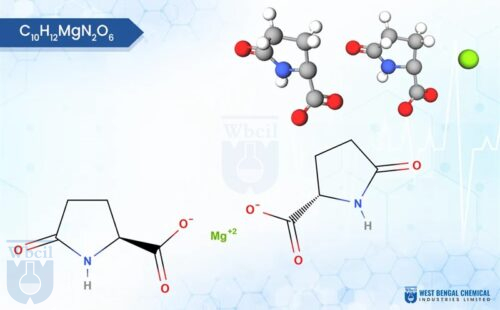
- Pidolic acid, also known as pyroglutamic acid, is a naturally occurring cerebral metabolite which supports Pidolic acid blood-brain barrier penetration through recognised amino acid transport pathways.
- Preclinical tissue and animal observations indicate that magnesium pidolate demonstrates modestly superior central uptake compared with several conventional magnesium salts.
- Enhanced intracellular availability supports stabilisation of NMDA receptor activity, regulation of calcium influx, and modulation of neurovascular signalling linked to migraine initiation.
- Organic magnesium salts such as pidolate generally show better systemic absorption and gastrointestinal tolerance than poorly soluble inorganic salts, which supports more reliable neuronal correction.
- For pharmaceutical formulators, this central transport advantage explains the growing interest in liquid oral magnesium pidolate systems for paediatric and neurological indications where bioavailability and compliance remain critical.
Magnesium salt selection influences intracellular delivery, clinical positioning, and differentiation within migraine prophylaxis portfolios.
Blood–Brain Barrier Penetration: The Pidolic Acid Advantage
Clinical data on migraine prophylaxis with magnesium salts support the targeted use of organic forms when central uptake is relevant.
- The Italian guideline on primary headache lists magnesium supplementation as a preventive option, particularly in menstrual migraine, supported by a reduction in headache frequency and premenstrual symptoms with magnesium treatment.
- In a controlled pediatric trial, 2.25 g magnesium pidolate twice daily for three months reduced headache days by approximately 69.9 %, decreased analgesic use by 65.4 % and improved disability scores by 75.7 % in young patients with primary headache [6].
- Clinical evaluations of magnesium demonstrate overall efficacy in migraine prevention, with high-bioavailability salts showing intracellular penetration, supporting their prophylactic use.
- Dosage frameworks for adults often reference daily magnesium provision in migraine trials that normalise serum levels within weeks, which informs formulation design for magnesium pidolate for migraine portfolios and pediatric dosing by weight [6].
- Safety profiles across studies show favourable tolerability, with mild gastrointestinal effects reported; significant adverse events or treatment discontinuations are uncommon with magnesium.
Also read: Top 5 FAQs on Magnesium Pidolate: Your Complete Guide.
Clinical Evidence in Chronic Migraine Management
Formulation strategy determines whether clinical evidence translates into consistent therapeutic performance, particularly in neurological indications where systemic and intracellular delivery matter.
Rationale for Liquid Oral Solutions
Liquid oral solutions reduce disintegration delays associated with compressed tablets and improve systemic availability. This format benefits paediatric and geriatric patients who face difficulty with solid dosage forms. Compared with several inorganic salts and certain chelated magnesium variants, pidolate demonstrates reliable systemic absorption in solution form. For migraine-focused magnesium supplements, predictable absorption supports consistent prophylactic exposure.
Bioavailability and Absorption Considerations
Preclinical comparative models indicate that organic magnesium salts show higher absorption than inorganic forms. Pidolate and gluconate display favourable urinary magnesium excretion patterns, which reflect improved systemic uptake. While chelated magnesium forms also offer absorption benefits, salt structure influences intracellular delivery and neurological targeting.
Stability and Physicochemical Profile
Magnesium pidolate appears as an amorphous white powder with favourable flow properties and minimal clumping under controlled storage. The compound exhibits moderate hygroscopicity, requiring moisture-controlled packaging systems. Oral solutions remain stable within controlled pH ranges when compatible excipients are selected.
Pharmacopeial and Regulatory Requirements for Indian Formulators
Indian pharmaceutical manufacturers must verify compliance with IP, BP, EP, or equivalent pharmacopeial standards prior to procurement. Each batch should include a Certificate of Analysis, MSDS, GMP certification, and, where applicable, export documentation such as COPP or Written Confirmation. Regulatory readiness directly influences dossier acceptance and market access.

Formulation Considerations: Stability, Absorption, and Delivery
Effective product development requires formulation precision that preserves central bioavailability, ensures batch reproducibility, and supports scale-up from pilot to commercial manufacturing.
- Liquid oral formats support flexible dosing and suit paediatric migraine protocols where tablets present compliance challenges.
- Organic salts exhibit higher fractional absorption than inorganic oxide forms, supporting sustained intracellular magnesium pidolate availability for migraine.
- Controlled moisture limits and buffered pH systems protect chemical stability in oral solutions across a defined shelf life.
- Defined particle size distribution and flow properties ensure blend uniformity in sachets, dry syrups, and dispersible formats.
- Portfolio differentiation against standard magnesium supplements or chelated magnesium products depends on validated stability data and indication-focused application and technology expertise.
Why Source Magnesium Pidolate API from WBCIL
WBCIL brings over six decades of manufacturing experience in mineral APIs and fine chemicals, supported by WHO-GMP, ISO, and GLP-compliant facilities in India. The company offers pharmacopeial-grade WBCIL’s Magnesium Pidolate with validated quality control systems, documented specifications, and technical support suitable for regulated and export markets.
As part of the broader WBCIL products portfolio, magnesium pidolate is backed by structured documentation, consistent batch quality, and application-focused expertise aligned with pharmaceutical and nutraceutical development needs.
Final Thoughts
Migraine prevention requires correction of neuronal biochemical imbalance rather than isolated symptom suppression. Research indicates that magnesium repletion can help stabilise cortical excitability and may reduce attack frequency in selected populations. Within this framework, magnesium pidolate for migraine represents a rational formulation choice, as the salt form influences intracellular availability and therapeutic positioning.
Careful evaluation of bioavailability data, stability parameters, and documented safety outcomes remains essential before advancing development pathways. Manufacturers with established mineral expertise, such as WBCIL, provide structured quality systems that support compliant and scientifically grounded formulation strategies.

- Migraine remains second among the world’s causes of disability, and first among young women: findings from GBD2019
- The Global Burden of Migraine: A 30-Year Trend Review and Future Projections by Age, Sex, Country, and Region
- Serum Magnesium Levels During the Ictal and Interictal Phase in Patients of Migraine: A Prospective Observational Study
- Magnesium in headache
- Magnesium and Migraine
- Magnesium as a preventive treatment for paediatric episodic tension-type headache: results at 1-year follow-up
How magnesium pidolate crosses the blood-brain barrier relates to its organic salt structure. Pidolic acid, a naturally occurring brain metabolite, supports transport through amino acid pathways at the endothelial interface. This may enhance central availability, which explains growing interest in magnesium pidolate for migraine prevention.
The role of exogenous magnesium in blocking migraine pathways includes modulation of NMDA receptors, regulation of calcium influx, and stabilisation of trigeminovascular signalling. Magnesium deficiency increases neuronal excitability. Clinical research supports magnesium pidolate for migraine as a preventive approach aimed at restoring physiological balance.
Magnesium pidolate dosage for chronic migraine management varies across clinical studies and depends on age and tolerance. Published trials describe structured daily dosing over defined treatment periods. Any regimen involving magnesium pidolate for migraine should align with medical supervision and documented clinical evidence.
Formulating liquid magnesium pidolate for rapid absorption requires pH control, moisture protection, and excipient compatibility. Solution formats allow flexible dosing and reduce reliance on tablet disintegration. These properties support the positioning of magnesium pidolate for migraine within preventive neurology portfolios.
Magnesium pidolate absorption rate vs bisglycinate depends on formulation context, as both organic salts demonstrate favourable systemic uptake compared with inorganic oxide. The stability of magnesium pidolate in oral solutions depends on controlled pH and humidity. Proper formulation ensures reproducible dosing performance in magnesium pidolate for migraine applications.