Chasing the Sun Chariot: Why Vitamin D Needs Magnesium to ‘Drive’ Your Health
Let’s start with Greek mythology today. Helios, God of war drove the chariot of the sun across the sky, bringing light and life to the earth. We love the morning rays, and swallow cholecalciferol capsules by the millions, hoping to banish fatigue and fractures.Vitamin D is that captured sunlight, a potent hormone precursor responsible for skeletal integrity, immune defence, and mood regulation. We chase this “sun nutrient” relentlessly.
But here is the uncomfortable truth facing the nutraceutical industry today: for a vast number of patients, the chariot is stuck. Despite high-dose supplementation, Vitamin D levels often remain stubbornly low, or worse, calcium accumulates in the arteries instead of the bones. Why? Because a chariot needs wheels to move. In the biochemical universe, Magnesium for Vitamin D acts as those wheels. For decades, the spotlight has been exclusively on the “Sunshine Vitamin.” Pharmaceutical formulators and clinicians are now waking up to a critical biochemical reality: Vitamin D is biologically inert without magnesium.
Key Takeaways:
- Activation is Impossible Without It: Vitamin D remains biologically inert without magnesium because the enzymes in the liver and kidneys required to convert it into its active hormone form are magnesium-dependent.
- Prevents the “Calcium Paradox”: Magnesium acts as a safety mechanism that guides calcium into the bones rather than letting it deposit in soft tissues like arteries, reducing the risk of calcification.
- Bioavailability Matters: Formulating with high-purity organic salts like WBCIL’s Magnesium Glycinate ensures the efficient absorption needed to fuel Vitamin D metabolism, unlike poorly absorbed generic oxides.

The Dormant Hormone: Why Vitamin D is Not Enough
To understand why you need Magnesium for Vitamin D, we must first look at what happens when you swallow a Vitamin D3 (cholecalciferol) capsule.
Many consumers assume that Vitamin D enters the body ready to work. It does not. Cholecalciferol is merely a raw material—a pre-prohormone. It has no biological activity of its own. To become the potent steroid hormone that protects bones and fights infection (Calcitriol), it must undergo a rigorous two-step transformation.
This is where the engine often stalls.
The journey from the skin (or the gut) to the cell nucleus is paved with enzymes. These enzymes are the workers that convert the inactive raw material into the active medicine. And every single one of these key enzymes has a non-negotiable requirement: they are magnesium-dependent.
Without adequate magnesium, Vitamin D is like a car with a full tank of gas but no spark plug. It sits in the liver and fat tissue, stored but useless. This explains the “Vitamin D Resistance” phenomenon seen in clinics worldwide, where patients take massive doses of D3 but see no improvement in their blood levels. They aren’t lacking Vitamin D; they are lacking the Magnesium for Vitamin D activation.
The Biochemical Pathway of Magnesium-Dependent Vitamin D Metabolism
Let’s get technical for a moment to understand the role of Magnesium in Cholecalciferol synthesis. The dependence on magnesium occurs at three critical checkpoints in the body.
Checkpoint 1: The Liver (25-Hydroxylation)
When Vitamin D3 enters the bloodstream, it travels to the liver. Here, an enzyme called CYP2R1 (a cytochrome P450 hydroxylase) must convert cholecalciferol into 25-hydroxyvitamin D [25(OH)D]. This is the storage form of the vitamin, and it’s what doctors measure in blood tests.
Here is the catch: CYP2R1 is a magnesium-dependent enzyme. If magnesium levels are low, this conversion slows down. You can flood the system with oral Cholecalciferol, but the liver cannot process it efficiently.
This is the first reason why Magnesium for Vitamin D is essential.
Checkpoint 2: The Transport (Vitamin D Binding Protein)
Once converted into 25(OH)D, the molecule needs a ride. It is hydrophobic (hates water) and cannot float through the blood alone. It must attach to a carrier called the Vitamin D Binding Protein (VDBP).
Research suggests that the binding capacity of VDBP is influenced by magnesium status. Adequate magnesium ensures the protein is in the correct shape to transport the vitamin safely to the kidneys. Without it, the vitamin may be degraded or excreted before it ever reaches its destination.
Checkpoint 3: The Kidney (1-Alpha-Hydroxylation)
This is the “activation” step. In the kidneys, another enzyme, CYP27B1 (1-alpha-hydroxylase), performs the final magic trick. It turns the storage form [25(OH)D] into 1,25-dihydroxyvitamin D [1,25(OH)2D], or Calcitriol. This is the active hormone that actually tells your gut to absorb calcium.
Just like the liver enzyme, the kidney enzyme is magnesium-dependent. This makes Magnesium co-factor for Vitamin D activation the absolute rate-limiting step in the entire process. Without magnesium, the kidney cannot flip the switch.
The Calcium Paradox: Why Magnesium Deficiency is Dangerous
The relationship between these nutrients is often described as the synergy between Magnesium and Vitamin D3, but it is also a safety mechanism.
One of the primary jobs of activated Vitamin D is to increase calcium absorption from the diet. When you take Vitamin D, your body pulls more calcium into the blood. But Vitamin D doesn’t fully control where that calcium goes once it’s absorbed.
That is magnesium’s job.
Magnesium stimulates the hormone Calcitonin, which draws calcium out of the blood and into the bones and teeth. Simultaneously, magnesium suppresses the Parathyroid Hormone (PTH), which would otherwise pull calcium out of the bones.
What happens if you have high Vitamin D and low Magnesium?
Calcification: Without magnesium to guide it to the bone, calcium floats freely in the blood. It can deposit in soft tissues, leading to kidney stones, heel spurs, and hardening of the arteries (atherosclerosis).
Bone Loss: Ironically, high Vitamin D without magnesium can weaken bones. By increasing calcium demand without the magnesium “glue” to form the bone matrix, the structure becomes brittle.
This is why we ask: Why do Vitamin D supplements require magnesium co-supplementation? It is to prevent the “Calcium Paradox”—where you have plenty of calcium, but it is rotting your arteries instead of building your skeleton.
The Silent Epidemic: Are We Missing the Magnesium?
If Magnesium for Vitamin D is so critical, why isn’t it standard in every prescription? The answer lies in the “Silent Epidemic.”
Modern agriculture has stripped soil of magnesium. Processed diets rich in refined grains and sugar further deplete our stores. It is estimated that nearly 50% of the population consumes less than the recommended daily allowance of magnesium.
Furthermore, taking Vitamin D actually uses up your body’s magnesium reserves. Because the enzymes described above run on magnesium, high-dose Vitamin D therapy acts like a metabolic vacuum, sucking up available magnesium to fuel the activation process.
This leads to a vicious cycle:
Patient is low in Vitamin D.
Doctor prescribes high-dose Vitamin D.
The sudden influx of Vitamin D consumes the patient’s remaining magnesium.
Magnesium deficiency precipitates symptoms like leg cramps, palpitations, and anxiety.
The Vitamin D stops working because there is no magnesium left to activate it.
This dynamic answers the question: How does magnesium deficiency affect Vitamin D absorption? It doesn’t just stop absorption; it creates a functional deficiency where the vitamin is present but paralyzed.
Choosing the Right Vehicle: Bioavailable Magnesium APIs
For pharmaceutical and nutraceutical manufacturers, the challenge is not just acknowledging the need for Magnesium for Vitamin D, but selecting the right form of magnesium.
Magnesium is a reactive metal; it needs to be bound to a carrier molecule to be stable and absorbable. The “salt” you choose determines whether the magnesium enters the bloodstream or simply acts as an expensive laxative.
At West Bengal Chemical Industries Limited (WBCIL), we specialize in manufacturing high-purity Magnesium salts for pharmaceutical formulations. We understand that for the delicate enzymatic machinery of Vitamin D metabolism, you need high bioavailability.
1. Magnesium Oxide vs. Organic Salts
Many generic supplements use Magnesium Oxide. While it has a high elemental percentage, it is poorly absorbed (often as low as 4%). For the purpose of Magnesium for Vitamin D metabolism, this is inefficient. The body spends too much energy breaking it down, and most is lost.
2. The Superiority of Magnesium Glycinate
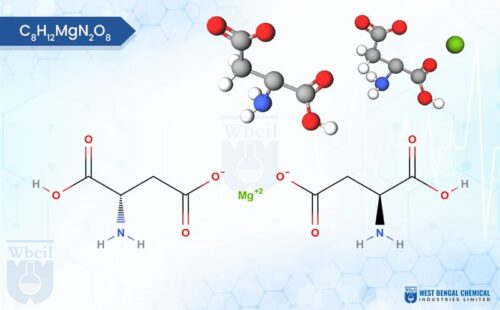
WBCIL Magnesium Aspartate and Glycinate APIs represent the gold standard for bioavailability.
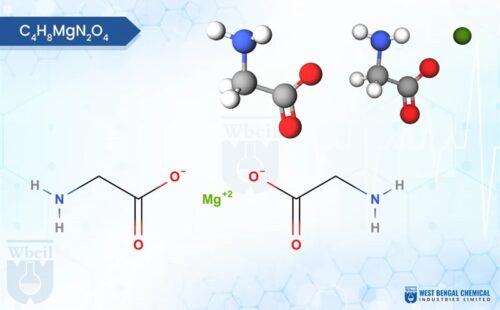
- Magnesium Bisglycinate: Here, magnesium is chelated to two glycine amino acids. This structure protects the magnesium from stomach acid and allows it to pass through the intestinal wall using amino acid channels, avoiding the competition with other minerals. It is gentle on the stomach and highly effective for raising serum magnesium levels.
- Magnesium Aspartate: Bound to aspartic acid, this form plays a dual role in cellular energy (Krebs cycle) and bioavailability.
When asking what are the best magnesium salts for Vitamin D activation?, the answer invariably points toward these organic chelates. They deliver the magnesium ion directly to the liver and kidney tissues where the CYP enzymes are waiting.WBCIL: Powering the “Sun Chariot” with Purity
In the world of B2B pharmaceuticals, purity is not a luxury; it is a safety mandate.
The bioavailable Magnesium API for bone health must be free from heavy metals and impurities. Low-grade magnesium salts can carry contaminants that interfere with the very enzymes we are trying to support.
WBCIL stands at the forefront of this technology. Our Magnesium Aspartate and Glycinate APIs are manufactured under strict Good Manufacturing Practices (GMP). We control the synthesis to ensure that the chelation is genuine—meaning the magnesium is truly bound to the organic molecule, not just dry-blended.
Why formulate with WBCIL Magnesium?
- Consistency: WBCIL team ensures uniform particle size and density, crucial for encapsulation and tableting.
- Solubility: Our organic salts dissolve effectively in the physiological pH range, ensuring the magnesium is released exactly where it is needed for Magnesium for Vitamin D synergy.
- Regulatory Compliance: We are WHO GMP certified API manufacturing company in India. Our APIs meet the rigorous standards required for pharmaceutical applications, ensuring your final product is both safe and efficacious.
Clinical Implications: The New Standard of Care
The future belongs to co-supplementation.
For formulators developing products for osteoporosis, immune support, or cardiovascular health, simply increasing the dosage of Cholecalciferol is no longer the smartest strategy. It leads to diminishing returns and potential toxicity.
Instead, the smart formulation strategy integrates Magnesium for Vitamin D. By adding a high-quality magnesium chelate to the formulation, you allow the consumer to achieve better Vitamin D status with lower, safer doses of the vitamin itself. You unlock the “storage” D and turn it into “active” D.
This approach:
- Maximizes Efficacy: Ensures the Vitamin D actually works.
- Minimizes Side Effects: Reduces the risk of calcium deposits and magnesium-depletion cramps.
- Optimizes Bone Health: The Bioavailable Magnesium API for bone health works in concert with Vitamin D and Calcium to build a stronger matrix.
Conclusion: Reuniting the Team
We have spent too long viewing nutrients in isolation. The body does not work in silos; it works in symphonies. Vitamin D is the conductor, but magnesium is the orchestra. Without the orchestra, the conductor is just waving his arms in silence.
Magnesium for Vitamin D is not just an “add-on”; it is a biochemical necessity. It is the fuel for the enzymes, the transporter in the blood, and the navigator for calcium in the bones.
As we look to the future of nutraceuticals, the focus must shift from simply “correcting deficiency” to “restoring metabolism.” This means acknowledging Why is magnesium necessary for Vitamin D to be effective? and acting on it.
For pharmaceutical companies, this presents an opportunity to innovate. By utilizing WBCIL Magnesium Aspartate and Glycinate APIs, you can create formulations that honor the biochemical pathway of magnesium-dependent Vitamin D metabolism. You can offer products that don’t just chase the sun, but actually catch it.
Let us stop driving the chariot on flat tires. It’s time to add the magnesium wheels and let the sun drive your health forward.

WBCIL’s high-bioavailability Magnesium Bisglycinate ensures the liver and kidney enzymes receive the co-factors needed to activate Vitamin D, overcoming resistance caused by malabsorption. This superior uptake ensures the supplement actually works, unlike formulations using generic oxides.
Enzymatic pathways are sensitive to contaminants, so WBCIL manufactures under strict WHO GMP guidelines to guarantee ultra-low heavy metal levels. This pharmaceutical-grade purity ensures the magnesium acts as a pure metabolic catalyst without toxic interference.
Magnesium Bisglycinate and Aspartate are ideal due to their excellent solubility and consistent particle size, which allow for smoother processing than gritty oxides. These organic chelates ensure stable encapsulation and superior patient tolerance.
Integrating WBCIL’s magnesium directs absorbed calcium into the bone matrix rather than soft tissues, preventing arterial calcification. This allows brands to market Vitamin D products that are effective for bones and safe for the heart.
WBCIL ensures seamless scaling through strict batch-to-batch consistency in density and particle size, crucial for high-speed manufacturing lines. We also provide comprehensive regulatory documentation to support the stability of complex mineral-vitamin formulations.