
Ferric Ammonium Citrate for Cyanotype Printing: A Guide
Cyanotype printing is one of the oldest photographic processes still in active use, invented by Sir John Herschel in 1842 using only two iron-based chemicals, UV light, and water. The process looks simple until results start varying between batches for no obvious reason. Research confirms that the sensitiser requires ammonium ferric citrate at 0.6-0.7 mol/dm³ Fe³⁺ and potassium ferricyanide at 0.3 mol/dm³ to produce a stable Prussian blue image on the substrate [1]. Most guides focus on the technique and skip the ingredient question entirely. For artists, educators and kit manufacturers alike, understanding what ferric ammonium citrate is and why grade matters separates consistent results from frustrating ones.
In this blog, you will learn how cyanotype printing works, what the chemicals do, how to prepare the formula and what to look for when sourcing ferric ammonium citrate at any scale.
Key Takeaways:
- Cyanotype printing uses ferric ammonium citrate and potassium ferricyanide to produce a permanent Prussian blue image when exposed to UV light.
- The green grade of ferric ammonium citrate is specified in every traditional cyanotype formula because of its tighter iron-content range and higher photosensitivity.
- Iron content, ammonium content and citrate as citric acid must all be confirmed per batch for consistent cyanotype results.
Quick Answer: Cyanotype printing uses ferric ammonium citrate and potassium ferricyanide mixed in equal parts to form a UV-sensitive solution that produces a Prussian blue image on paper or fabric.

What Is Cyanotype Printing
Cyanotype printing is a contact printing process that uses the photosensitivity of iron salts to form a permanent image on paper or fabric. When UV light hits the sensitised surface, ferric ions reduce to ferrous ions. Those ferrous ions react with potassium ferricyanide to produce ferric ferrocyanide, the insoluble pigment that gives cyanotype the Prussian blue colour.
What makes the process distinctive is that the image forms visibly during exposure. The coated surface shifts from yellow-green to grey-blue as the chemistry progresses. Cyanotype is sensitive to UV radiation in the 300-400 nm range [2], so the sensitised surface must be coated and dried away from fluorescent and LED light sources before exposure. Unexposed areas remain soluble and wash away in cold water, leaving a sharp blue image on a white background, fixed by a simple water rinse.
What Are the Chemicals Used in Cyanotype Printing
The cyanotype technique relies on two iron-based chemicals mixed immediately before use and applied as a combined sensitiser to the chosen surface.
Ferric Ammonium Citrate
Ferric ammonium citrate is the light-sensitive component in the cyanotype formula. It is available in two grades: green and brown. Ferric ammonium citrate green is specified in every traditional cyanotype formula because it has a tighter iron content range and greater photosensitivity than the brown grade.
When UV light strikes the coated surface, ferric ammonium citrate undergoes photochemical reduction. Ferric ions convert to ferrous ions, making them available to react with the second chemical. Dissolved in distilled water, it forms a yellow-green solution that must be prepared and stored away from UV and daylight. The dry powder absorbs moisture from air, so sealed storage between uses is essential.
Sourcing the right grade of ferric ammonium citrate for cyanotype printing directly affects sensitiser performance and print consistency across batches.
Potassium Ferricyanide
Potassium ferricyanide is the second component, dissolved separately to make Solution B. It appears as a bright red crystalline powder that forms an orange-red solution in water. It is not photosensitive on its own. Its role is reactive: when ferrous ions are present after UV exposure, potassium ferricyanide reacts with them to form ferric ferrocyanide, the insoluble Prussian blue pigment that constitutes the cyanotype image.
It is stable in dry storage but must not be combined with acid. Store it separately from ferric ammonium citrate until you coat to prevent premature reaction.
The Cyanotype Formula and How to Prepare the Solution
The standard cyanotype formula uses two separate stock solutions that are mixed in equal parts immediately before coating. Preparing each solution correctly and keeping them separate until use determines the final sensitiser’s working life and sensitivity.
Step 1: Prepare Solution A
Dissolve 25g of ferric ammonium citrate in 100mL of distilled water at room temperature. Stir until fully dissolved and store in a dark glass bottle away from light.
Step 2: Prepare Solution B
Dissolve 10g of potassium ferricyanide in 100mL of distilled water separately. Transfer to a dark glass bottle and store away from Solution A until ready to coat.
Step 3: Mix the Cyanotype Solution
Combine equal volumes of Solution A and Solution B immediately before coating the surface. The mixed cyanotype solution is active and degrades within hours, so prepare only what you need for each session.
Step 4: Apply the Sensitiser
Apply the mixed solution to paper or fabric with a brush or coating rod in a room lit only by tungsten or incandescent light. Work quickly and evenly, as uneven application directly affects tonal consistency across the final print.
Step 5: Dry Before Exposure
Allow the coated surface to dry completely in the dark before exposure. Any residual moisture in the sensitiser layer accelerates premature chemical reaction and reduces the sharpness of the final image.
Step 6: Expose to UV Light
Place the dried, sensitised surface under direct sunlight or a UV lamp with the negative or object in direct contact. The coated surface shifts visibly from yellow-green to grey-blue during exposure, confirming the photochemical reaction is progressing.
Step 7: Wash and Fix
Rinse the exposed surface in cold running water until the yellow-green sensitiser clears completely from the unexposed areas. The Prussian blue image deepens and stabilises as the print dries in air.
Cyanotype Technique: Paper, Fabric and Surface Preparation
Surface choice determines how well the cyanotype solution penetrates, how evenly it dries and how much Prussian blue density the final print achieves.
- Paper Selection: Hot-pressed watercolour paper and cotton-rag paper absorb the sensitiser evenly and tolerate wet processing without distorting. Heavily buffered or alkaline papers neutralise the acidic cyanotype formula during washing, causing the Prussian blue image to fade or shift green before it stabilises.
- Fabric Preparation: Cotton, linen and silk accept the cyanotype solution well once pre-washed to remove sizing and fabric finishes. Unwashed fabric resists even sensitiser penetration, producing patchy Prussian blue density across the final print.
- Surface Porosity: The sensitiser must penetrate the upper fibre layer without saturating through. Over-saturated surfaces bleed the cyanotype formula laterally during drying, softening fine detail at the edges of the image area.
- Coating Environment: Apply the sensitiser only under tungsten light. Fluorescent and LED light sources have UV output to start activating the cyanotype solution before exposure begins.
- Drying Before Exposure: The coated surface must be fully dry before UV exposure. A damp sensitiser layer scatters light laterally during exposure, reducing image sharpness and tonal separation in the final print.
Why the Green Grade Is Specified in Every Cyanotype Formula
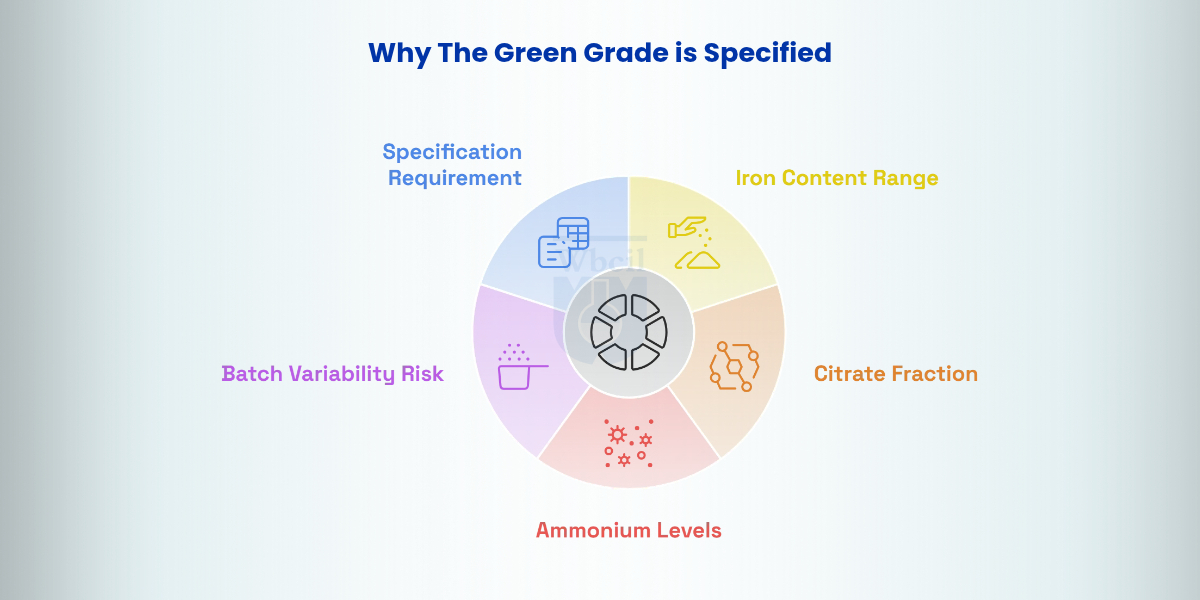
The green grade of ferric ammonium citrate reflects a specific chemical composition that determines sensitiser behaviour under UV exposure and Prussian blue consistency across a print.
- Iron Content Range: Green grade carries 14.5-16.5% iron by weight. This narrow range produces predictable Fe³⁺ to Fe²⁺ reduction under UV exposure, directly affecting print density and tonal scale.
- Citrate Fraction: Citrate (citric acid) accounts for 72-74% of the green grade composition. This keeps ferric iron in a stable, soluble coordination state before coating.
- Ammonium Levels: Ammonium content sits at 10–12%. This keeps sensitiser pH within the range required for clean ferric-ion coordination and consistent washout of unexposed areas.
- Batch Variability Risk: Iron content across commercial FAC sources ranges from 14% to 28%. A supplier whose green grade drifts outside specification delivers an inconsistent sensitiser that changes exposure requirements between batches.
- Specification Requirement: Grade name alone does not guarantee batch consistency. Locking iron content, ammonium content and citrate range in the purchase specification is the only reliable way to protect print reproducibility across production lots.
What Ferric Ammonium Citrate Manufacturers Must Provide
A ferric ammonium citrate manufacturer supplying the cyanotype market must provide documented composition per batch. Grade name without analytical data is not a supply specification.
- Lot-Specific CoA: Every shipment needs a certificate of analysis confirming iron content, ammonium content, citrate as citric acid and moisture against stated limits for that specific lot.
- GMP Certification: GMP certification confirms compositional limits are controlled through the manufacturing process itself, not corrected at release testing.
- Light-Safe Packaging: Bulk ferric ammonium citrate is hygroscopic and photosensitive. Supply must arrive in moisture-controlled, light-safe packaging to prevent composition drift before preparing the sensitiser.
- Stability Documentation: A stated shelf life without supporting stability data is unverifiable. Request accelerated and real-time stability data covering the specific packaging format supplied.
- Supply Consistency: Kit manufacturers and chemical distributors need a supplier who holds the same compositional specification across repeat orders, not just at initial qualification.
WBCIL manufactures ferric ammonium citrate in WHO-GMP-certified facilities in Kolkata and Dahej, with iron content, ammonium content, and citrate confirmed per batch. Supply reaches 75+ countries.
Final Thoughts
Cyanotype printing rewards precision at every stage, and that precision starts with the sensitiser ingredient. Confirm iron content, ammonium content and citrate as citric acid before accepting any batch of ferric ammonium citrate, regardless of grade labelling. Request lot-specific documentation rather than a generic certificate that covers multiple production runs. If results vary between batches despite consistent technique, start by checking the ingredient specification. Manufacturers supplying the cyanotype market at scale, including WBCIL, should provide full compositional data per shipment as a standard, not on request.

- Sentoku, S., Kurashina, M. and Kida, K. (2025). Observation of blue particles formed by photosensitizing reaction on paper fibres of cyanotypes. Photochem, [online] 5(3), p.18. doi:10.3390/photochem5030018.
- Turner J, Parisi AV, Downs N, Lynch M. From ultraviolet to Prussian blue: a spectral response for the cyanotype process and a safe educational activity to explain UV exposure for all ages. Photochemical and Photobiological Sciences. 2014.doi: 10.1039/c4pp00166d
Cyanotype printing uses ferric ammonium citrate and potassium ferricyanide mixed in equal parts. UV light reduces ferric ions to ferrous ions, which react with potassium ferricyanide to form insoluble Prussian blue.
The green grade has a narrower iron-content range and higher photosensitivity than the brown grade. It produces a longer tonal scale and more consistent Prussian blue density across the print.
25g ferric ammonium citrate in 100mL distilled water (Solution A). 10g potassium ferricyanide in 100mL distilled water (Solution B). Mix equal parts immediately before coating.
Yes. Cotton, linen and silk work well after pre-washing to remove sizing. The cyanotype solution must penetrate the upper fibre layer evenly for consistent Prussian blue density.
Cyanotype printing is used in fine art photography, botanical printing, textile design and educational settings. It was historically used for architectural blueprints and remains popular for contact printing and photograms.
