Why Vegan Yogurts are Switching to Calcium Gluconate?
Think about the last time you dug into a spoonful of dairy-free yogurt. Was it perfectly creamy, or did you find a gritty, chalky residue at the bottom? For many of us making the switch to a plant-based lifestyle, that “sandiness” is a dealbreaker. It’s a common frustration that stems from how we add minerals to dairy alternatives. However, the industry is witnessing a major shift. Food scientists are moving away from traditional mineral sources and toward a more sophisticated solution: Calcium Gluconate for food fortification.
At West Bengal Chemical Industries Limited (WBCIL), we’ve spent decades perfecting the art of mineral chemistry. We know that vegan yoghurt isn’t just about avoiding dairy; it’s about replicating the experience. That journey starts with choosing the right ingredients that don’t just add nutrition, but also enhance the final product’s character.
Key Takeaways
- Calcium Gluconate for food fortification is the gold standard for vegan yogurts because its high solubility prevents sedimentation and ensures a smooth, non-gritty texture.
- The Bioavailability of calcium gluconate is superior to inorganic sources, ensuring that consumers receive the full nutritional benefit of the plant-based dairy alternative.
- WBCIL is a premier Calcium Gluconate bulk manufacturer India, providing high-purity minerals that optimise the Impact of calcium salts on yogurt viscosity and stability.

The Creamy Revolution: Calcium fortification in vegan yoghurt. The demand for Calcium fortification in vegan yoghurt has never been higher.
As more people move away from cow’s milk, the “calcium gap” becomes a primary concern for bone health. But adding calcium to a plant-based base is technically difficult. Plant proteins, like those in almond, soy, or coconut, react differently to minerals than milk proteins do.
Why Plant-based dairy calcium sources matter?
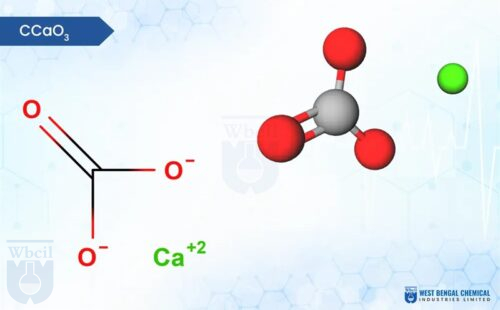
Traditionally, Plant-based dairy calcium sources relied heavily on calcium carbonate or tri-calcium phosphate. While these are cheap, they are essentially ground-up rocks. They are insoluble, meaning they don’t dissolve; they just “float” in the liquid. This is why you often have to shake your almond milk vigorously—the calcium has simply settled at the bottom.
The Shift to Organic Salts
By replacing calcium carbonate with calcium gluconate in dairy alternatives, manufacturers are choosing an “organic salt.” Unlike carbonate, calcium gluconate is highly soluble. It stays in the solution, ensuring that every spoonful of yoghurt contains exactly the same amount of nutrition without the need for constant stirring.
Achieving the “Clean Label”
Modern consumers look at the back of the pack. Using Calcium Gluconate for food fortification allows for a cleaner ingredient list. Because it integrates so well into the food matrix, you need fewer stabilisers and thickeners to keep the minerals from falling out of suspension.
Texture and Taste: Best calcium source for smooth texture in vegan yoghurt. If you are a B2B formulator, you know that texture is everything.
Calcium Gluconate for food fortification is widely regarded as the Best calcium source for smooth texture in vegan yoghurt. It provides a neutral flavour profile that doesn’t interfere with the delicate notes of vanilla, fruit, or the base’s natural nuttiness.
Improving the properties of fortified yoghurt. The properties of fortified yoghurt go beyond just taste.
The right mineral choice affects the “mouthfeel”—the way the yoghurt melts on your tongue. Calcium Gluconate for food fortification ensures that the yogurt remains homogeneous. You won’t find those annoying white specks or a gritty finish that ruins the indulgence of a high-end vegan dessert.
Understanding the Impact of calcium salts on yogurt viscosity and stability
Different minerals react with the thickening agents (like pectin or starch) used in vegan products. The Impact of calcium salts on yogurt viscosity and stability can be dramatic. Insoluble salts can make the yogurt too thick or cause “syneresis”—where the water separates from the gel. Calcium Gluconate for food fortification provides a stable ionic environment, keeping the yogurt thick, glossy, and stable throughout its shelf life.
WBCIL’s Calcium Gluconate specifications Quality starts with the specification.
At West Bengal Chemical Industries Limited, our WBCIL’s Calcium Gluconate specifications are designed for the ultra-precise needs of the food industry. We offer a high-purity, free-flowing powder that integrates seamlessly into liquid and semi-solid formulations, ensuring no lumps and 100% consistency.
Solving the Sediment Challenge-
How to prevent sedimentation in calcium-fortified plant milk?
One of the biggest headaches for dairy-alternative brands is “fallout.”
Learning How to prevent sedimentation in calcium-fortified plant milk is the key to consumer loyalty. If the calcium stays at the bottom of the carton or the yogurt cup, the consumer isn’t getting the health benefits they paid for.
The Physics of Suspension
Sedimentation happens because insoluble minerals are denser than the liquid they are in. By Replacing calcium carbonate with calcium gluconate in dairy alternatives, you remove the density problem. Since the gluconate dissolves into its ionic form, it becomes part of the liquid itself. It literally cannot sediment because it is no longer a solid particle.
Enhancing the Bioavailability of calcium gluconate
A mineral is only useful if your body can absorb it. The Bioavailability of calcium gluconate is consistently rated higher than inorganic sources like carbonate. Because it is an organic salt, the gut recognises and absorbs it more efficiently. This means that using Calcium Gluconate for food fortification doesn’t just make the yogurt better—it makes it healthier.
Calculating the Calcium gluconate dosage for daily value claims in vegan products To claim “High in Calcium” on your packaging, you need to hit specific targets. The Calcium gluconate dosage for daily value claims in vegan products must be calculated based on elemental calcium content. While you may need to add a slightly higher mass of gluconate compared to carbonate, the trade-off in quality and absorption is well worth it for premium brands.
Why Partner with WBCIL- leading Calcium Gluconate manufacturer India?
In the global supply chain, reliability is as important as chemistry. West Bengal Chemical Industries Limited stands as a leading Calcium Gluconate bulk manufacturer India, serving the world’s most demanding food brands.
Scaling for Success
As the plant-based market explodes, you need a partner that can scale with you. Our facilities are built for high-volume production without ever compromising on the WBCIL’s Calcium Gluconate specifications. Whether you are a startup or a global dairy giant, we provide the consistent quality needed for large-scale Calcium fortification in vegan yogurt.
Vertical Integration and Purity
What makes WBCIL different? We are a vertically integrated manufacturer. We control the process from raw material to finished API-grade and food-grade minerals. This means our Calcium Gluconate for food fortification is free from heavy metals and impurities that could affect the delicate properties of fortified yogurt.
A Trusted Legacy
For over 60 years, West Bengal Chemical Industries Limited has been at the forefront of mineral innovation. We are not just a supplier; we are an R&D partner. We help our clients understand the Impact of calcium salts on yogurt viscosity and stability, ensuring their final product is nothing short of perfect.
The Future of Fortification: Better Minerals, Better Yogurt
The “Brain Vitamin” and “Bone Mineral” era is here. Consumers are no longer satisfied with fortified foods that taste like chalk. They want luxury, they want plant-based, and they want high Bioavailability of calcium gluconate.
By embracing Calcium Gluconate for food fortification, the vegan dairy industry is finally shedding its “compromise” image. We are entering an era of silky, smooth, and highly nutritious dairy alternatives that rival their traditional counterparts in every way.
At West Bengal Chemical Industries Limited, we are proud to power this revolution. Our Calcium Gluconate for food fortification is the invisible hero behind the world’s favorite plant-based yogurts. We invite you to experience the difference that high-purity, Indian-manufactured minerals can make for your brand.

Yes! Our Calcium Gluconate for food fortification is produced through a purely mineral and fermentation-based process, making it 100% suitable for vegan and plant-based products.
The Bioavailability of calcium gluconate is higher because it is an organic acid salt. The body can break the bond and absorb the elemental calcium more easily than it can from the dense, inorganic structure of calcium carbonate.
No. One of the best properties of fortified yogurt when using this mineral is its neutral taste. It allows the natural flavors of the yogurt to shine through without the metallic or chalky aftertaste common in other Plant-based dairy calcium sources.
You must look at the elemental calcium content (typically around 9%). To meet a specific % of the Daily Value, you calculate the total mass of Calcium Gluconate for food fortification required to hit that elemental target per serving.
By Replacing calcium carbonate with calcium gluconate in dairy alternatives, you eliminate the particles that cause fallout. Our mineral dissolves completely, which is the most effective way of How to prevent sedimentation in calcium-fortified plant milk.
WBCIL’s Calcium Gluconate specifications include high purity (99%+), low heavy metal content, and a specific particle size that ensures it is the Best calcium source for smooth texture in vegan yogurt.