Zinc Ascorbate in Healing: Accelerated Wound Repair
The global burden of impaired wound healing remains a significant challenge for modern healthcare systems across all developed and developing nations. Chronic ulcers, post-surgical recovery, and pressure sores require advanced nutritional strategies to prevent infection and long-term disability within clinical populations. Traditional inorganic zinc salts often suffer from poor gastric tolerance and limited bioavailability during the most critical phases of tissue repair. Formulators now prioritise organic chelates, such as zinc ascorbate, to deliver dual nutrients for superior cellular uptake and faster recovery.
In this blog, we examine the clinical science and formulation benefits of zinc ascorbate for healing, providing insights for pharmaceutical decision-makers.
Click here to view the detailed product specifications for Zinc Ascorbate.
Key Takeaways:
- Zinc ascorbate combines a zinc ion with two ascorbate anions to offer superior organic bioavailability over traditional inorganic mineral salts.
- This dual-action compound supports every phase of tissue repair by facilitating collagen mRNA translation and the hydroxylation of the triple helix.
- Pharmaceutical procurement teams prioritise this chelate for its verified 99% purity and compliance with international WHO-GMP manufacturing quality standards.Quick Answer: Zinc ascorbate accelerates clinical recovery by supporting collagen synthesis, immune modulation, and rapid epithelialization across all phases of repair.
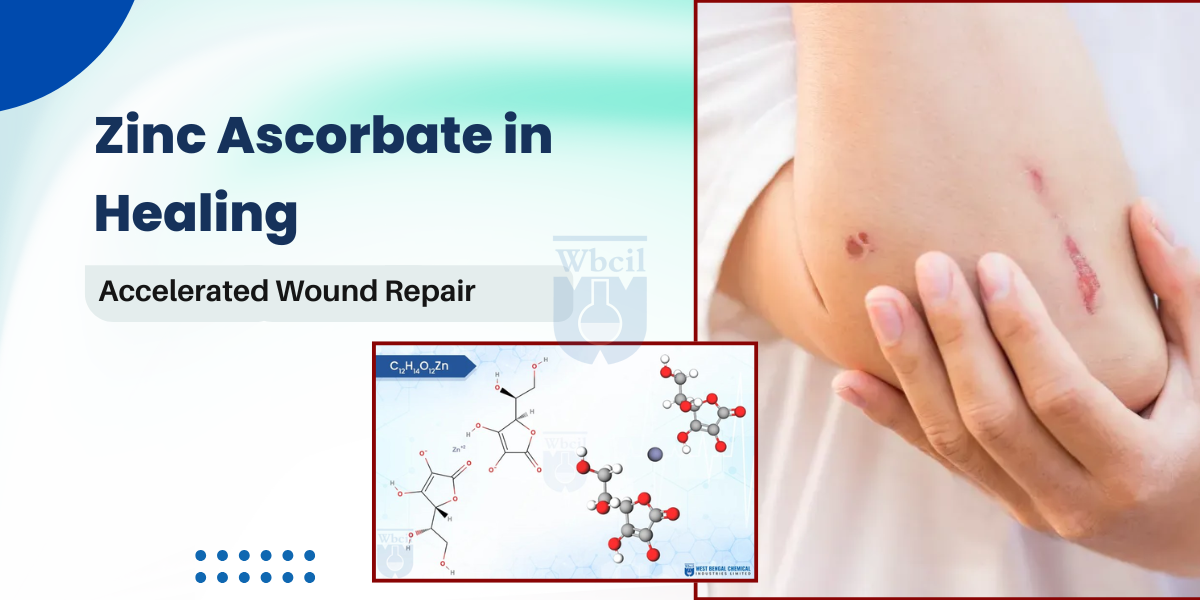
Zinc Ascorbate Roles in the Wound Healing Cascade
Zinc ascorbate in healing acts as a catalyst that drives the biological repair of damaged human tissue through dual-nutrient synergy. The chelate delivers both elemental zinc and ascorbic acid to cellular sites, thereby accelerating the natural transition from the inflammatory to the proliferative recovery stage.
- Haemostasis and Initial Inflammation Control: Zinc ions in the compound regulate early platelet aggregation and the release of essential growth factors, stabilising the wound site immediately. The mineral also modulates the inflammatory response by reducing pro-inflammatory cytokine levels, thereby preventing chronic tissue damage or delayed closure.
- Cellular Proliferation and Epithelialization: The ascorbate component serves as a vital electron donor, triggering rapid keratinocyte migration across the open wound surface. Research indicates that zinc further supports this phase by acting as a required cofactor for DNA polymerase and cellular protein synthesis.
- Enzymatic Support via Matrix Metalloproteinases: Zinc enables the function of matrix metalloproteinases, which remove damaged extracellular matrix debris during the early repair phases. A specific 2017 study highlights that zinc concentration in the wound margin increases by 15% to 20% during the peak of epithelialization [1].
- Collagen Synthesis and Structural Integrity: Ascorbic acid facilitates the hydroxylation of proline and lysine residues to ensure the triple-helix stability of newly formed collagen fibres. Without this specific nutrient interaction, the resulting tissue lacks the tensile strength necessary to withstand physical stress or prevent wound dehiscence.
- Oxidative Stress Reduction and Remodelling: Zinc ascorbate functions as a potent antioxidant, neutralising reactive oxygen species that often affect the final maturation of the wound. The protection allows for proper collagen cross-linking and reduces the risk of hypertrophic scarring during the long-term tissue remodelling phase.
Formulators choose zinc ascorbate for healing because this organic chelate offers superior absorption compared to traditional inorganic mineral salts.
Bioavailability Comparison: Zinc Ascorbate vs. Zinc Sulfate
Pharmaceutical formulators frequently evaluate various minerals to determine which chemical salt offers the best clinical outcome for patient recovery. While inorganic options remain common in large-scale production, zinc ascorbate for tissue repair offers a distinct advantage due to its unique molecular structure and absorption pathways.
The following data highlights the critical performance differences between these two compounds to help procurement teams make informed decisions for zinc ascorbate in healing applications.
| Feature | Zinc Ascorbate | Zinc Sulfate |
| Chemical Category | Organic Acid Chelate | Inorganic Mineral Salt |
| Elemental Zinc Content | Typically 15% to 18% with high purity | Approximately 22% to 23% in heptahydrate form |
| Intracellular Uptake | High ionophore activity increases cellular zinc more than other salts | Standard passive and active transport pathways across membranes |
| Fractional Absorption | Enhanced by sodium-ascorbate cotransporters (SVCT1/2) for dual-pathway entry | Ranges from 10% to 30%, depending on dietary phytate levels |
| Gastrointestinal Tolerance | Higher tolerance due to nearly neutral pH levels in the gut | Often causes nausea due to its acidic nature (pH 4.5) |
Also read: Zinc Citrate vs. Zinc Oxide: Why Absorption Rates Matter for APIs
Zinc Ascorbate Mechanisms in Collagen and Skin Repair
The biochemical factors in zinc ascorbate facilitate the rapid synthesis of structural proteins required for durable skin restoration. This dual-action compound serves as a critical substrate for the cellular machinery that builds the extracellular matrix during the final stages of tissue recovery.
Here is a comprehensive overview of the mechanism of action of zinc ascorbate in wound healing:
1. Fibroblast Activation and mRNA Translation
Zinc ions in these APIs stimulate dermal fibroblast proliferation, initiating the production of new connective tissue. These cells depend on zinc as a catalytic cofactor to enable the translation of messenger RNA into procollagen polypeptide chains. Research indicates that zinc deficiency can reduce DNA synthesis in these repair cells by over 50% [2].
2. Triple-Helix Stability Through Hydroxylation
Ascorbic acid acts as the mandatory electron donor for the enzymes prolyl-hydroxylase and lysyl-hydroxylase during collagen formation. This process adds hydroxyl groups to amino acids, ensuring that the collagen molecule adopts a stable triple-helix conformation. Without this specific chemical reaction, the resulting fibres remain thermally unstable and lack the strength to effectively close wounds.
3. Induction of Type I and Type III Collagen
This organic chelate promotes the specific expression of Type I and Type III collagen genes within the local wound environment. Studies show that ascorbate can increase the steady-state levels of procollagen mRNA by nearly eightfold in human skin cells [3]. Such an increase ensures that the body has sufficient raw materials to rebuild the dermis after a traumatic injury.
4. Cross-Linking and Tensile Strength
The maturation of the skin repair site requires the precise cross-linking of collagen fibres to provide long-term structural durability. Zinc-dependent enzymes facilitate these links, transforming a weak fibrin clot into a resilient scar that resists physical rupture. This enzymatic activity ensures the restored skin reaches approximately 80% of its original strength after several months of remodelling.
5. Antioxidant Protection for Dermal Integrity
High concentrations of ascorbate in the skin protect newly synthesised, delicate proteins from oxidative damage caused by reactive oxygen species. This protection prevents the premature degradation of the newly formed matrix by harmful free radicals during the inflammatory phase. A 2017 review notes that the skin contains up to 64 mg of vitamin C per 100 g of tissue, supporting these repair mechanisms [4].
Clinical data demonstrate that zinc ascorbate remains a cornerstone for the healing of compromised tissue after surgery.

Clinical Use: Post-Operative and Chronic Wound Recovery
Evidence suggests that the efficacy of zinc ascorbate in healing is greatest in patients with identified micronutrient deficiencies.
Healthcare providers must evaluate individual nutritional status to optimise the recovery of surgical sites and the management of persistent ulcers.
- Surgical Site Closure in Post-Operative Care: Oral supplementation with this chelate provides the necessary substrates to support rapid incision closure after major abdominal surgeries. Clinical data from hernia repair trials show that these nutrients can reduce the time to reach full wound tensile strength.
- Management of Chronic Venous Leg Ulcers: Patients with chronic venous insufficiency often exhibit low serum zinc levels, which can stall the normal tissue repair process. Targeted delivery of this organic compound helps to restart the stagnant inflammatory phase and promotes the growth of new granulation tissue.
- Recovery Protocols for Severe Burn Injuries: Paediatric burn patients require high doses of both zinc and ascorbate to meet the massive metabolic demands of skin regeneration. Research indicates that this combined therapy can reduce hospital stay duration by over 10% in some clinical cohorts [5].
- Pressure Ulcer Prevention and Treatment: Elderly patients in long-term care facilities benefit from this molecule’s dual-action support in preventing the development of deep pressure sores. The enhanced bioavailability of the ascorbate form ensures that therapeutic levels of zinc reach the dermal layers even with poor digestion.
- Evidence for Diabetic Foot Ulcer Support: Diabetes often impairs microcirculation and collagen cross-linking, both of which are required for healing small abrasions on the lower extremities. This nutrient combination addresses these specific metabolic deficits to lower the risk of infection and subsequent limb amputation in high-risk populations.
Also read: Why WBCIL’s Research Points to Liposomal Zinc as the Future.
Formulation Benefits for B2B Zinc Ascorbate Procurement
Pharmaceutical and nutraceutical manufacturers select specialised products for their high purity and structural stability, with an emphasis on molecular chelates. This white, hygroscopic powder maintains a consistent 1:2 coordination complex between the zinc ion and its two ascorbate anions, ensuring reliable efficacy. WBCIL’s WHO-GMP- and ISO-certified facilities in Kolkata and Dahej ensure that every batch meets the most rigorous international quality standards. These manufacturing protocols guarantee a purity level of at least 99%, ensuring safety and performance in sensitive zinc ascorbate formulations for healing applications.
The versatility of this ingredient enables seamless integration into diverse oral and topical delivery systems within current application & technology frameworks. Procurement teams prefer this form over inorganic salts because it offers superior compatibility with other active materials in complex tablets or capsules. Its nearly neutral pH profile reduces the risk of chemical degradation for sensitive cofactors during long-term storage under varied climatic conditions. This stability, backed by over sixty years of API expertise, makes it the ideal choice for high-end clinical recovery and dermatology formulations.
Final Thoughts
Zinc ascorbate provides a superior clinical solution by combining high bioavailability with the dual-action biochemistry of collagen synthesis and repair. This organic chelate offers pharmaceutical formulators a stable, high-purity ingredient that outperforms traditional inorganic mineral salts in clinical recovery.
As a WHO-GMP, ISO, and HACCP-certified manufacturer, WBCIL has over six decades of API expertise to deliver consistent quality worldwide. We invite formulators and procurement teams to contact our technical department for samples, COA documentation, or bulk pricing requests.
- Lin, P.-H., Sermersheim, M., Li, H., Lee, P., Steinberg, S. and Ma, J. (2017). Zinc in Wound Healing Modulation. Nutrients, [online] 10(1), p.16.
- Ho, E., Courtemanche, C. and Ames, B.N. (2003). Zinc Deficiency Induces Oxidative DNA Damage and Increases P53 Expression in Human Lung Fibroblasts. The Journal of Nutrition, 133(8), pp.2543–2548.
- Pinnell, S.R., Murad, S. and Darr, D. (1987). Induction of Collagen Synthesis by Ascorbic Acid: A Possible Mechanism. Archives of Dermatology, [online] 123(12), pp.1684–1686.
- Pullar, J.M., Carr, A.C. and Vissers, M.C.M. (2017). The Roles of Vitamin C in Skin Health. Nutrients, 9(8), p.866.
- Bechara, N., Flood, V.M. and Gunton, J.E. (2022). A Systematic Review on the Role of Vitamin C in Tissue Healing. Antioxidants, 11(8), p.1605.
Zinc ascorbate is a chelated compound bonding zinc ions with ascorbate molecules for enhanced absorption. It activates repair enzymes, supports collagen synthesis, and reduces oxidative stress at wound sites.
Yes, zinc ascorbate is an organic salt with superior gastrointestinal absorption compared to inorganic zinc sulfate. The ascorbate ligand improves mucosal uptake, reduces gastric irritation, and enhances tissue retention.
Yes, zinc ascorbate is suitable for post-operative formulations, as both nutrients support surgical wound closure and tissue repair. Post-surgery patients often have depleted zinc and ascorbate levels, making supplementation clinically valuable.
Most wound recovery protocols recommend 10–30 mg of elemental zinc daily, within established tolerable upper limits. Formulators must consult clinical literature and applicable regional regulatory guidelines before finalising dosage.
Yes, zinc ascorbate supports collagen biosynthesis and suppresses inflammatory mediators linked to acne and skin damage. Its stability over free ascorbic acid makes it ideal for anti-ageing and wound-care products.
WBCIL is a GMP-certified Indian manufacturer producing pharmaceutical-grade zinc ascorbate as an API and nutraceutical ingredient. With 60+ years of experience, WBCIL supplies global pharma, nutraceutical, and functional food manufacturers