Schrödinger’s Nutrient- Is Your Supplement Alive or Dead in the Bottle?
The Quantum Mechanics of the Supplement Aisle
In 1935, physicist Erwin Schrödinger proposed a famous thought experiment: a cat placed in a sealed box with a radioactive mechanism is alive and dead at the same time until you open the box and observe it.
Let’s apply this quantum paradox to the modern nutraceutical industry. You manufacture a high-end Vitamin C or Glutathione supplement. You print a shiny “24-Month Shelf Life” label, seal the bottle, and ship it to a warehouse. Until the consumer opens that bottle and a lab runs a high-performance liquid chromatography (HPLC) assay on the contents, your active pharmaceutical ingredient (API) exists in a state of biochemical limbo. It is Schrödinger’s Nutrient—at the same time “alive” (active) and “dead” (degraded).
Let’s be brutally honest.
If you use standard powders or even liquid liposomal formulations, there is a terrifying chance that your nutrient is dead long before the expiry date.
Oxygen, moisture, thermal stress and excipient interactions are the silent killers of the supplement world. Today, the nutraceutical scene is shifting. So what’s on the label is in the cell; formulators are turning to the most reliable breakthrough in pharmaceutical chemistry: liposomal pellets in supplementation.
In this deep dive, we will explore the biochemical fragility of raw vitamins, the fatal flaw of liquid liposomes and how advanced particle engineering is rewriting the rules of stability.
Key Takeaways
- The Liquid Flaw Solved: While liquid liposomes suffer from hydrolysis and phase separation, liposomal pellets in supplementation remove the aqueous environment, halting degradation and ensuring a robust 24+ month shelf life at room temperature.
- Ultimate Combination Flexibility: Solid liposomal pellets physically isolate reactive ingredients, allowing formulators to combine previously incompatible vitamins and minerals (like Iron and Vitamin C) in a single capsule without cross-oxidation.
- Verified Pharma-Grade Stability: Partnering with a specialized manufacturer like WBCIL ensures high Encapsulation Efficiency (EE%) and rigorous potency testing, guaranteeing that your sensitive actives arrive at the cell fully intact.
The Fragility of Unprotected Actives: Why Standard Supplements Die
Before we discuss the cure, we must diagnose the disease. If you are asking how to prevent nutrient degradation in bottles, you must first understand water activity and oxidation.
Standard crystalline vitamins and botanical extracts are susceptible to their environment. Vitamin C (ascorbic acid) oxidizes into dehydroascorbic acid when exposed to ambient moisture. Glutathione, a potent endogenous antioxidant, is unstable and degrades into inactive dimers when subjected to even mild thermal stress. [1]
For decades, the industry relied on standard gelatin or HPMC capsules filled with raw powders. However, when evaluating liposomal pellets vs capsules filled with standard powder, the data favour the liposomal pellets. A standard capsule is permeable. It breathes. Micro-condensation within the bottle during shipping and warehousing triggers hydrolysis. [1]
If you are developing advanced supplementation for sensitive actives, throwing a desiccant packet into the bottle is a band-aid. You need a structural molecular defence mechanism.
The Liposomal Delivery System: A Biologically Safe
The industry introduced liposomal delivery systems to address poor absorption and instability.
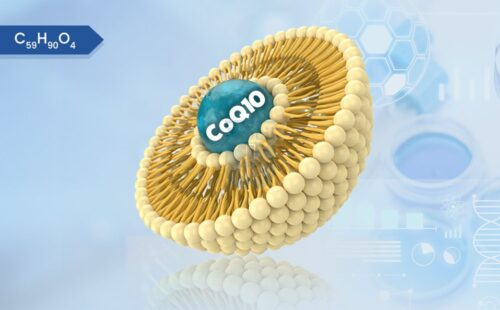
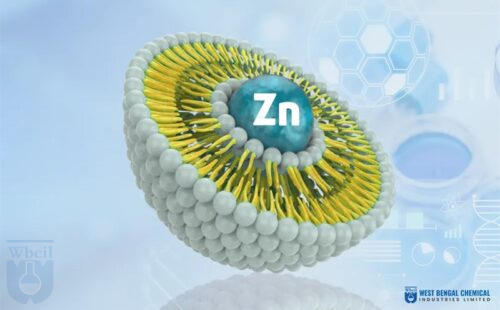
A liposome is a microscopic spherical vesicle composed of a phospholipid bilayer—the exact same material that constructs human cell membranes. By encapsulating a water-loving nutrient (like Vitamin C) in the water-based core, or a fat-loving nutrient (like Curcumin) within the lipid tail, you create a biologically safe. [3]
This is one of the most powerful high-bioavailability delivery systems ever conceptualised. The liposome protects the nutrient from harsh gastric acids (pH 1.5 – 3.5) and enzymatic breakdown in the digestive tract, fusing with intestinal cells for passive absorption. [2]
But there was a catch. Early liposomes were liquids.
The Liquid Paradox: The Flaw in Early Liposomes
Liquid liposomal supplements dominated the market for years. But formulators soon discovered a glaring issue. If you ask a chemist, “Are liposomal supplements more stable than standard powders?” the answer for liquid liposomes is a hesitant “sometimes.”
Liquid liposomes face severe physical instability:
- Hydrolysis: The constant presence of water surrounding the phospholipids leads to the hydrolysis of ester bonds, which destroys the liposome.
- Ostwald Ripening and Aggregation: Over time, tiny liposomal spheres in a liquid suspension tend to collide and merge into larger, unstable droplets, causing phase separation. [2]
- Strict Storage: They often require cold-chain logistics and refrigeration after opening to prevent rapid microbial growth and lipid spoilage.
If liquid is the problem, solidification is the answer. [3]
The Best Solution: Liposomal Pellets in Supplementation
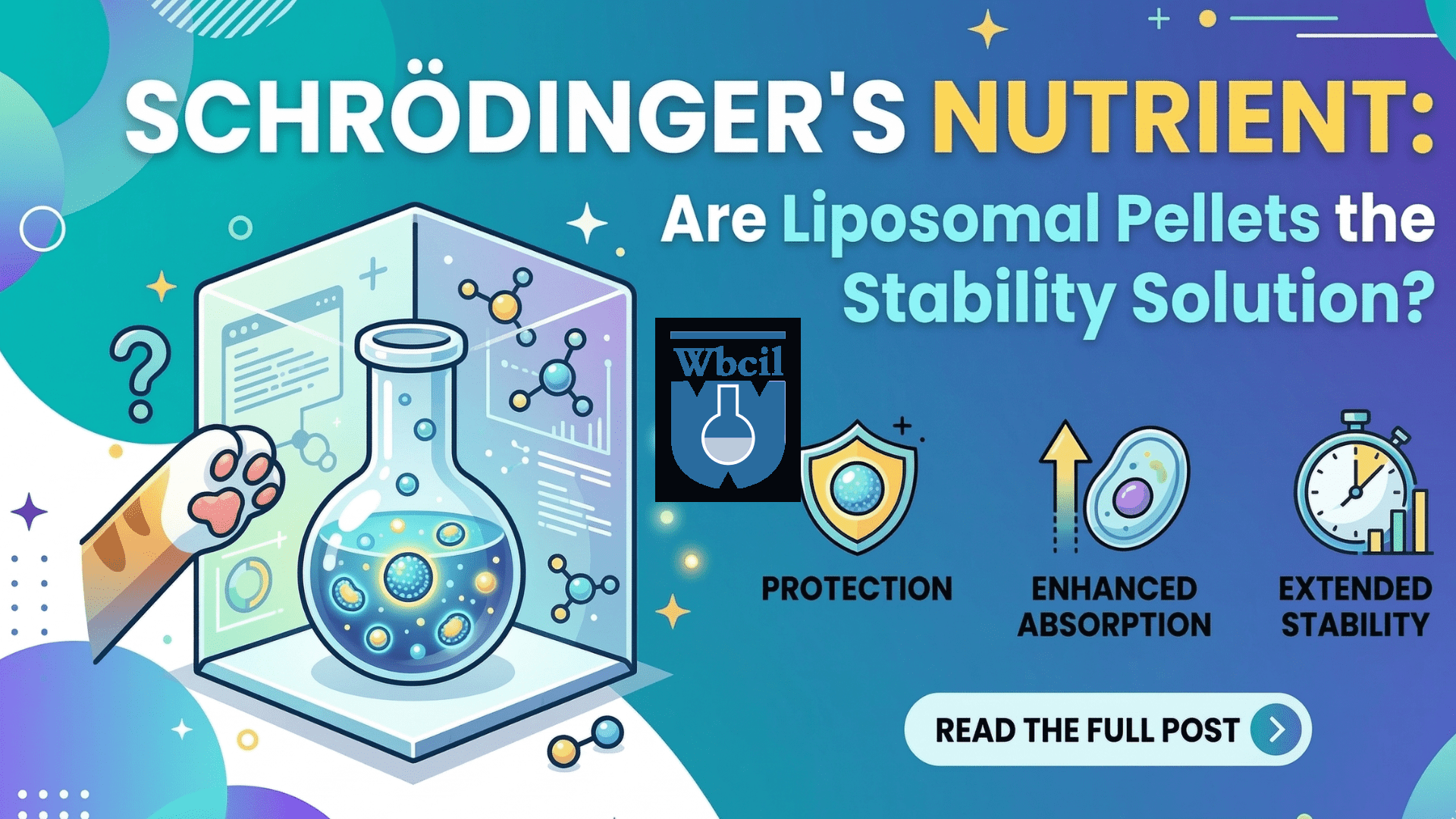
To solve Schrödinger’s Nutrient paradox, we must take water out of the equation without destroying the delicate liposomal vesicle. This happens through the engineering of liposomal pellets in supplementation.
What is a liposomal pellet? It is the result of taking formed, nutrient-loaded liposomes and putting them through advanced fluid-bed drying, lyophilisation (freeze-drying), or extrusion-spheronization to create a dry, free-flowing solid micro-pellet. [1]
The integration of liposomal pellets in supplementation causes a complete change in the stability kinetics of the product. By locking the liposome in a solid matrix (often using cryoprotectants like trehalose), the lipid bilayer remains intact, but all aqueous degradation pathways are halted. [3]
When researchers evaluate the best delivery system to maintain vitamin potency solid-state liposomal pellets in supplementation outperform both raw powders and liquid liposomes. The nutrient is trapped in a dry vault wrapped in a lipid shield, which is then further protected by a solid polymeric or cellulose outer layer.
This multi-layer protection is why liposomal pellets in supplementation are fast becoming the gold standard for clinical-grade nutraceuticals. When the consumer swallows the capsule, the dry pellet reaches the stomach, the outer matrix dissolves, the liposome rehydrates, and the active payload is delivered with maximum bioavailability. [4]
Applications and Efficacy: Where Liposomal Pellets Shine
The versatility of liposomal pellets in supplementation is staggering. Because the pellets are dry, stable, and uniform, they can be used across a wide variety of delivery formats.
Handling the “Impossible” Actives
When dealing with unstable molecules like S-Adenosyl Methionine (SAMe) or reduced L-Glutathione, liposomal pellets in supplementation are essential. These molecules will denature in standard capsules within months. By using liposomal pellets in supplementation, formulators can guarantee a 24-month shelf life at room temperature. [3]
Microencapsulated Curcumin for Beverages
The applications extend beyond capsules. Let’s look at Curcumin—a powerful anti-inflammatory that is practically insoluble in water and has dismal bioavailability. By engineering solid-state liposomal curcumin, we can create microencapsulated curcumin for beverages. These specialized micro-pellets can be suspended in functional waters, sports drinks, or stick packs. They remain stable on the shelf and become bio-active when consumed, eliminating the classic “yellow staining” and bitter taste associated with raw turmeric extracts. [2]
Liposomal Pellets vs Capsules: The Combination Therapy Advantage
One of the greatest formulation challenges is combining reactive ingredients. If you mix Vitamin C and Iron in a standard powder capsule, the oxidative cross-reactivity will degrade both.
However, by using liposomal pellets in supplementation, you achieve perfect isolation. You can fill a single clear HPMC capsule with red Liposomal Iron pellets and white Liposomal Vitamin C pellets. Because each active is locked within its own pelletized lipid matrix, there is zero cross-reactivity. This makes liposomal supplementation pellets the ultimate tool for designing complex multi-ingredient formulations. [3]
Proof of Life: Potency Testing for Liposomal Supplements
If we want to collapse the quantum wave function and prove the nutrient is “alive,” we need rigorous analytical data. Potency testing for liposomal supplements in pellet form is a specialised scientific endeavour.
Standard assay methods often fail because the lipid bilayer hides the API from the testing solvent. To conduct accurate potency testing for liposomal supplements, quality control labs must use specific surfactants (like Triton X-100) to lyse (break open) the liposome before they run the HPLC analysis.
What’s more, a true liposomal pellet manufacturer will provide data on Encapsulation Efficiency (EE%). [3]
This metric proves how much of the vitamin is trapped inside the liposome versus how much is just floating around on the outside. When you use high-quality liposomal pellets for supplementation, the EE% exceeds 85%, ensuring that the vast majority of your payload is protected. [4]
Sourcing the Science: Your Liposomal Pellet Manufacturer
The brutal reality of the supply chain is that producing liposomal pellets for supplementation is difficult. It requires millions of dollars in specialized homogenization and fluid-bed coating equipment. It requires an intimate understanding of lipid thermodynamics and particle engineering.
You cannot simply buy a blender and make liposomal pellets in supplementation.
To ensure your brand delivers on its promises, you must partner with a premier liposomal pellet manufacturer. This is where West Bengal Chemical Industries Limited (WBCIL) steps in.
As a globally recognized manufacturer of pharma-grade liposomal APIs, WBCIL has perfected the architecture of the solid-state liposome. We don’t just supply ingredients; we supply biological certainty.
When you source liposomal pellets in supplementation from WBCIL, you are backed by 60+ years of chemical mastery, WHO-GMP certified facilities, and robust stability data. Our proprietary engineering ensures that your liposomal pellets feature optimal zeta potential (to prevent aggregation) and a tight particle size distribution, resulting in reliable, repeatable pharmacokinetic profiles.

Liquid liposomes are a logistical liability. They often require cold-chain transport, suffer from shorter shelf lives due to lipid oxidation and hydrolysis, and present dosing inaccuracies for the consumer. By sourcing WBCIL’s dry liposomal pellets, you eliminate cold-chain costs, guarantee long-term ambient stability, and can easily incorporate them into traditional, high-margin capsule filling lines.
Yes. WBCIL’s nanotechnology division can engineer water-dispersible, liposomal curcumin pellets specifically designed for functional foods and beverages. These pellets prevent the hydrophobic curcumin from clumping, mask the bitter turmeric taste, and prevent the classic yellow staining of manufacturing equipment, all while vastly improving bioavailability.
As a manufacturer of pharma-grade liposomal APIs, WBCIL provides comprehensive Certificates of Analysis (CoA) that include precise HPLC assay results (following targeted lipid-lysis), Encapsulation Efficiency (EE%) data, Particle Size Distribution (PSD), and Zeta Potential readings. This ensures your QA/QC teams have the exact data needed to verify the integrity of the liposomes.
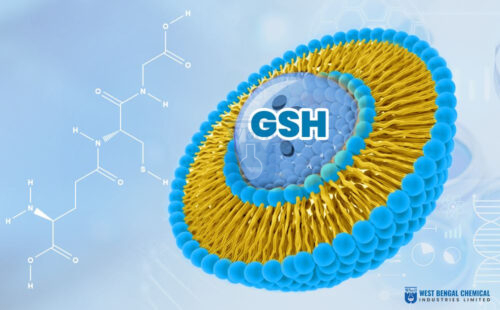
Reduced L-Glutathione is incredibly sensitive to moisture and heat. Our process involves encapsulating the glutathione in a phospholipid bilayer and then utilizing advanced freeze-drying (lyophilization) or fluid-bed technology to lock it in a solid matrix. This dry, oxygen-impermeable barrier effectively freezes the liposome in time, preventing the glutathione from oxidizing into its inactive disulfide form (GSSG) while in the bottle.
WBCIL is dedicated to supporting both established pharmaceutical giants and disruptive nutraceutical startups. While MOQs vary depending on the specific API and custom engineering required, we offer scalable commercial batches. Our dedicated project management team ensures streamlined technology transfer, rapid prototyping, and reliable lead times tailored to your commercial launch schedule.