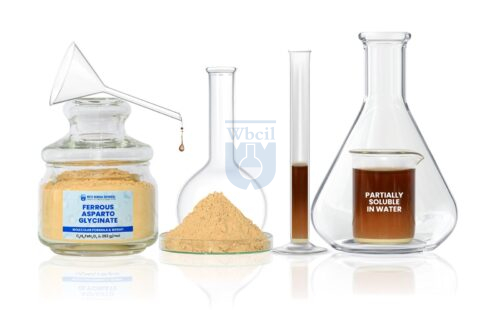
Ferrous Glycine Sulphate Benefits: The Smarter Iron API
NFHS-5 data from 2019 to 21 shows that two in three children under five were anaemic, and over half of women aged 15-49 in India carry the same burden [1]. For pharmaceutical formulators and nutraceutical manufacturers in India, these figures represent a large, underserved market where iron API selection directly shapes clinical outcomes at scale. India’s current iron requirements assume a bioavailability of just 8% for adults and adolescents. This figure exposes the fundamental inadequacy of standard iron salt formulations in a high-phytate dietary environment.
In this blog, we examine the ferrous glycine sulphate benefits across chemistry, bioavailability, tolerability, clinical evidence, and API quality standards.
Key Takeaways:
- Ferrous glycine sulphate’s 1:2 metal-to-ligand chelation ratio makes it significantly more bioavailable than standard iron salts, particularly in India’s high-phytate dietary environment.
- Clinical trials confirm FGS delivers measurable haemoglobin and serum ferritin recovery across pregnant women and children, the two highest-priority IDA populations in India.
- For B2B formulators, FGS offers a dual commercial advantage: peer-reviewed tolerability data that supports CDSCO-compliant label claims and lower elemental iron loading per dose.
Quick Answer: Ferrous glycine sulphate benefits formulators with superior iron bioavailability, lower GI side effects, and clinical-grade efficacy across pharmaceutical and nutraceutical applications.

What Is Ferrous Glycine Sulphate? Chemistry of a Chelate
Ferrous glycine sulphate (FGS) is a bioavailable iron formulation where ferrous iron (Fe²⁺) bonds with two glycine molecules and a sulphate ion in a 1:2 metal-to-ligand ratio. The ratio restricts reaction with dietary iron absorption inhibitors, protects gastrointestinal surfaces from metal cation irritation, and makes FGS a formulation-ready API across pharmaceuticals and nutraceuticals.
Here are some of the key characteristics of ferrous glycine sulphate:
- Crystal Structure: FGS crystallises in the monoclinic P2₁ space group, with iron cations coordinated by sulphate oxygen atoms and glycine ligands. Neighbouring layers run parallel to one another and bond via hydrogen interactions. The crystal architecture is what gives FGS its batch-to-batch structural consistency, which is critical for iron API qualification and pharmacopoeial compliance.
- Iron Valence State: FGS holds iron in the ferrous (Fe²⁺) state, the form the intestinal DMT1 transporter directly accepts for active absorption. Ferric (Fe³⁺) salts require prior enzymatic gut reduction, a step that fails in patients with low gastric acid output. The geometry influences how the chelate releases iron at the mucosal absorption site, which is critical for bioavailability assessment. Abbas et al. reported that patients receiving oral FGS had a 71.3% increase in haemoglobin levels [2].
- Coordination Geometry: The coordination polyhedron around the iron atom forms a strongly distorted octahedron with elongated axial edges. Equatorial Fe²⁺–O bond lengths measure approximately 2.11-2.15 Å, whilst axial contacts extend to 2.37-2.39 Å, indicating notably weak axial bonding.
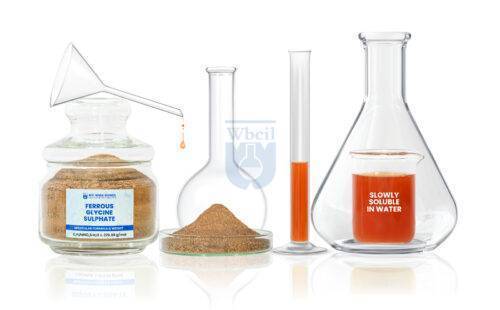
- Hygroscopic Behaviour: FGS synthesis requires careful heating under a nitrogen atmosphere to 70°C; the complex forms as the colour turns uniformly light brown [3]. The oxygen-sensitive synthesis profile signals that humidity and atmospheric control are non-negotiable across the full API supply chain.
- Chelation Criteria: A nutritionally functional ferrous chelate must meet four criteria:
- The ligand must contain two functional groups capable of covalent and coordinate covalent bonds
- The ferrous ion must close a ring structure
- The chelate must be sterically possible, and the chelation reaction must be energetically possible.
With the chemistry established, here is what that chelated structure means for iron absorption in practice.
Bioavailability Advantage: Why Chelated Iron Outperforms Standard Salts
For formulators sourcing an iron API, bioavailability determines whether a product delivers measurable clinical outcomes at the stated dose. The ferrous glycine sulphate benefits in this area are grounded in absorption physiology, phytate-resistance chemistry, and peer-reviewed in vivo evidence.
Here are five advantages of chelated iron over conventional salts.
1. Fundamental Limitation of Standard Iron Salts
Iron bioavailability from inorganic salts is low; less than 20% is typically absorbed in the duodenum, and the remaining unabsorbed iron passes into the colon. High therapeutic dosages of 150-300 mg daily are often required, compounding gastrointestinal irritation and patient dropout. Formulators who select a low-bioavailability API effectively design for higher doses and poorer treatment outcomes from the outset.
2. The DMT1 Transporter Pathway
Studies conducted on DMT1-knockout Caco-2 cells showed that intracellular labile iron increased significantly with glycine-chelated iron treatment in wild-type cells, but was markedly suppressed in DMT1-knockout cells. Therefore, FGS uses an active, physiologically regulated transport channel rather than passive diffusion. For API manufacturing decisions, this mechanistic clarity provides a defensible scientific basis for bioavailability claims on product labels.
3. Phytate Resistance for India-Specific Formulations
India’s cereal and legume-dominant diet, rice, wheat, dal, and maize, is high in phytic acid, the primary iron absorption inhibitor. The 1:2 metal-to-ligand ratio in FGS restricts reaction with dietary inhibitors; the iron does not exchange with the non-haem pool before intracellular incorporation, yet absorption remains regulated by the same physiological mechanisms as ferrous sulphate.
4. Solubility Across Physiological pH
Standard ferrous and ferric salts lose solubility as gut pH rises from the acidic stomach toward the neutral duodenum, causing precipitation before the iron reaches the absorptive surface [4]. Ferrous glycinate maintains high bioavailability in foods despite the presence of phytic acid, precisely because its chelated structure remains soluble across the full gastrointestinal pH gradient.
5. Dose Efficiency and Cost-Effectiveness
The bioavailability advantage translates directly into formulation economics. If a standard ferrous sulfate tablet delivers 10-15% of its stated iron dose, a formulator must include 200-300 mg of elemental iron to achieve a therapeutically meaningful absorbed dose.
Also read: Biopharma SHAKTI Initiative: Why WBCIL Leads the Shift.
Gastrointestinal Tolerability: Solving the Patient Compliance Problem
GI side effects are the primary reason patients stop oral iron therapy, and a discontinued course is clinically equivalent to no treatment. For formulators, gastrointestinal tolerability of iron supplements is a core API selection criterion that directly shapes adherence outcomes across all patient populations.
- The Fenton Mechanism: Free ionic iron in the gut lumen catalyses the Fenton reaction, which produces reactive oxygen species that damage the gastric mucosa. FGS keeps the iron ion shielded until it reaches the mucosal absorption site, thereby reducing lumenal reactivity and the tissue damage that follows.
- Tolerability Data Across Iron Classes: A systematic review of 111 studies covering 10,695 patients reported GI adverse event rates of 18.5% for ferrous glycine sulphate, 32.3% for standard ferrous sulphate, and 47.0% for ferrous fumarate [5]. The ferrous glycine sulphate benefits in tolerability are quantifiable, with nearly half as many GI adverse events as ferrous fumarate across a large, peer-reviewed patient sample.
- Adherence in Indian Programmes: India’s Anaemia Mukt Bharat programme reaches hundreds of millions, yet oral iron adherence stays poor due to GI intolerance at scale. A meta-analysis confirmed ferrous sulphate carries a GI adverse event odds ratio of 2.32 versus placebo (95% CI 1.74-3.08, p<0.0001), a problem that FGS’s chelated structure reduces at the formulation level [6].
- Adverse Effects FGS Reduces: Standard iron salts cause nausea, constipation, abdominal cramping, and a metallic taste, all direct results of free ionic iron contacting the gut mucosa. FGS prevents mucosal iron exposure before absorption, thereby reducing these effects across oral dosage forms, including syrups, tablets, and dispersible formulations.
- The B2B Regulatory Angle: Under CDSCO’s scrutiny of nutraceutical health claims, systematic review data gives your product a defensible scientific foundation that proprietary blends cannot match. Ask your API supplier for clinical tolerability documentation as part of their regulatory dossier, before product registration.

Clinical Evidence: From Iron Deficiency to Pregnancy and Paediatrics
Clinical trials across high-risk populations in India will support the benefits of ferrous glycine sulphate. A randomised double-blind trial of 187 pregnant women showed a mean haemoglobin increase of 1.32 ± 0.18 g/dL after eight weeks of FGS-based iron therapy. Serum ferritin levels in the same FGS group rose by 24.9 ± 4.48 μg/L, confirming store-level iron repletion beyond surface haemoglobin correction. This dual endpoint response, haemoglobin and ferritin, makes FGS a clinically complete API choice for maternal health formulations.
Physiological self-regulation is a key safety feature of FGS-based iron therapy at the population scale. The JECFA/FAO/WHO monograph confirms that the body’s iron status regulates iron absorption from ferrous glycinate, so fortification does not produce overload in populations with normal iron stores. FGS is also classified as USFDA Pregnancy Category B, which provides formulators a defined regulatory safety anchor for maternal and paediatric product lines. Note that FGS remains contraindicated in haemochromatosis, haemosiderosis, and haemolytic anaemia; all product labelling must reflect these
boundaries clearly.
API Quality Standards: What B2B Formulators Must Demand
Sourcing ferrous glycine sulphate benefits your finished product only when the API meets pharmaceutical-grade quality standards; the supplier you choose determines whether your clinical claims hold up in the market.
- Ferrous and Ferric Content: Pharmaceutical-grade FGS must carry a defined ferrous content specification, with ferric content kept below the accepted pharmacopoeial limit; any excess indicates oxidative degradation during manufacturing or storage.
- Heavy Metal Limits: Verify that your supplier’s CoA confirms lead, arsenic, and cadmium within internationally accepted pharmacopoeial limits for FSSAI, EU, and US-regulated markets.
- Moisture and Stability Control: Water content must remain within the accepted pharmacopoeial range, and your supplier must provide accelerated stability data for at least 6 months, especially critical in India’s tropical storage and transit conditions.
- GMP and Regulatory Certification: Demand WHO-GMP certification from your API supplier at a minimum, alongside ISO 9001, ISO 22000, FSSAI compliance, and full Drug Master File support for regulated market submissions across India and export destinations.
- Solvent-Free Synthesis and Particle Customisation: A solvent-free manufacturing process eliminates organic residue carryover into the finished API, and particle size customisation directly controls dissolution rate, dose uniformity, and processing behaviour across tablet, syrup, and sachet formats.
Final Thoughts
Ferrous glycine sulphate benefits extend well beyond chemistry; they correlate directly with better clinical outcomes, stronger label claims, and more commercially viable iron formulations for the Indian market. The evidence across bioavailability, GI tolerability, and RCT data makes FGS one of the most scientifically defensible iron APIs available to formulators today.
WBCIL, with over six decades of expertise in pharmaceutical mineral chemistry and 16+ API patents, manufactures ferrous glycine sulphate to WHO-GMP standards via a patented solvent-free process. If your next iron formulation demands API-grade quality with full regulatory documentation support, WBCIL is the partner your product development team needs to speak with.

- Rukmini S (2024). Anaemia in India. [online] Data for India.
- Abbas, A.M., Abdelbadee, S.A., Alanwar, A. and Mostafa, S. (2018). Efficacy of ferrous bis-glycinate versus ferrous glycine sulfate in the treatment of iron deficiency anemia with pregnancy: a randomized double-blind clinical trial. The Journal of Maternal-Fetal & Neonatal Medicine, 32(24), pp.4139–4145.
- Chemical Book (2025). Ferroglycine Sulfate | 17169-60-7. [online] ChemicalBook.
- Williams G., (2026). NUTRITIONAL SOURCE OF IRON: WHO FOOD ADDITIVES SERIES: 52, FERROUS GLYCINATE (PROCESSED WITH CITRIC ACID) (JECFA 52, 2004). [online]
- Cancelo-Hidalgo MJ, Castelo-Branco C, Palacios S, Haya-Palazuelos J, Ciria-Recasens M, Manasanch J, Perez-Edo L. Tolerability of different oral iron supplements: a systematic review. Current Medical Research and Opinion 2013; 29(4): 291-303.
- Tolkien, Z., Stecher, L., Mander, A.P., Pereira, D.I.A. and Powell, J.J. (2015). Ferrous Sulfate Supplementation Causes Significant Gastrointestinal Side-Effects in Adults: A Systematic Review and Meta-Analysis. PLOS ONE, [online] 10(2), p.e0117383.
FGS is 2.5-3.4 times more bioavailable than standard ferrous sulphate because its chelated structure resists phytate inhibition in high-grain diets. It also produces significantly fewer GI side effects, which directly improves patient adherence across treatment courses.
FGS delivers superior iron absorption, lower GI adverse events, and built-in protection against iron overload, all supported by peer-reviewed clinical data. Its chelated structure also protects co-nutrients, such as Vitamin A and Vitamin C, in multi-micronutrient premix formulations.
Chelated iron stays shielded from the gut lining until it reaches the intestinal absorption site, which prevents the mucosal damage that standard iron salts cause. This is why FGS records nearly half the GI adverse event rate of ferrous fumarate in head-to-head systematic review comparisons.
FGS uses the active DMT1 transporter pathway for absorption, which delivers efficient iron uptake without the luminal reactivity that triggers GI side effects. Independent research consistently places it among the highest-bioavailability oral iron APIs available for pharmaceutical and nutraceutical formulation.
WBCIL is a WHO-GMP-certified manufacturer with over six decades of mineral API expertise and supplies to 30+ countries for pharmaceutical and food fortification applications. Their FGS carries full regulatory documentation support, including DMF filings, CoAs, and stability data for FSSAI, EU, and US market submissions.
WBCIL’s solvent-free process eliminates organic residues that accelerate oxidative degradation, preserving the ferrous Fe²⁺ state and API potency across the full shelf life. It also controls moisture uptake, the primary driver of ferrous-to-ferric conversion in hygroscopic iron APIs stored in India’s tropical climate.