Understanding the Ferric Pyrophosphate Citrate safety profile
Imagine a dialysis session that doesn’t just filter the blood, but also provides a continuous, gentle refill of iron, similar to how the body naturally absorbs nutrients. For those living with chronic kidney disease (CKD), managing iron stores is often a stressful cycle of low energy and heavy intravenous (IV) boluses. The “spike and crash” of conventional iron therapy is a major challenge for patient well-being.
At West Bengal Chemical Industries Limited (WBCIL), we believe renal care should be as biological as possible. We are bridging the gap with advanced mineral chemistry, specifically focusing on the Ferric Pyrophosphate Citrate safety profile. This molecule is not just another supplement; it is a fundamental shift in how we approach the FPC vs. IV iron in dialysis debate.
For product-grade details and documentation, visit our Ferric Pyrophosphate Citrate API page.
Key Takeaways
- The Ferric Pyrophosphate Citrate safety profile is inherently safer because it donates iron directly to transferrin, avoiding the release of redox-active free iron.
- Using FPC is a proven strategy for reducing ESA dosage with Ferric Pyrophosphate Citrate, which lowers the risk of cardiovascular events and stroke.
- West Bengal Chemical Industries Limited ensures the highest Ferric Pyrophosphate Citrate API solubility and stability for parenteral formulations, backed by WHO-GMP manufacturing standards.

Understanding the Ferric Pyrophosphate Citrate safety profile
The Ferric Pyrophosphate Citrate safety profile is uniquely built on its ability to bypass the standard iron-handling machinery of the body. Unlike conventional iron, which requires processing by the reticuloendothelial system (RES), FPC delivers iron directly to transferrin.
Why FPC is different from conventional iron ⬅️
Conventional IV iron formulations typically consist of an iron core surrounded by a carbohydrate shell. These require “unlocking” by macrophages, which can release reactive, “labile” iron into the blood. The Ferric Pyrophosphate Citrate safety profile is superior because it contains no carbohydrate shell and donates iron directly to apo-transferrin with fast kinetics.
Avoiding the “Iron Overload” trap ⬅️
Standard IV iron often leads to sequestered iron in macrophages, which cannot be used effectively due to high hepcidin levels in CKD patients. FPC, however, replaces iron losses during the dialysis session itself, maintaining iron balance without unnecessarily increasing long-term stores.
The role of vertical integration ⬅️
As a GMP manufacturer for liposomal formulations and high-purity APIs, West Bengal Chemical Industries Limited ensures that every batch of FPC meets stringent pharmacopeial standards.
Addressing the Risks: FPC vs. IV iron in dialysis ⬅️
When evaluating FPC vs. IV iron in dialysis, the most critical factor is how the patient feels both during and after the session.
Eliminating the bolus effect ⬅️
Conventional parenteral iron safety comparison often highlights the risks of bolus dosing, which provides large amounts of iron in a short time. This can lead to an increased risk of infection and inflammation.
Maintaining Hemoglobin stability ⬅️
In the landmark CRUISE studies, the Ferric Pyrophosphate Citrate safety profile was proven to maintain hemoglobin (Hgb) levels more effectively than placebo, without the need for periodic heavy IV iron injections.
Dialysate vs. IV Bolus ⬅️
The safety of iron administration via dialysate vs IV bolus comes down to concentration. FPC is typically delivered via the dialysate at a concentration of approximately 2 microns, ensuring a slow, constant transfer that mimics physiological processes.
Managing Complications: Does Ferric Pyrophosphate Citrate cause anaphylaxis?
A major concern for patients and nurses is hypersensitivity. Does Ferric Pyrophosphate Citrate cause anaphylaxis?
● Clinical hypersensitivity data
Clinical studies and post-marketing surveillance indicate that FPC is not associated with an increased risk of serious hypersensitivity or anaphylactic reactions. Because it lacks the carbohydrate shell found in iron dextran or sucrose, it does not trigger the same immune responses.
● Comparative safety stats
In Phase 3 trials, the proportion of adverse and serious adverse events was similar between the FPC group and the placebo group. This confirms the robust Ferric Pyrophosphate Citrate safety profile in a real-world clinical setting.
● Improving patient comfort
By reducing the physical stress of an IV bolus, patients experience fewer episodes of hypotension or nausea.
Beyond the Needle: Oxidative stress in hemodialysis patients
Oxidative stress in hemodialysis patients is a chronic issue that damages blood vessels and heart tissue.
● Minimizing labile iron
The Ferric Pyrophosphate Citrate safety profile is specifically designed to minimize the release of non-transferrin-bound iron (NTBI). NTBI is highly redox-active and is a primary driver of oxidative stress.
● Protecting endothelial health
By bypassing the macrophage pathway, FPC avoids the inflammatory “flare” that often accompanies IV iron repletion. This directly helps in reducing oxidative stress in hemodialysis patients, promoting better vascular health over time.
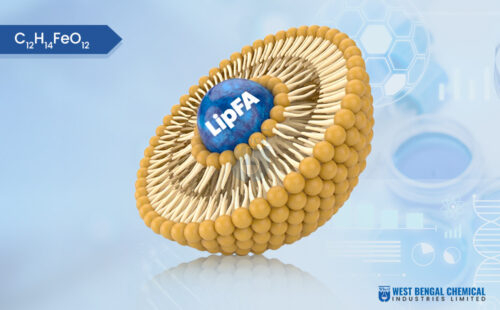
● Liposomal mineral innovations
At West Bengal Chemical Industries Limited, we apply these same principles to our liposomal minerals. By encapsulating minerals, we protect the body from reactive ions, further minimizing oxidative damage.
Enhancing Efficiency: Reducing ESA dosage with Ferric Pyrophosphate Citrate
One of the most valuable clinical goals in renal care is reducing ESA dosage with Ferric Pyrophosphate Citrate.
● The link between iron and ESA
Erythropoiesis-stimulating agents (ESAs) are expensive and can have adverse cardiovascular effects at high doses. By ensuring a steady supply of “bio-available” iron, FPC improves the efficiency of red blood cell production.
● Clinical outcomes of reduction
The PRIME study demonstrated that patients receiving FPC required significantly fewer doses of IV iron and could potentially lower their ESA requirements. This contributes to the overall long-term cardiovascular safety of FPC in dialysis.
● Vertical quality control
West Bengal Chemical Industries Limited ensures that the FPC API solubility and stability for parenteral formulations are precise, allowing for the consistent delivery needed to achieve these ESA reductions.
The Industry Standard: What is the best iron supplement for dialysis patients?
When clinicians ask, “What is the best iron supplement for dialysis patients?”, the answer depends on finding a balance between efficacy and safety.
● Why FPC leads the market
FPC is increasingly recognized as a “paradigm shift” because it replaces iron lost during the treatment, rather than trying to fix a massive deficit later. This proactive approach is the core of the Ferric Pyrophosphate Citrate safety profile.
● Manufacturing Excellence
Our role as a GMP manufacturer for liposomal formulations and parenteral APIs like FPC means we provide the purity that dialysis units demand. We utilize patented, solvent-free processes to ensure our minerals are as clean and safe as possible.
● A complete renal portfolio
Beyond iron, West Bengal Chemical Industries Limited liposomal minerals offer support for magnesium, calcium, and zinc, providing a comprehensive nutritional strategy for the chronic patient.

Unlike IV boluses that create spikes in reactive iron, FPC binds rapidly to transferrin. This prevents the formation of labile iron, thereby reducing oxidative stress in hemodialysis patients.
So, does Ferric Pyrophosphate Citrate cause anaphylaxis? Clinical data shows it is not associated with an increased risk of infection, inflammation, or serious hypersensitivity reactions.
Yes. High-dose IV boluses are associated with a risk difference of 25 additional infection-related hospitalizations per 1,000 patient-years. Dialysate administration via FPC avoids these high-risk surges.
West Bengal Chemical Industries Limited is WHO-GMP certified with over 60 years of innovation. We specialize in creating stable, nano-sized vesicles that enhance bioavailability without gastric distress.
For many, the best iron supplement for dialysis patients is FPC because it delivers iron in a slow, continuous manner during every session, maintaining a perfect iron balance.