Iron & the Brain: How Mineral Deficiency Steals Creativity
In the world of pharmaceutical development 2026, we often observe iron through a single, narrow lens and that is hematology. Most pharmacist, nutrationist measure it in grams per deciliter, treating it purely as the fuel for hemoglobin to prevent physical exhaustion.
But this traditional, “blood-first” perspective is dangerously incomplete. It ignores a physiological reality that neuroscientists have stressed for years: the critical, metabolic relationship between iron deficiency and brain health.
For decades, clinical practice assumed that if the blood count is normal, the patient is healthy. Yet, millions walk into clinics describing a thick “brain fog,” a loss of motivation, and a stalling of their creative drive. Their blood tests come back “normal,” leaving them without answers. These individuals are often victims of Non-Anemic Iron Deficiency (NAID)—a state where the body prioritizes survival (red blood cells) over intellect.
For B2B stakeholders and formulators, recognizing the impact of iron deficiency and brain function isn’t just an academic exercise. It represents a massive, underserved therapeutic window. We aren’t just treating fatigue; we are protecting the seat of human innovation.
Key Takeaways:
- The Dopamine Connection: Iron deficiency and brain function are inextricably linked through dopamine synthesis; without adequate iron, the enzyme tyrosine hydroxylase fails, leading to a direct reduction in executive function, motivation, and creativity.
- Beyond Hemoglobin: The neurocognitive effects often occur in the “Non-Anemic” stage, meaning a patient can suffer from severe iron deficiency and brain fog while having normal hemoglobin levels, representing a massive, undiagnosed medical gap.
- Precision Recovery: To effectively reverse these neurological deficits, WBCIL’s Ferric Carboxymaltose Injectable API provides a superior, high-dose solution that bypasses the gut, rapidly restoring the mineral levels essential for optimal iron deficiency and brain health.

The Neurochemistry of Creativity: Why Ideas Need Iron
To grasp how iron levels and mental clarity are linked, we must demystify “creativity.” It isn’t magic; it’s a metabolic process. Creativity is “divergent thinking”—the brain’s ability to connect unrelated concepts. This requires a heavy neurological toll, specifically on the dopaminergic system.
Dopamine is the neurotransmitter of executive control and motivation. Its production is governed by a gatekeeper enzyme called tyrosine hydroxylase. Here is the biological bottleneck: this enzyme is iron-dependent.
When iron deficiency and brain physiology intersect, the activity of tyrosine hydroxylase plummets. The brain senses scarcity and rations resources, cutting power to the prefrontal cortex to preserve basic motor functions. The result? Iron deficiency brain fog—where thoughts feel viscous and the creative spark dies out.
The Cellular Engine: Mitochondria and Cognitive Energy
The connection goes deeper than neurotransmitters; it roots itself in cellular energy. The brain is an energy glutton, consuming 20% of the body’s oxygen. This energy (ATP) is forged in the mitochondria via the electron transport chain.
Iron is a structural necessity for cytochromes—proteins that drive this energy production. specifically, Cytochrome C Oxidase cannot function without it.
When iron drops, neuronal mitochondria sputter. They produce less energy and more oxidative stress. This explains the neurocognitive effects of iron deficiency, such as the inability to sustain attention or mental fatigue that sleep cannot fix.
The Formative Years: Iron Deficiency and Brain Development
The stakes are highest at the start of life. Iron deficiency and brain development are irreversibly linked. In the pediatric sector, iron is an architect, not just a nutrient.
During late pregnancy and infancy, the brain undergoes rapid myelination—the insulation of nerve fibers to ensure fast signal transmission. The cells responsible for this, oligodendrocytes, have the highest iron requirements of any brain cell.
If iron deficiency and brain growth coincide, myelination stalls. Research suggests that infants with early anemia may suffer permanent deficits in processing speed and motor function. This reality drives the urgency for UK and EU companies developing pediatric nutraceuticals to focus heavily on iron deficiency and brain health.
The Psychiatry of Anemia: Iron Deficiency and Mental Health
The conversation is shifting from physical symptoms to psychiatric ones. There is undeniable evidence linking iron deficiency and mental health. Because iron regulates the “Big Three” neurotransmitters—Dopamine (motivation), Serotonin (mood), and GABA (relaxation)—a deficiency often mimics psychiatric disorders.
Common misdiagnoses include:
- Anxiety: Linked to disrupted GABA/glutamate metabolism.
Depression: Linked to low dopamine. - Restless Leg Syndrome (RLS): A neurological disorder directly tied to low brain iron.For many, micronutrient deficiency and cognition issues are mistaken for depression. Patients are prescribed antidepressants when they actually need iron therapy.
The Diagnostic Gap: Ferritin vs. Hemoglobin
A major hurdle is the “Diagnostic Gap.” Standard protocols screen for anemia and brain function issues using Hemoglobin. But Hemoglobin is the last marker to drop.
The body stores iron in a protein called Ferritin. When intake is low, the body drains Ferritin to keep Hemoglobin stable. In this “Non-Anemic” phase, the blood looks fine, but the brain is already starving. Educating providers to check Ferritin is key to managing iron deficiency and brain disorders.
The Solution: Precision Delivery with Ferric Carboxymaltose
Identifying the problem is half the battle; fixing it is the other. Traditional oral iron (ferrous sulfate) is often poorly absorbed and harsh on the gut. The brain needs iron immediately, but the digestive system creates a blockade.
This is where WBCIL’s Ferric Carboxymaltose Injectable API revolutionizes the landscape.
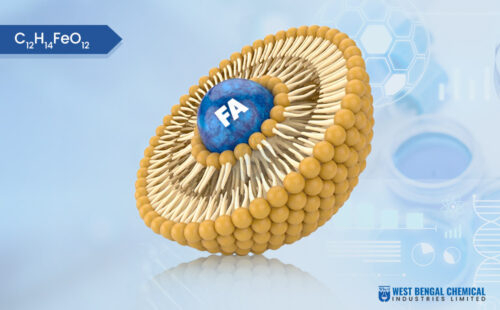
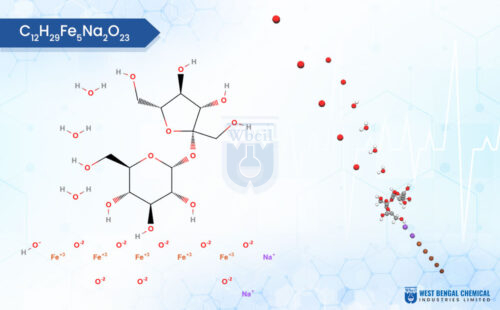
Ferric Carboxymaltose (FCM) is a third-generation IV iron. It is a colloidal solution where iron is tightly bound in a carbohydrate shell, mimicking physiological ferritin.
Why is this the superior solution?
- High Stability & Safety: The shell prevents the release of toxic “free iron,” allowing for high-dose infusions (up to 1000mg) in just 15 minutes.
- Rapid Repletion: By bypassing the gut, FCM delivers iron directly to the bone marrow and tissues, rapidly reversing iron deficiency brain fog.
Targeted Delivery: It ensures a sustained supply for both erythropoiesis and neuro-metabolism.
WBCIL: The Partner for Global Pharmaceutical Innovation
For companies targeting the iron deficiency and brain market, the quality of the Active Pharmaceutical Ingredient (API) is paramount. As a premier iron API manufacturer in India, West Bengal Chemical Industries Limited (WBCIL) leads this technological frontier.
Partner with WBCIL
- Regulatory Excellence: We operate under strict WHO GMP guidelines, providing the DMFs and Tech Packs required for UK and EU market entry.
- Purity & Precision: We control molecular weight distribution to prevent toxicity, ensuring a safety profile suitable for treating sensitive neurocognitive effects of iron deficiency.
- Scalability: As awareness of micronutrient deficiency and cognition grows, we offer a scalable supply chain for global brands.
The Future of Neuro-Nutrition
We are leaving the era where iron was just for blood. The future is neuro-nutrition. As the market demands “smart” therapies that restore the mind, simple salts will no longer suffice.
By leveraging advanced APIs like WBCIL’s Ferric Carboxymaltose Injectable API, pharmaceutical companies can offer more than anemia relief—they can offer a restoration of self.
West Bengal Chemical Industries Limited is your partner in this journey. Let’s build the future of cognitive health together.

-
Beard, J. L., & Connor, J. R. (2003). Iron status and neural functioning. Annual Review of Nutrition, 23, 41-58.
-
Link: https://www.annualreviews.org/doi/10.1146/annurev.nutr.23.020102.075739
-
Georgieff, M. K. (2007). Nutrition and the developing brain: nutrient priorities and measurement. American Journal of Clinical Nutrition, 85(2), 614S-620S.
-
Link: https://academic.oup.com/ajcn/article/85/2/614S/4649626
-
Krayenbuehl, P. A., et al. (2011). Intravenous iron for the treatment of fatigue in nonanemic, premenopausal women with low serum ferritin concentration. Blood, 118(12), 3222-3227.
-
Link: https://ashpublications.org/blood/article/118/12/3222/28775
-
Lozoff, B., et al. (1991). Long-term developmental outcome of infants with iron deficiency. New England Journal of Medicine, 325, 687-694.
-
Note: The volume (325) and pages (687-694) in your citation match this 1991 paper, though your text said 2006. The link below is for the correct Vol 325 paper.
-
Link: https://www.nejm.org/doi/full/10.1056/NEJM199109053251004
-
-
Note: The volume (325) and pages (687-694) in your citation match this 1991 paper, though your text said 2006. The link below is for the correct Vol 325 paper.
-
Link: https://www.nejm.org/doi/full/10.1056/NEJM199109053251004
Yes. This is known as Non-Anemic Iron Deficiency (NAID). The brain requires iron for enzyme function and neurotransmitter synthesis. These processes can be compromised when ferritin stores are low, even if hemoglobin levels (anemia markers) remain normal.
Symptoms often include difficulty concentrating, poor memory recall, lack of motivation, and mental fatigue that does not improve with rest. These are linked to reduced dopamine activity and mitochondrial inefficiency.
Ferric Carboxymaltose is an intravenous iron formulation that bypasses the digestive system, allowing for complete absorption. Unlike oral iron, which can cause gut irritation and has low absorption rates, FCM can deliver a large dose of iron directly to the body’s tissues in a single 15-minute infusion.
Iron is essential for myelination—the coating of nerve fibers—and the development of the hippocampus, the memory center of the brain. Iron deficiency and brain development issues in infancy can lead to long-term cognitive and motor delays.
Yes. As a leading iron API manufacturer in India, WBCIL manufactures Ferric Carboxymaltose under strict GMP guidelines. We provide comprehensive regulatory documentation (DMFs) to support pharmaceutical companies in the UK, EU, and other global markets.