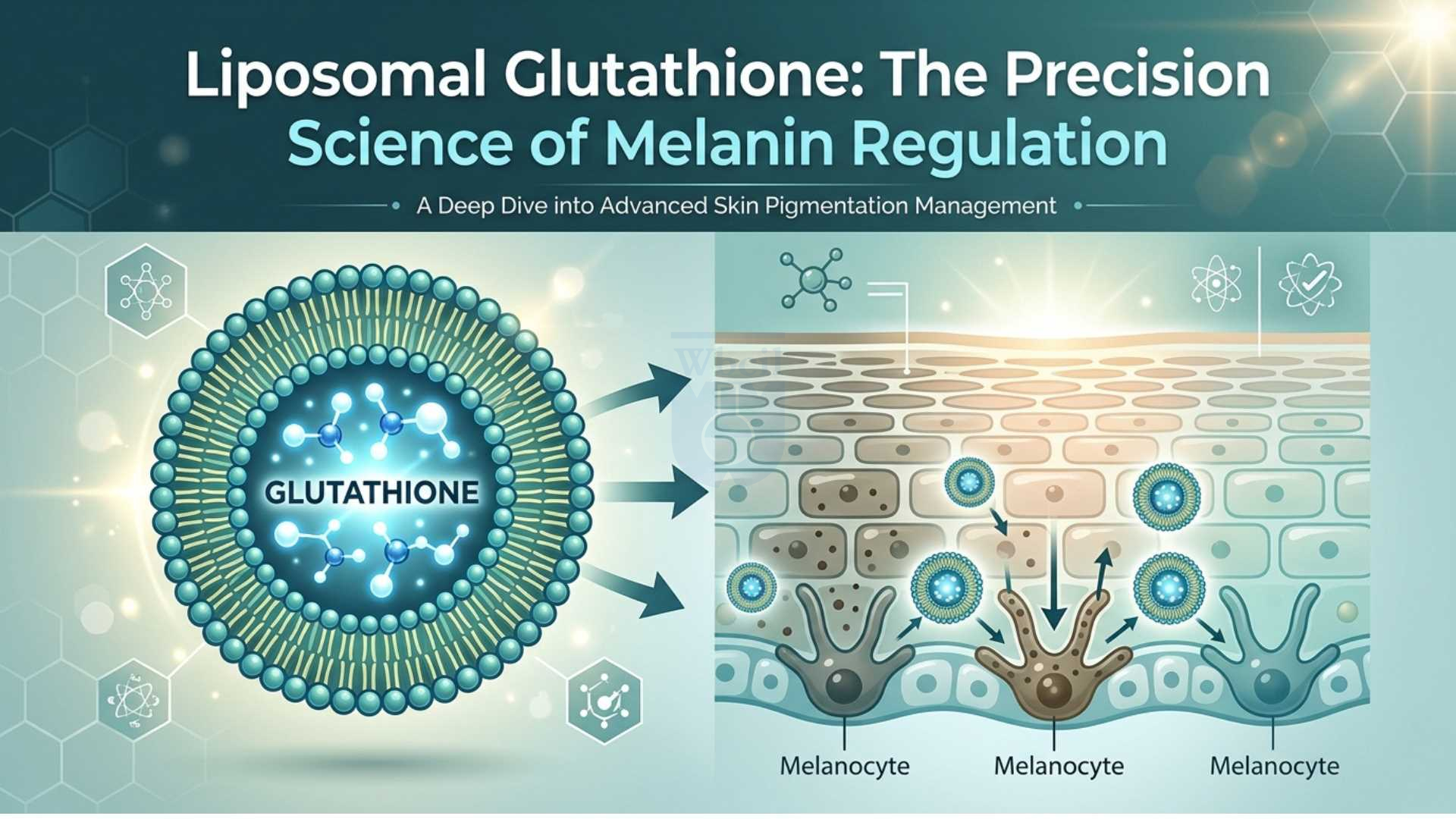
Liposomal Glutathione: The Precision Science of Melanin Regulation
Want perfectly radiant skin? If so, achieving a luminous, even skin tone requires advanced biochemical intervention, making glutathione for melanin regulation the premier choice for dermatologists and cosmetic formulators alike. While the aesthetic industry has flooded the market with various brightening ingredients, few understand the complex cellular pathways required to safely modulate skin pigment. To achieve predictable, professional-grade results, we must look at the deep biochemistry of the body’s master antioxidant-glutathione.
Harnessing the power of glutathione for melanin regulation means moving past superficial topical cosmetics and targeting hyperpigmentation directly at its intracellular source.
Discover the formulation data: [Explore Our Liposomal Glutathione Ingredient Profile]
Key Takeaways
1. Glutathione for melanin regulation: Glutathione regulates skin tone by inhibiting tyrosinase and shifting production of dark eumelanin to lighter pheomelanin.
2. Superior Bioavailability: Liposomal technology bypasses the “absorption ceiling” of standard GSH, delivering significantly higher concentrations to target cells.
3. Clinically Proven Results: Human trials validate that liposomal glutathione effectively reduces the Melanin Index and improves skin hydration within 4–10 weeks.
4. Pharmaceutical Precision: WBCIL’s QbD approach ensures >80% encapsulation and high stability, providing a reliable bulk source for premium cosmeceutical brands using glutathione for melanin regulation.
The Master Antioxidant and the Melanogenesis Challenge
Glutathione is a powerhouse tripeptide (composed of L-glutamate, L-cysteine, and L-glycine) that is endogenously synthesized by human cells. Reduced glutathione or GSH serves as the cornerstone for maintaining:
- Cellular redox homeostasis [1]
- Neutralizing free radicals [1]
- Heavy-metal detoxification [1]
- Regulate pigmentation pathways [1]
The Bioavailability Paradox
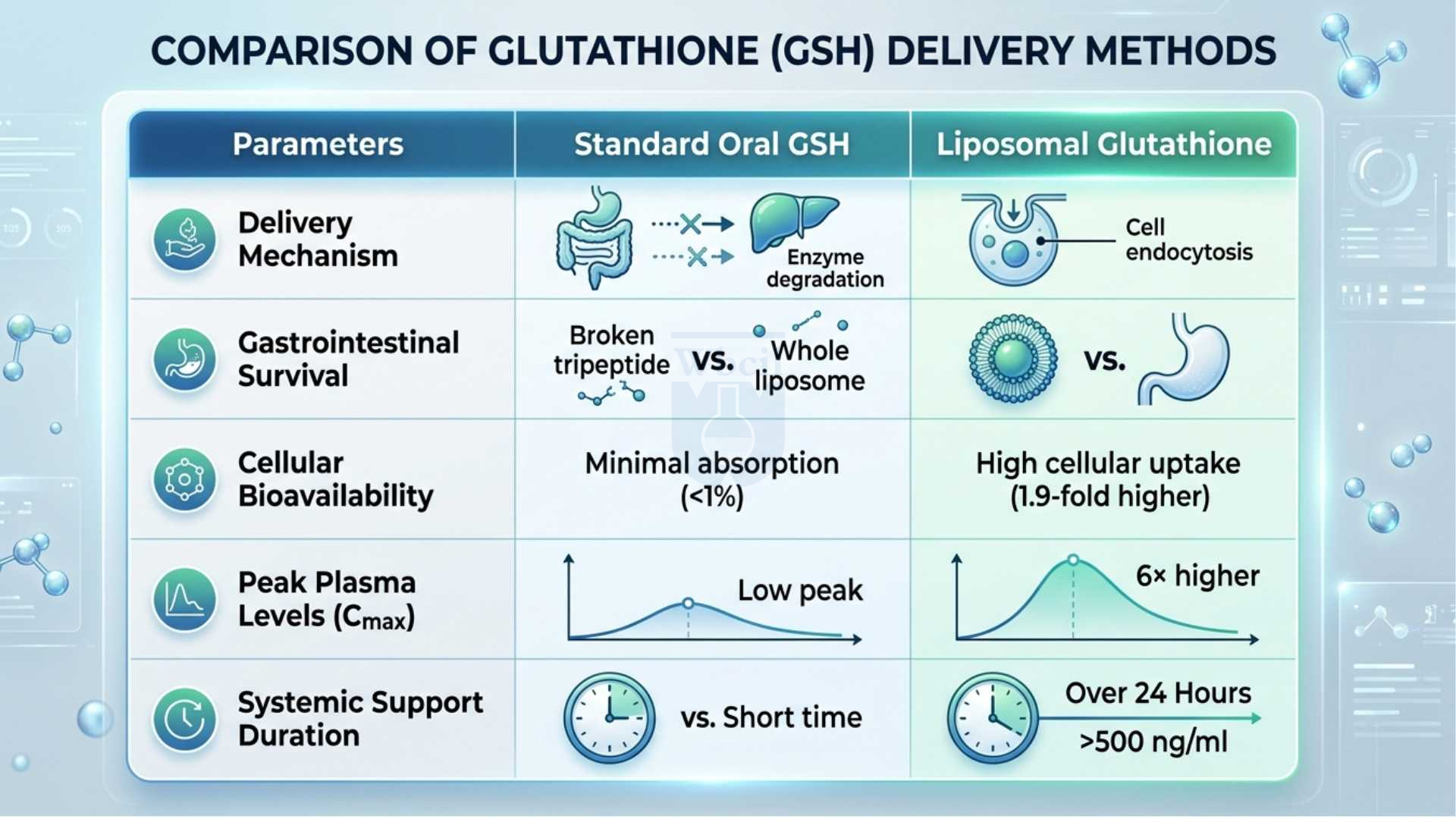
Despite its unmatched therapeutic potential, standard oral glutathione suffers from significant biological limitations. When consumed as a standard powder or tablet, the fragile tripeptide structure is rapidly degraded by gastric enzymes (such as gamma-glutamyltransferase) and undergoes aggressive first-pass hepatic metabolism, reducing the amount of GSH in the blood [2]. This creates a challenging bottleneck for formulators who need to deliver a functional dose to achieve the desired output.
The Pivot
To solve this biological barrier, advanced manufacturing has shifted toward phospholipid encapsulation technology. By encapsulating the active molecule in a protective lipid vesicle, we can shield it from the harsh environment of the digestive tract. This advanced delivery platform turns an otherwise unstable ingredient into a highly robust system, opening up brand-new possibilities of utilizing liposomal glutathione for professional cosmetic formulations.
The Biochemistry: Mechanism of Glutathione for Melanin Regulation
To understand how glutathione functions, it is essential to trace the journey from external stress to pigment production.
- Step 1: Exposure to UV radiation generates Reactive Oxygen Species (ROS) [3]
- Step 2: High levels of ROS induce oxidative stress, which leads to Tyrosinase activation, the enzyme responsible for melanin synthesis.
- Step 3: Production of Eumelani, the dark, brown pigment associated with hyperpigmentation and tanning [4].
The Glutathione Intervention: Tyrosinase Inhibition Mechanism
Tyrosinase is a copper-containing enzyme that catalyzes the conversion of L-tyrosine into melanin. Glutathione alters this pathway in two ways:
- Copper Chelation and Dopaquinone Blockade: Glutathione directly binds to the copper ions at the active site of the tyrosinase enzyme, temporarily deactivating it. By doing this, GSH effectively halts the production of dopaquinone, the vital precursor to all melanin production.
- Pheomelanin Shift: GSH induces the production of pheomelanin, the lighter, yellow-red pigment, resulting in a brighter and more even skin tone.
- ROS Scavenging and Gene Regulation: Oxidative stress upregulates the Microphthalmia-associated Transcription Factor (MITF), which acts as the primary “on-switch” for melanin production [5]. Glutathione quenches these free radicals and prevents the activation of MITF stopping stress-induced hyperpigmentation.
The Liposomal Advantage: Superior Pharmacokinetics
When evaluating oral routes for skin lightening, looking at the advantages of liposomal glutathione vs standard oral GSH reveals a massive difference in performance.
Comparative Performance Analysis: Liposomal vs. Standard GSH
Clinical Evidence: Results in Aesthetic Dermatology
The clinical application of glutathione for melanin regulation is backed by strong clinical evidence, moving far beyond mere marketing claims.
Melanin Index Reduction
In randomized, double-blind, placebo-controlled clinical trials, dermatologists monitored the skin changes of participants using a specialized spectrophotometer to track their Melanin Index (MI).
- Dosage & Timeline: Participants receiving an oral dose of 500 mg/day of liposomal glutathione for melanin regulation showed measurable, statistically significant drops in their Melanin Index within 4 weeks [6].
- Visual Outcomes: The data revealed a visible reduction in dark spots, improved hyperpigmentation patches, and a more uniform overall skin clarity across diverse skin types.
- TEWL Improvement: A measurable decrease in Trans-Epidermal Water Loss (TEWL), proving a stronger, healthier skin moisture barrier.
- Hydration Boost: Higher overall skin moisture levels due to reduced deep-tissue cellular inflammation.
- Wrinkle Reduction: Visible smoothing of fine lines, driven by glutathione protecting dermal fibroblasts from the oxidative breakdown of collagen.
Industrial Excellence: The WBCIL Advantage
In the competitive landscape of aesthetic dermatology, mastering the use of glutathione for melanin regulation enables formulators to address hyperpigmentation at its biological root. For global brands looking to build premium products, the primary challenge lies in the stability of liposomal glutathione. Because glutathione contains a highly reactive sulfur group, poor formulations can degrade quickly, causing a loss of potency and unpleasant sulfur odors, reducing the potency of glutathione for melanin regulation.
At West Bengal Chemical Industries Limited (WBCIL), we address this issue through strict Quality-by-Design (QbD) principles. Our R&D teams monitor essential physicochemical benchmarks to ensure top-tier performance:
| Characterization Parameter | WBCIL LipoEdge Liposomes |
| Encapsulation Efficiency (EE) | >80% Entrapment |
| Zeta Potential (Surface Charge) | <-30 mV (High Colloidal Stability) |
| Mean Particle Size | <300 nm (Optimized for Uptake) |
WBCIL operates LipoEdge, our dedicated knowledge and research platform built to bridge the gap between laboratory bench science and large-scale industrial manufacturing. Through LipoEdge, we help brands create stable, next-generation clean-label formulations that deliver predictable, real-world clinical results.
For companies looking to upgrade their product line, you can purchase pharmaceutical grade glutathione directly from our WHO-GMP certified facilities, ensuring unmatched batch-to-batch consistency and strict global compliance that ensures sustained release of glutathione for melanine regulation in hyperpigmentation treatment.
Conclusion: Defining the Gold Standard
As we have explored, the quest for a truly radiant and uniform complexion is no longer a matter of high-concentration topicals or aggressive chemical interventions. Instead, the modern “gold standard” is defined by how effectively we can communicate with our cells. By integrating glutathione for melanin regulation into high-performance regimens, brands can offer a scientifically backed pathway to achieving a luminous and uniform skin tone. The convergence of high-potency reduced glutathione and advanced phospholipid encapsulation technology represents the absolute pinnacle of this scientific evolution.
By providing a highly stable, exceptionally bioavailable glutathione bulk source, formulators can safely optimize the body’s natural pigment pathways from within. If your brand is ready to lead this shift, we invite you to purchase pharmaceutical grade glutathione from our WHO-GMP certified facilities
Partner with WBCIL’s world-class R&D team to transform your formulations today.
Explore our innovative portfolio at www.wbcil.com

- Townsend, D. M., Tew, K. D., & Tapiero, H. (2003). The importance of glutathione in human disease. Biomedicine & pharmacotherapy = Biomedecine & pharmacotherapie, 57(3-4), 145–155.
- Wu, G., Fang, Y. Z., Yang, S., Lupton, J. R., & Turner, N. D. (2004). Glutathione metabolism and its implications for health. The Journal of nutrition, 134(3), 489–492.
- Gieniusz, E., Skrzydlewska, E., & Łuczaj, W. (2024). Current Insights into the Role of UV Radiation-Induced Oxidative Stress in Melanoma Pathogenesis. International journal of molecular sciences, 25(21), 11651.
- Thawabteh, A. M., Jibreen, A., Karaman, D., Thawabteh, A., & Karaman, R. (2023). Skin Pigmentation Types, Causes and Treatment-A Review. Molecules (Basel, Switzerland), 28(12), 4839.
- Roider, E., Lakatos, A. I. T., McConnell, A. M., Wang, P., Mueller, A., Kawakami, A., Tsoi, J., Szabolcs, B. L., Ascsillán, A. A., Suita, Y., Igras, V., Lo, J. A., Hsiao, J. J., Lapides, R., Pál, D. M. P., Lengyel, A. S., Navarini, A., Okazaki, A., Iliopoulos, O., Németh, I., … Fisher, D. E. (2024). MITF regulates IDH1, NNT, and a transcriptional program protecting melanoma from reactive oxygen species. Scientific reports, 14(1), 21527.
- Glutathione as an oral whitening agent: A randomized, double-blind, placebo-controlled study
Plain oral glutathione gets rapidly oxidized or broken down by digestive enzymes before it can reach systemic circulation. As a result, a very small amount reaches the melanocytes in the deep layers of the skin at a concentration high enough to affect melanin production.
In rigorous clinical trials, participants using a daily dose of liposomal glutathione showed measurable reductions in their Melanin Index and visible improvements in skin uniformity after 4 to 8 weeks of consistent daily use.
Yes. True liposomes are made from naturally occurring biocompatible phospholipids (such as non-GMO sunflower lecithin). These lipids are recognized as safe for human use and blend naturally with the cell membrane without causing irritation or side effects.
Yes. By acting as a highly efficient intracellular antioxidant delivery platform, liposomes ensure targeted delivery of GSH, where it neutralizes the free radicals (ROS) induced by solar radiation. This action protects keratinocytes and fibroblasts from oxidative stress, prevents inflammation, and stops UV-driven hyperpigmentation before it begins.
No. Glutathione modulates the process of melanogenesis. Because your cells constantly renew, these results depend on maintenance. If you discontinue use and experience unprotected UV exposure, your melanocytes will eventually return to producing pigment at their genetically determined baseline.
Many cheap ingredients on the market are “lecithin-powder blends” rather than true liposomes. To verify authenticity when sourcing high-purity glutathione for pharmaceutical manufacturing, always demand an official COA.