Magnesium Gluconate: Solid Dosage Integrity & Better Tablets
You may face tablet cracks, poor hardness, uneven weight, or dose variation during mineral tablet development. These issues often arise from salt selection, excipient fit, or weak compression behaviour. A suitable magnesium salt can support tablet quality, shelf stability, and batch acceptance. Magnesium gluconate for tabletting has attracted interest among pharmaceutical and nutraceutical manufacturers due to its suitability for oral dosing and its balanced formulation profile. It also has use in solid dosage forms where consistent performance across production batches matters.
In this blog, you will learn how magnesium gluconate supports tablet integrity, which quality parameters deserve attention, and what formulators should assess before product scale-up.
Key Takeaways:
- Magnesium gluconate may help stabilise tablets and improve dosage consistency. Proper formulation checks help maintain tablet quality during production.
- Moisture, assay, and powder flow affect tablet batch acceptance. Early evaluation may reduce formulation and compression-related challenges.
- Salt choice should match tablet size, dosage, and stability. Magnesium gluconate may be suitable for many pharmaceutical tablet systems.
Quick Answer: Magnesium gluconate for tabletting supports stable tablets, dose consistency, and suitable oral dosage performance when properly formulated, with proper formulation checks.

Why Magnesium Gluconate Suits Tablet Formulations
Magnesium gluconate for tabletting has value in solid oral dosage due to good salt stability, acceptable solubility, and tablet dose uniformity.
Here are some of the key considerations you must know for solid oral dosage formulations:
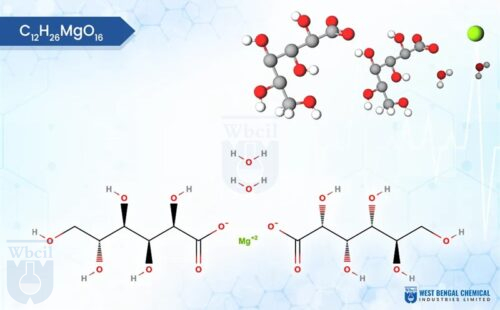
- Stable salt form for tablet use: Magnesium gluconate, a magnesium salt of gluconic acid, is suitable for tablets and capsules due to its stable chemical profile. This point is relevant to pharma-grade oral dosage in India.
- Support for tablet strength and dose uniformity: Tablet quality rests on hardness, friability, and dose match. A suitable mineral salt may help a tablet retain its form after compression and during packing, which is critical for batch quality checks.
- Thermal stability may aid dosage form quality: A research paper on magnesium gluconate noted thermal stability up to 275°C under DSC analysis [1]. This result may support excipient and process checks during tablet work.
- Good fit for pharma-grade mineral salt use: Many formulators select organic magnesium salts for tabletting due to salt behaviour and oral use records. Magnesium gluconate also suits nutraceutical and pharmaceutical tablet formats.
- Suitable option for bulk tablet manufacture: If your team seeks pharmaceutical-grade mineral salts, magnesium gluconate may be a suitable choice for solid oral dosage forms due to its salt quality, oral use data, and tablet-formulation fit.
Also read: Everything About Magnesium Gluconate – From Energy to Heart Health.
5 Critical Quality Parameters for Tablet Production
For magnesium gluconate for tabletting, your quality check should cover assay, water level, pH, particle profile, and tablet test fit.
Here are five critical parameters for organic magnesium salts for tabletting:
1. Assay and Magnesium Content
Magnesium gluconate USP grade usually has an assay of 98.0% to 102.0% on an anhydrous basis. Its magnesium content may range from 5.1% to 5.8%, according to supplier specifications. This helps your team fix label claim, dose load, and batch release checks.
2. Water Level and Hygroscopic Nature
Magnesium gluconate may exist as a fine, granular, or crystalline powder with hygroscopic character. USP-type specs often show water or loss on dry limit from 3.0% to 12.0%. Your team should check the pack seal, storage area, and blend hold time before compression.
3. pH and Solubility Profile
A 5% solution with a pH of 6.0 to 7.8 is suitable for many oral tablet systems. Magnesium gluconate has good water solubility, while ethanol solubility stays low. This profile can aid dissolution goals and tablet disintegration checks.
4. Particle Size and Flow Behaviour
Particle size affects blend flow, die fill, and tablet weight match. One commercial USP/FCC spec states 90% minimum through 20 mesh and 75% minimum on 80 mesh. Your formulation team should check flow data before direct compression trials.
5. Tablet Performance Tests
USP tablet standards require 95.0% to 105.0% of labelled magnesium gluconate content. Dissolution must reach at least 80% in 30 minutes, with dosage unit uniformity compliance. These tests help protect tablet quality and patient-safe label claims.
Understanding quality parameters helps, but magnesium gluconate for tabletting delivers real value only when formulation behaviour translates into stable commercial tablets.

How Magnesium Gluconate Improves Tablet Integrity
Due to the stanle salt-like behaviour of magnesium gluconate, it is suitable for tablet-making. Also, with the higher water solubility, the tablets have a better shelf life:
- Both powder compression and compact strength are critical factors for tablet integrity. Magnesium salts with higher flow allow for better tablet hardness and lower friability for transportation and storage. However, magnesium gluconate tablets should never have less than 80% dissolution within the first 30 minutes to ensure better dose consistency and compatibility with solid oral dosage forms.
- Recent studies indicate that magnesium gluconate has a stable melting point of 165 °C, whereas a higher melting point of 169 °C has been reported [2]. The data is viable for formulation and analytical teams to assess process suitability during each compression stage.
- An important criterion for solid dosage quality depends on moisture control and stable excipient interactions. Formulation compositions affect physical and chemical stability and are a critical factor in assessing shelf-life in India’s humid climate.
- Uniformity in die filling and appropriate powder flow are critical aspects for direct compression. Commercial-grade mineral granules, especially magnesium salts, exhibit higher dust formation and better outflow, which is ideal for batch manufacturing.
- Magnesium gluconate gavce has roles in both pharmaceutical and nutraceutical industries and is important for dosage due to its stable oral salt characteristics. Pharmaceutical manufacturers looking for mineral salts benefit from this aspect.
Direct compression can work for magnesium gluconate, but your team must first confirm powder flow, moisture content, and compaction behaviour.
Direct Compression Requirements for Manufacturing
Direct compression can be used for magnesium gluconate tabletting, but your team must first confirm powder flow, moisture content, compaction, and release profile.
- Powder flow and die-fill control: Direct compression depends on steady powder flow into the die. Poor flow can cause tablet weight drift and dose variation. Your team should check bulk density, tapped density, Hausner ratio, and Carr index before scale-up.
- Moisture level before compression: Magnesium gluconate may contain 3.0% to 12.0% water, as determined by Karl Fischer titration in USP-type specs. This range makes moisture control a key point for blend hold time and pack choice.
- Assay and grade match: USP magnesium gluconate contains 98.0% to 102.0% anhydrous magnesium gluconate. Your QA team should match assay, ID tests, and impurity limits with the final tablet claim.
- Compaction and lubricant response: Direct compression requires a blend that forms firm tablets without risk of punch stick or cap. Lubricant type and level can affect tablet hardness, ejection force, and release [3].
- Excipient choice for tablet strength: Magnesium gluconate may require a suitable DC filler or binder to achieve better compaction strength. Co-processed excipients can aid flow, porosity, and compressibility in direct compression systems.
- Dissolution and final tablet release: Magnesium gluconate tablets must meet release criteria, not just assay. USP tablet data sets a dissolution limit of not less than 80% in 30 minutes.
Salt choice affects more than just elemental magnesium content; it determines tablet behaviour, shelf stability, and your formulation’s success rate.
Magnesium Gluconate vs Citrate: Formulation Guide
Salt choice can affect tablet yield, compression behaviour, coating response, and long-term product quality, so formulators often compare magnesium gluconate and magnesium citrate before scale-up.
| Formulation Factor | Magnesium Gluconate | Magnesium Citrate |
| Acidic Nature and Blend Compatibility | A near-neutral pH profile may suit blends with acid-sensitive actives or vitamins. | Citrate salt has an acidic profile, which may affect compatibility with some actives or flavour systems. |
| Moisture Behaviour in Storage | Often shows a more controlled moisture profile in solid dosage when proper pack systems remain in place. | Citrate salts may attract more moisture under poor storage conditions, which can affect powder handling and tablet appearance. |
| Suitability for Chewable Tablets | A mild taste profile may suit a chewable or dispersible dosage where mouthfeel matters. | A slight tart taste may suit flavoured formulations, but may require a sweetener balance. |
| Coating and Surface Finish | The tablet surface may exhibit good film-coat acceptance with suitable excipient systems. | High-dose citrate tablets may require additional coat support due to their high tablet mass and friability risk. |
| Multi-Ingredient Formula Fit | Often, suits blend with calcium, zinc, or vitamin systems where balanced mineral loading matters. | Better suited where high magnesium delivery takes priority over blend complexity. |
Selecting the right magnesium salt matters, but supplier reliability and technical support determine whether your formulation succeeds at commercial scale without reformulation delays or batch rejections.
Why Choose WBCIL’s APIs
If your team seeks a trusted source for magnesium gluconate for tabletting, supplier quality, documentation, and batch consistency should stay at the centre of your choice.
- WBCIL brings 64+ years of experience in APIs, mineral salts, and fine chemicals. This long market presence supports pharmaceutical and nutraceutical companies with dependable supply and technical support.
- WBCIL has a WHO-GMP-certified plant in Dahej, Gujarat, which supports global-quality manufacturing systems. This helps maintain strict process control, product consistency, and quality assurance for regulated and semi-regulated markets.
- Beyond magnesium gluconate, WBCIL offers a broad range of pharmaceutical-grade mineral salts, including calcium, zinc, iron, and magnesium derivatives. This portfolio may help if your formulation needs multi-mineral combinations or line extensions.
- For companies that seek organic magnesium salts for tabletting, WBCIL supports formulation teams with consistent material quality and technical documentation. Product support may include specification sheets, COAs, and regulatory documents, depending on market needs.
- WBCIL works closely with pharmaceutical and nutraceutical brands, contract manufacturers, and formulation teams. If your focus stays on magnesium gluconate for tabletting, the team can support technical evaluation, bulk supply, and commercial discussion based on your dosage format and market target.
Final Thoughts
Tablet quality often depends on many small formulation choices, and magnesium salt selection forms an important part of that process. Before final product approval, your team should assess assay, moisture level, compression profile, excipient compatibility, and dissolution behaviour. Magnesium gluconate for tabletting may suit formulations where stable oral dosage forms and tablet consistency are important. A pilot batch and stability study can help confirm the product’s long-term suitability before commercial production. If supplier quality also matters to your team, a manufacturer with mineral expertise and technical documentation, such as WBCIL, supports a more informed evaluation process.

- Rafie, S.E., Shalaby, M.S. and Osman, R.M. (2018). Preparation of magnesium gluconate from citrate solution. ResearchGate, [online] 13(2), pp.599–604.
- Trivedi, M.K., Dixit, N., Panda, P., Sethi, K.K. and Jana, S. (2017). In-depth investigation on physicochemical and thermal properties of magnesium (II) gluconate using spectroscopic and thermoanalytical techniques. Journal of Pharmaceutical Analysis, 7(5), pp.332–337.
- Moravkar, K.K., Shah, D.S., Magar, A.G., Bhairav, B.A., Korde, S.D., Ranch, K.M. and Chalikwar, S.S. (2022). Assessment of pharmaceutical powders flowability and comparative evaluation of lubricants on development of gastro retentive tablets: An application of powder flow tester. Journal of Drug Delivery Science and Technology, [online] 71, p.103265.
Yes, magnesium gluconate supports direct compression when powder flow and moisture levels receive proper control before blending. Bulk density values and particle size distribution determine die-filling consistency, which affects tablet weight uniformity across production runs.
Magnesium gluconate is well-suited to multivitamin blends due to its near-neutral pH, which helps protect acid-sensitive vitamins during storage. Magnesium citrate delivers higher elemental magnesium but may compromise blend stability in formulations containing moisture-sensitive active ingredients.
USP standards require a minimum 80% dissolution within 30 minutes for magnesium gluconate tablets at specified test conditions. Tablets must also meet 95-105% label claim and pass uniformity of dosage units testing before batch release.
High humidity increases moisture absorption in hygroscopic magnesium gluconate, reducing powder flowability and leading to tablet defects. Manufacturers need climate-controlled storage areas and moisture-barrier packaging to maintain tablet hardness and prevent capping during monsoon seasons.
Verify 98-102% assay on anhydrous basis, 5.1-5.8% magnesium content, and particle size meeting 90% through the 20-mesh screen. Request certificates of analysis showing water content below 12%, pH range 6.0-7.8, and heavy metals within pharmacopoeia limits.