Ferric Phosphate: Effective Slug & Snail Control Without Environmental Risk
Every growing season, slugs and snails quietly devastate millions of hectares of crops worldwide. For decades, farmers reached for metaldehyde — a potent molluscicide that worked fast but left a trail of dead hedgehogs, contaminated waterways, and residue-laden soil in its wake. Today, ferric phosphate in agriculture is rewriting that story. It kills the pest, spares the ecosystem, and — crucially — keeps your organic certification intact.
Key Takeaways:
- Ferric phosphate controls slugs and snails as effectively as metaldehyde across field conditions, yet breaks down into harmless iron and phosphate soil nutrients, leaving zero toxic residue, no waterway contamination, and no wildlife casualties.
- Approved under USDA NOP and EU Organic Regulations, ferric phosphate is the only scientifically validated, certification-safe slug control available — making it the default choice for organic cereal, vegetable, and oilseed rape growers worldwide.
- Not all ferric phosphate is equal. Consistent iron content, low heavy metals, controlled particle size, and EDTA-free purity — qualities that only certified manufacturers like WBCIL reliably deliver — are what separate an effective bait formulation from an inconsistent one.
What Is Ferric Phosphate and Why Does It Matter?
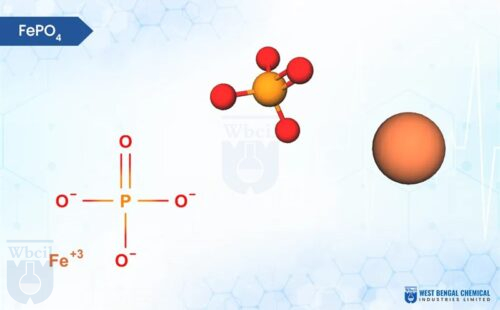
Ferric phosphate (iron(III) phosphate, FePO₄, CAS 10045-86-0) is an inorganic compound consisting of ferric iron (Fe³⁺) and orthophosphate ions. It occurs naturally in soils and in certain foods and vitamin supplements — which tells you something important about its baseline safety profile before we even get into the pest-control science.
In agriculture, ferric phosphate is formulated as small bait pellets scattered at the base of vulnerable crops. The granules attract slugs and snails, which consume the bait, and what follows is a surprisingly targeted metabolic disruption that affects only mollusks.
Key Physical and Chemical Properties
- Molecular weight: 150.82 g/mol (anhydrous form)
- Appearance: Yellow-brown to buff-coloured powder
- Solubility: Practically insoluble in water — a crucial property that limits leaching and groundwater contamination
- Stability: Stable across a wide temperature range; the dihydrate form is stable under normal field humidity conditions
- Iron content: 26–29% Fe in the dihydrate grade typically used in agricultural formulations

How Ferric Phosphate Works as a Molluscicide?
Understanding how ferric phosphate works as a molluscicide clears up a common misconception: slugs and snails don’t collapse dramatically on contact the way they do with metaldehyde. The mode of action is internal and slower — but equally effective according to field trials conducted across Europe.
Step-by-Step Mechanism:
- Ingestion: A slug or snail is attracted to the cereal-based bait carrier and consumes the pellet.
- Gut disruption: In the molluscan digestive system, ferric phosphate interferes with calcium metabolism and damages the gastric epithelium — the lining of the stomach.
- Feeding cessation: Within hours of ingestion, the slug stops feeding. It then retreats underground or to moist refuges where it dies within 3 to 6 days.
- No visible corpses: Unlike metaldehyde (which triggers excessive slime production and leaves visible dead slugs), iron phosphate-killed slugs decompose below the soil surface — which can unsettle growers used to “seeing results” but does not diminish actual control efficacy. [2]Scientific note: Research by Iglesias and Speiser (2002), published in Crop Protection, confirmed equivalent slug damage reduction between iron phosphate and metaldehyde in both lettuce and oilseed rape field trials conducted in Switzerland. Nearly 200 European efficacy trials have since corroborated this finding.
Ferric Phosphate vs. Metaldehyde: A Clear Comparison
The environmental impact of iron phosphate vs. metaldehyde is arguably the single most important factor driving the global regulatory shift toward iron-based molluscicides. Here is how the two active substances compare across the criteria that matter most to modern agriculture:
| Parameter | Ferric Phosphate (FePO4) | Metaldehyde |
| Mode of Action | Disrupts calcium metabolism; mollusks stop feeding immediately. | Disrupts nervous system via acetaldehyde release; causes excessive mucus. |
| Oral Toxicity – Rats (LD50) | >5,000 mg/kg (Very low toxicity) | 630 mg/kg (Significantly higher toxicity) |
| Toxicity to Dogs | Low – poisoning is rare at label rates. | High – confirmed fatalities and severe illness. [3] |
| Toxicity to Birds | No known adverse effects (EPA). | Secondary poisoning documented in bird populations. |
| Earthworm Impact | Minimal impact at standard label rates. | Moderate direct toxicity to soil health. |
| Leaching Risk | Low – binds tightly to soil particles. | High – documented risk of watercourse contamination. |
| Soil Residue | Breaks down into plant nutrients (Iron and Phosphate). | Leaves acetaldehyde and synthetic polymer residues. |
| Organic Certification | Permitted (USDA NOP, EU Regulation). | Not permitted for organic use. |
| UK Regulatory Status | Fully approved for all uses. | Banned for outdoor use as of 2022. |
| Cold Performance (<5°C) | Equal or superior efficacy in cold/wet weather. | Significantly reduced effectiveness. |
Sources: USDA Technical Evaluation Report (2010); EPA Iron Phosphate Risk Assessment (1998); Crop Production Magazine efficacy data (2023); UK Health and Safety Executive regulatory documentation (2022).
Ferric Phosphate Safety for Pets and Wildlife
Ferric phosphate safety for pets and wildlife is the question farmers and household gardeners ask most. The U.S. Environmental Protection Agency (EPA) classifies iron phosphate as a low-risk pesticide and notes no known or expected adverse effects on humans, mammals, birds, or fish at normal application rates. The compound’s low water solubility means it doesn’t readily release ionic iron into biological systems the way some other iron salts do.
Dogs and cats would need to consume very large quantities of bait pellets to experience iron overload symptoms — far beyond what typical incidental contact would involve.
There is no evidence of secondary poisoning in wildlife from consuming slugs killed by ferric phosphate, unlike the documented secondary metaldehyde poisoning in hedgehogs and birds.
EU-sold ferric phosphate pellets commonly include a bittering agent to further discourage ingestion by domestic animals.
Uneaten pellets do not persist as hazardous waste — they break down into iron and phosphate ions that are absorbed as soil micronutrients.
Important nuance: Some commercial ferric phosphate pellets contain chelating agents (notably EDTA or EDDS) to improve slug uptake. Research by Dr. Kathy Lewis (University of Hertfordshire) flagged that EDTA in particular can elevate toxicity to earthworms. Formulators sourcing pure, EDTA-free ferric phosphate for bait manufacture should verify the chelating agent profile of their active ingredient — which is where the quality of the bulk ferric phosphate source becomes critically important.
Iron Phosphate Use in Organic Certified Farming
For farmers operating under organic certification, metaldehyde was never an option. Ferric phosphate, however, slots neatly into organic systems — and this is not just a marketing claim but a regulatory reality.
- USDA National Organic Program (NOP): Ferric phosphate (ferric orthophosphate) is listed as a permitted molluscicide, on the condition it is applied in a way that prevents runoff into water bodies and is not in direct contact with harvested crops. [5]
- EU Organic Regulation (EC 889/2008, updated): Iron phosphate is on the approved list of substances for plant protection in organic production across all member states.
- IFOAM (International Federation of Organic Agriculture Movements): Recognises iron phosphate as compatible with organic principles.
Products such as Ferramol (iron phosphate-based) have been commercially proven in organic lettuce and oilseed rape across Western Europe.
Ferric Phosphate Stability in High Humidity Environments
One practical concern when deploying bait pellets in wet, humid field conditions — exactly the weather that slugs prefer — is bait degradation. Ferric phosphate stability in high humidity environments is generally good relative to alternative actives, though the final formulation (carrier material, coatings, binders) plays the larger role.
- Ferric phosphate itself exhibits low hygroscopicity — it does not readily absorb atmospheric moisture, which helps maintain granule integrity in humid conditions. [3]
- Field observations suggest iron phosphate pellets hold together longer in light rain than metaldehyde pellets, making them more practical for the wet autumn window when slug pressure peaks in cereal and OSR drilling.
- Stability during storage requires moisture-barrier packaging — standard HDPE bags or sealed drums are the industry norm for bulk agricultural-grade ferric phosphate. [2]
- High-purity FePO₄ with a consistent particle size distribution and low chloride content (<3.55% as Cl) performs more predictably across humidity ranges than lower-grade material.
Bulk Sourcing Ferric Phosphate for Agricultural Formulations
For formulators, agrochemical manufacturers, and distributors considering bulk sourcing ferric phosphate for agricultural formulations, several technical and commercial factors determine supply quality.

What to Look for in a Ferric Phosphate Manufacturer
Before you chooose any Ferric phosphate manufacturer, check out these factors-
- Iron content consistency: Agricultural-grade FePO₄ should reliably deliver 26–29% Fe (dihydrate form) across batches. Batch variability undermines formulation efficacy. [3]
- Heavy metal limits: Arsenic <3 ppm, Lead <4 ppm, Mercury <3 ppm — these thresholds matter for both regulatory compliance and food safety in edible-crop applications.
- Particle size: Affects pellet binding and bait attractiveness. Consistent granulation is a manufacturing capability differentiator.
- Certifications: Look for cGMP, GLP, ISO 9001, ISO 22000, FSSAI, and where applicable WHO-GMP, for manufacturers operating across food-contact and agricultural applications.
- Documentation: Full batch traceability, SDS, Certificate of Analysis, and REACH/RoHS compliance documentation for export markets.
- Packaging options: 25 kg HDPE bags, 500 kg jumbo bags, and sealed moisture-barrier drums accommodate different formulation scales.
Why Ferric Phosphate Is Gaining Ground Across the USA, UK, and Germany
The global shift toward ferric phosphate in agriculture isn’t accidental — it’s being driven by a convergence of regulatory pressure, farmer awareness, and market demand for cleaner food systems.
In the UK, the 2022 outdoor ban on metaldehyde left ferric phosphate as the only legally available molluscicide for field use, instantly accelerating adoption across cereal and oilseed rape farming — the country’s largest slug-affected crop categories.
In the USA, the EPA’s low-risk classification of iron phosphate, combined with the explosive growth of the organic food market — now valued at over $67 billion annually — has pushed formulators and growers alike toward ferric phosphate-based baits as the default choice in certified organic systems. [5]
Germany, already one of Europe’s most regulation-conscious agricultural markets, has seen ferric phosphate uptake rise sharply as the EU’s Farm to Fork Strategy pushes member states to cut synthetic pesticide use by 50% before 2030. Beyond regulation, there’s a simpler commercial reality at play: retailers in all three markets are increasingly demanding pesticide residue-free produce, and buyers are willing to pay a premium for it. Ferric phosphate doesn’t just help farmers comply — it helps them compete.
Why WBCIL’s Ferric Phosphate Is the Right Choice for Your Formulations?
We, West Bengal Chemical Industries Limited (WBCIL) have spent over 64 years building a reputation as one of India’s most trusted manufacturers of fine chemicals and active ingredients. Our ferric orthophosphate — available in FCC food-grade and agricultural specifications — is manufactured under WHO-GMP, cGMP, ISO 9001, ISO 14001, ISO 22000, FSSAI, and HALAL certification. That’s not a checkbox exercise; it reflects the process discipline required to produce consistently pure iron phosphate that formulation chemists can rely on batch after batch. Most importantly, WBCIL ensures full compliance with USFDA regulations.
WBCIL supplies to pharmaceutical, nutraceutical, food fortification, and increasingly agricultural-chemistry clients across the US, EU, India, and beyond. Their ferric orthophosphate meets the tight purity parameters — low heavy metals, consistent Fe content, controlled particle size — that distinguish a premium molluscicide-grade input from a commodity product. For formulators sourcing at scale, WBCIL’s manufacturing infrastructure handles everything from R&D quantities to full industrial batches, backed by complete documentation and batch traceability.
- Legacy of 64+ years manufacturing
- Certifications of WHO-GMP, ISO, FSSAI, HALAL, Kosher
- Markets served in USA, EU, India & 40+ countries
- 18 patented APIs
- Active customization capability
If you’re formulating slug and snail baits, developing organic-approved pesticides, or simply need a reliable, traceable, high-purity ferric phosphate source for any agricultural application, WBCIL is a partner worth talking to. Contact us for more details!

- Speiser, B. and Kistler, C. (2002). Field tests with a molluscicide containing iron phosphate. Crop Protection, 21(5), pp.389–394.
- Mirhaya, S., Chesmore, D., Smith, J. and Port, G. (2021). Listening to Slugs: Acceptability and Consumption of Molluscicide Pellets by the Grey Field Slug, Deroceras reticulatum. Insects, [online] 12(6), pp.548–548.
- Listening to Slugs: Acceptability and Consumption of Molluscicide Pellets by the Grey Field Slug, Deroceras reticulatum
- https://www.gov.uk/government/news/outdoor-use-of-metaldehyde-to-be-banned-to-protect-wildlife
- https://www.epa.gov/superfund/previous-superfund-remedial-annual-accomplishments
Ferric phosphate disrupts calcium metabolism in the unique digestive system of slugs and snails, causing them to stop feeding and die within 3–6 days. This mechanism is specific to mollusks because of how their gastric epithelium processes iron and calcium. Mammals, birds, and insects have fundamentally different digestive biochemistry, which is why the EPA classifies iron phosphate as having no known adverse effects on these groups at label rates.
Yes. The USDA National Organic Program (NOP) permits ferric phosphate as a molluscicide in certified organic systems, subject to application guidelines (no runoff into water bodies, not in direct crop contact). EU organic regulations similarly list iron phosphate as an approved plant protection substance. Always verify with your specific certifying body, as conditions of use may be further defined at a national or scheme level.
This is one of the most common grower concerns. Unlike metaldehyde, which causes slugs to produce copious slime and die on the soil surface, ferric phosphate causes slugs to stop feeding and retreat underground to die. Decomposition occurs below the soil — which explains the lack of visible corpses. Field trials comparing slug damage reduction — not corpse counts — consistently show ferric phosphate matches metaldehyde for actual crop protection.
Ferric phosphate itself has low hygroscopicity, meaning the active ingredient is relatively stable in humid air. The durability of bait pellets in wet conditions depends largely on the carrier formulation (binders, coatings). Field observations suggest iron phosphate-based pellets generally retain integrity better in light rain than metaldehyde pellets, making them particularly suited to the wet autumn drilling season when slug pressure is highest.
Yes, WBCIL is a leading bulk supplier of ferric phosphate (ferric orthophosphate), maintaining high-volume production for the food, beverage, and pharmaceutical industries.The company leverages industrial-scale manufacturing capabilities to produce metric tons of mineral APIs, ensuring all batches meet international USP and cGMP quality standards.