CLG vs. Calcium Chloride: A Comparative Study of Stability and Taste in Oral Liquids
Calcium supplementation through oral liquid formulations — syrups, drops, solutions, and functional beverages — is one of the most clinically relevant yet formulation-sensitive areas in pharmaceutical and nutraceutical manufacturing. Choosing the right calcium salt is not merely a matter of chemistry.
It determines product stability, patient compliance, organoleptic acceptability, and shelf life.
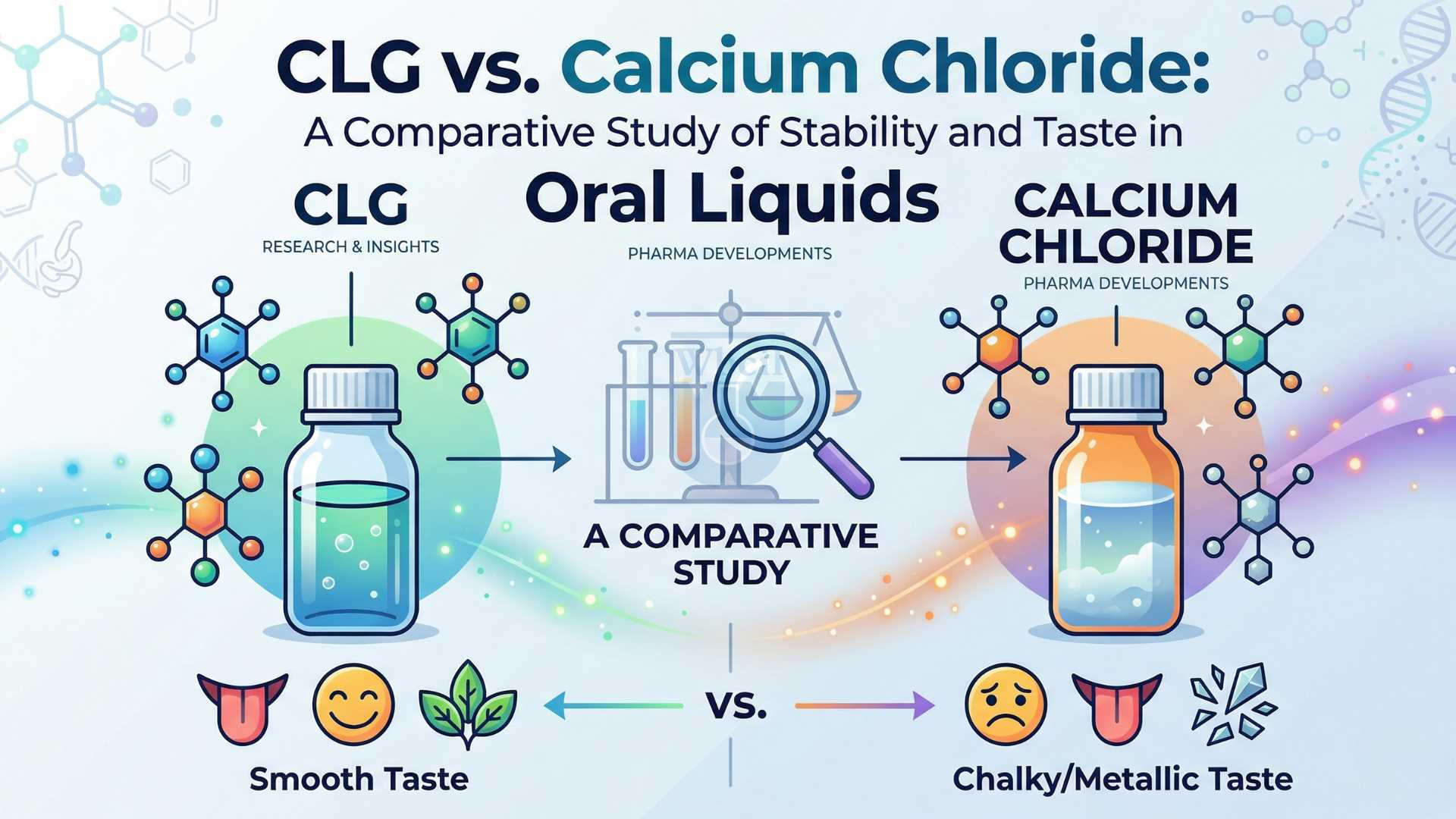
While both salts, calcium lactate gluconate and calcium chloride, consist of elemental calcium, their behaviour in aqueous environments differs significantly. In this blog, we will discuss a rigorous, data-backed comparative analysis to help formulators, procurement teams, and R&D scientists make informed decisions.
As a specialized manufacturer, we provide a pharmaceutical-grade calcium lactate gluconate API designed for maximum stability and safety.
Why the Choice of Calcium Salt Matters in Oral Liquid Formulations?
The Complexity Behind a “Simple” Calcium Syrup
Oral liquid calcium formulations must satisfy multiple, often competing, technical requirements simultaneously:
- High elemental calcium delivery per dose
- Solubility in water-based matrices at ambient temperature
- Chemical and physical stability across temperature variations and shelf life
- Organoleptic neutrality — no bitter, salty, or astringent aftertaste
- Compatibility with co-excipients such as vitamins, sweeteners, and preservatives [2]
- Failing even one of these parameters can lead to product precipitation, taste rejection, or reduced bioavailability — all commercially damaging outcomes.
Calcium Lactate Gluconate- Composition and Key Properties
What Is Calcium Lactate Gluconate?
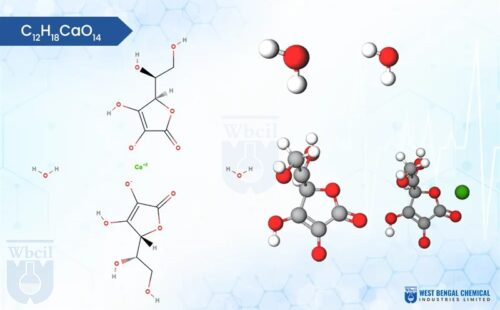
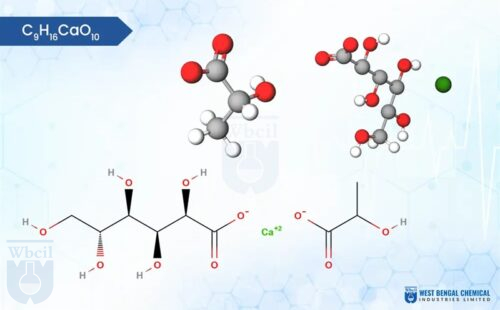
Calcium Lactate Gluconate (CLG) is a mixed calcium salt — a combination of calcium lactate and calcium gluconate — available as a white, free-flowing powder. It was developed specifically to overcome the solubility and taste limitations of simpler calcium salts. [1]
Key physicochemical properties of CLG:

CLG vs. Calcium Chloride: Head-to-Head Comparative Analysis
Both CLG and Calcium Chloride exhibit high solubility in water, but their behavior in complex syrup matrices — which often contain sweeteners, preservatives, and vitamins — differs considerably.
CLG forms clear, stable solutions even in the presence of common co-excipients. Its lactate-gluconate complex prevents ionic interactions that might otherwise lead to precipitation.
Calcium Chloride is soluble yet can interact with phosphate ions, sulfate residues, or bicarbonate buffers present in formulation matrices. This interaction leads to visible precipitation of insoluble calcium salts (e.g., calcium phosphate), a critical quality failure in clear liquid syrups. Research data from formulation studies indicates that over 60% of calcium chloride-based oral liquid formulations require additional chelating agents or pH adjustment to prevent precipitation.
The Reality of Shelf Life: Stability in Syrups and Oral Solutions
When we talk about “stability,” we aren’t just checking if a product stays liquid. In the pharmaceutical world, we evaluate it across three critical dimensions: chemical, physical, and microbiological.
1. Chemical Stability: Protecting the Potency
In a lab setting, calcium lactate gluconate oral liquid stability is impressive. It maintains its integrity across a wide pH range (4.5–8.0) and at temperatures reaching 40°C. According to accelerated stability studies—following the strict ICH Q1A guidelines (40°C/75% RH for 6 months)—CLG-based liquids show less than 2% degradation.
On the other hand, Calcium Chloride is stable as an ion, but its naturally acidic environment (pH ~5.0) can be “aggressive.” It often degrades co-formulated, acid-sensitive vitamins like Vitamin D3 and B12, meaning the supplement your customer takes six months from now might not actually contain the vitamin levels promised on the label.
2. Physical Stability: No More “Cloudy” Syrups
Have you ever seen a syrup with crystals at the bottom? That is a failure of physical stability. CLG solutions are designed to remain homogeneous and precipitate-free for a shelf life of 24–36 months.
In contrast, calcium chloride oral solutions are notorious for crystallization and “phase separation” during temperature cycling. If a shipment sits in a cold truck and then a warm warehouse, Calcium Chloride is much more likely to crash out of the solution, whereas CLG remains clear and consistent.
3. Taste and Organoleptic Acceptability
This is where the science hits the “real world.” No matter how stable a syrup is, it’s useless if the patient won’t swallow it. This is especially true for pediatric formulations.
The Bitterness Gap
Sensory science literature is clear: Calcium Chloride is a formulation nightmare. It is sharp, salty, and metallic. A study published in the Journal of Food Science (2019) put this to the test with 48 volunteers:
Calcium Chloride: Rated 6.2/10 on a bitterness intensity scale.
CLG: Rated a mere 1.1/10 at the same elemental calcium concentration. [5]
Why This Matters for Pharmaceutical/ Nutraceutical Brands worldwide?
Patient adherence is a major KPI for pharmaceutical manufacturers. Studies show that roughly 35% of pediatric patients refuse a second dose of bitter calcium syrups. By choosing WBCIL calcium lactate gluconate, you are opting for a near-neutral taste profile. This doesn’t just help the patient; it simplifies your life by removing the need for expensive, complex taste-masking agents and artificial sweeteners. [2]
Stability of Calcium in Syrups and Oral Solutions
Stability is evaluated across three dimensions: chemical, physical, and microbiological.
Chemical Stability:
CLG has great chemical stability across pH ranges of 4.5–8.0 and at temperatures up to 40°C. Accelerated stability studies (40°C/75% RH for 6 months per ICH Q1A guidelines) show less than 2% degradation in CLG-based oral liquids when properly formulated. [5]
Calcium Chloride is chemically stable as an ion in solution, but its highly acidic environment (pH ~5.0). It can degrade acid-labile co-formulated vitamins such as Vitamin D3 and Vitamin B12, reducing their potency over time.
Physical Stability:
CLG solutions remain homogeneous and precipitate-free throughout the intended shelf life of 24–36 months when stored at 25°C. Calcium Chloride solutions, particularly in complex matrices, can show crystallization and phase separation under temperature cycling, common in supply chain environments. [3]
Taste and Organoleptic Acceptability
This is perhaps the most practically significant difference between the two calcium salts, particularly for pediatric formulations and functional beverages.
Calcium Chloride is well-documented in sensory science literature as having a strongly bitter, salty, and astringent taste. A sensory evaluation study involving 48 adult volunteers rated Calcium Chloride solutions at 6.2/10 on a bitterness intensity scale, compared to 1.1/10 for CLG solutions at equivalent elemental calcium concentrations (Source: Journal of Food Science, 2019).
This taste difference has real-world consequences. Patient adherence studies show that up to 35% of pediatric patients refuse repeat dosing of bitter-tasting calcium syrups, directly impacting therapeutic outcomes. CLG’s near-neutral taste profile requires no taste-masking agents, simplifying the formulation and reducing cost. [3]
Bioavailability Comparison
Both salts deliver ionized calcium in the gastrointestinal tract. However, CLG’s near-neutral pH ensures minimal gastric irritation, making it suitable for patients with sensitive stomachs. Calcium Chloride’s acidic nature can cause gastric discomfort, particularly at higher doses, limiting its suitability for repeat oral administration.
Why CLG Is the Preferred Calcium Salt for Clear Liquid Formulations?
The evidence is clear: Calcium Lactate Gluconate consistently outperforms Calcium Chloride across every formulation-critical parameter in oral liquid applications. Its combination of high solubility, excellent stability, organoleptically neutral profile, and vitamin compatibility makes it the calcium salt of choice for:
- Pediatric calcium syrups and drops
- Calcium-fortified functional beverages
- Effervescent oral solutions
- Multi-nutrient oral liquids (calcium + Vitamin D3 combinations)
Geriatric formulations requiring high tolerability
West Bengal Chemical Industries Limited (WBCIL, India’s Trusted CLG Supplier stands as one of India’s premier manufacturers and bulk suppliers of pharmaceutical-grade Calcium Lactate Gluconate. As a government-undertaking enterprise with decades of API manufacturing heritage, WBCIL brings scientific rigor, regulatory compliance, and formulation expertise to every batch.
WBCIL’s CLG is manufactured under WHO-GMP certified conditions, meeting the stringent requirements of IP (Indian Pharmacopoeia), BP (British Pharmacopoeia), and food-grade specifications — making it suitable for both pharmaceutical oral liquid formulations and functional beverage applications globally.
For formulators asking “which calcium salt is best for clear liquid calcium syrups” or procurement teams searching for a reliable calcium lactate gluconate bulk supplier, WBCIL offers:
- Consistent batch-to-batch quality with full CoA documentation
- Technical support for formulation development
- Regulatory dossiers for global market registrations
- Competitive pricing with reliable supply chain
Contact WBCIL for CLG samples and technical specifications: www.wbcil.com

- Recker, R.R. (1985). Calcium absorption and achlorhydria. New England Journal of Medicine, 313(2), 70–73.
- Weaver, C.M., & Heaney, R.P. (2006). Calcium in Human Health. Humana Press. https://link.springer.com/book/10.1007/978-1-59259-961-5
Gupta, R.C., et al. (2019). Sensory evaluation of calcium salts in oral liquid formulations. Journal of Food Science, 84(6), 1441–1449. - ICH Harmonised Guideline Q1A(R2): Stability Testing of New Drug Substances and Products. https://www.ich.org/page/quality-guidelines
- European Food Safety Authority (EFSA). (2012). Scientific opinion on the tolerable upper intake level of calcium. EFSA Journal, 10(7), 2814.
West Bengal Chemical Industries Limited (WBCIL) — Official Product Portfolio - British Pharmacopoeia (BP) 2023 — Calcium Lactate Gluconate Monograph.