The Science of Combining Vitamin c with zinc and magnesium
Most multi-mineral supplements fail — not because the nutrients are wrong, but because the delivery is. Magnesium, zinc, and vitamin C are among the most scientifically validated micronutrients in human health. Magnesium participates in over 300 enzymatic reactions, from ATP synthesis to neuromuscular regulation. Zinc is an essential cofactor for more than 300 enzymes, governing immune cell development, wound repair, and DNA synthesis.
Vitamin C is simultaneously the body’s primary water-soluble antioxidant, a critical driver of collagen synthesis, and a known enhancer of non-heme mineral absorption. Together, these three nutrients form a functional triad — amplifying immune defence, supporting cellular energy, and protecting tissue integrity at the molecular level. Yet conventional supplements delivering this combination face a fundamental pharmacokinetic problem.
Gastric acid degrades ascorbic acid before it can be absorbed. Magnesium ions interact with dietary phytates and oxalates in the gut lumen, forming insoluble complexes that are excreted rather than absorbed. Zinc competes with other divalent cations at intestinal transporter sites. The result is a predictable, well-documented gap between what is on the label and what actually reaches the target cell.
Liposomal encapsulation resolves this gap — not incrementally, but mechanistically. At West Bengal Chemical Industries Limited (WBCIL), Kolkata, India, the co-encapsulation of magnesium, zinc, and vitamin C within phospholipid bilayers is engineered to overcome each of these degradation points simultaneously, delivering a stable, bioavailable, high-potency multi-mineral premix suitable for B2B nutraceutical formulation at industrial scale.
Explore the technical specifications and purity benchmarks of our Liposomal Vitamin C to see how our manufacturing standards ensure maximum stability and cellular-level absorption.
Key Takeaways
- Look Beyond the Basics: Standard packages often miss deep imaging and vitamin levels that affect your daily energy and immunity.
- Early Detection is Key: Specialized tests like the LFT test or USG report can find organ stress long before you actually feel any pain or sickness.
- Make it Personal: Your annual health checkup should be based on your specific lifestyle and age rather than a generic list.

Why These Three Nutrients Work Better Together: The Micronutrient Synergy Case
Vitamin C as the Bioavailability Amplifier for Zinc and Magnesium
Vitamin C does more than protect against oxidative stress — it actively enhances the absorption environment for co-administered minerals. Research confirms that vitamin C enhances the absorption of non-heme minerals by reducing them to more soluble ionic forms and maintaining an acidic microenvironment in the intestinal lumen that sustains mineral solubility.
For zinc, this is particularly significant: vitamin C is known to increase the bioavailability of zinc by supporting its ionised form at the absorptive surface of the enterocyte. In a liposomal multi-mineral system, this effect is further amplified because all three nutrients share the same vesicle, ensuring simultaneous delivery to the same intestinal absorption site — eliminating the timing variability inherent to separate supplement dosing.
Zinc and Magnesium: Complementary Immune and Metabolic Roles
Zinc and magnesium are not simply co-passengers in a formulation — they are metabolic partners. Magnesium is required for the enzymatic activation of vitamin D, which in turn regulates zinc absorption. Zinc, conversely, is necessary for the synthesis of proteins that maintain magnesium homeostasis at the cellular level. Their combined presence in a single liposomal dosage form ensures that neither nutrient faces the competitive absorption dynamics that occur when divalent minerals are administered separately at high doses.
Clinical data confirms that zinc, when co-delivered in a liposomal multinutrient formulation, achieves higher maximum plasma concentration (C_max) and incremental area under the curve (iAUC) than equivalent non-liposomal comparators — evidence that the liposomal format amplifies the pharmacokinetic profile of the mineral beyond what conventional delivery achieves.
The Antioxidant Network: Zinc, Vitamin C, and Cellular Protection
Both zinc and vitamin C are independently validated antioxidants — but their combined mechanism is additive rather than redundant. Vitamin C neutralises free radicals in the aqueous phase of the cell, while zinc stabilises cellular membranes and protects against lipid peroxidation in the hydrophobic layer.
This complementary spatial activity means that together, they provide broader oxidative protection than either nutrient alone. In a liposomal delivery format, both the aqueous core and the phospholipid bilayer of the vesicle itself serve as structured compartments for these two complementary antioxidant mechanisms — making the liposomal multi-mineral format uniquely suited to preserving the functional integrity of both actives during transit through the GI tract.
The Core Problem: Why Gastric Degradation Makes Conventional Formulations Inefficient
Conventional magnesium salts — carbonate, oxide, citrate — are subject to significant pH-dependent degradation in the stomach. At gastric pH (1.5–3.5), magnesium carbonate rapidly dissociates, releasing free Mg²⁺ ions that are immediately available for binding with dietary oxalates, phytates, and phosphates.
These insoluble complexes are biologically unavailable and are excreted. High-dose conventional magnesium is also strongly associated with osmotic diarrhoea — a consequence of unabsorbed magnesium ions drawing water into the colon. For zinc, the picture is similarly constrained: free zinc ions at gastric pH interact with chloride and phosphate to form poorly soluble salts, and compete with calcium, iron, and copper at intestinal transporter sites (specifically the ZIP4 and ZnT1 transporters), creating an absorption ceiling that high doses cannot overcome.
Vitamin C Instability in Multi-Mineral Complexes
Ascorbic acid presents a specific formulation challenge in multi-mineral premixes. It is highly susceptible to oxidative degradation when exposed to free metal ions — particularly iron and copper — that are commonly present as trace contaminants in mineral salt ingredients. [1]
In a conventional mixed-powder or tablet formulation, unprotected ascorbic acid undergoes accelerated oxidative breakdown in the presence of these metal ions, converting to dehydroascorbic acid and then to inactive degradation products.
This means that vitamin C stability in a multi-mineral complex is fundamentally compromised in any formulation where the nutrients are unprotected — precisely the problem that phospholipid encapsulation solves by physically separating the active from the ionic environment. [2]
How WBCIL’s Liposomal Encapsulation Technology Overcomes Each of These Barriers
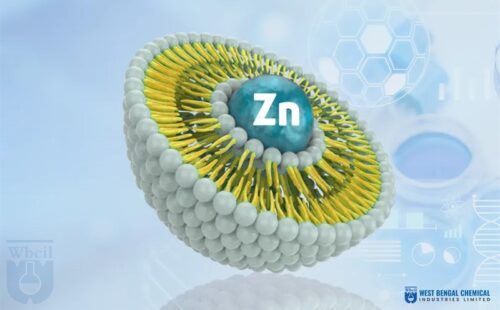
WBCIL engineers its liposomal multi-mineral systems using pharmaceutical-grade Phosphatidylcholine (PC) — the primary structural phospholipid of natural cellular membranes. The PC bilayer serves as a physical barrier between the encapsulated actives and the external GI environment, preventing direct contact between the mineral ions and gastric acid, digestive enzymes, and dietary inhibitors. Magnesium and zinc, housed within the aqueous core of the liposomal vesicle, are shielded from pH-dependent precipitation and competitive ionic interactions until the vesicle reaches the intestinal absorptive surface.
Phospholipid Encapsulation: The Mechanism That Changes Everything
Vitamin C, co-encapsulated within the same bilayer system, is simultaneously protected from metal-catalysed oxidative degradation — maintaining its chemical integrity and biological activity throughout GI transit.
Three Absorption Pathways That Bypass Conventional Rate-Limiting Steps
WBCIL’s liposomal multi-mineral format exploits three alternative absorption pathways that are unavailable to conventional mineral salts.
Endocytosis is the primary pathway of distinction.
Because the phospholipid bilayer of WBCIL’s liposomes structurally mimics the cellular membrane, intestinal epithelial cells recognise and internalise the entire vesicle through receptor-mediated and fluid-phase endocytosis — delivering the full mineral payload directly into the intracellular space without requiring passage through transporter-dependent ion channels. This completely bypasses the ZIP4/ZnT1 saturation ceiling for zinc and eliminates the phytate-binding loss for magnesium. [3]
Paracellular transport provides a secondary absorption route, driven by the sustained concentration gradient that WBCIL’s controlled-release liposomal system maintains in the intestinal lumen. Unlike conventional salts that produce a rapid concentration spike followed by rapid clearance, the liposomal format releases minerals gradually — prolonging the gradient that drives passive paracellular flux across tight junctions throughout the length of the small intestine. [4]
Lymphatic absorption, relevant primarily to the phospholipid carrier itself and to co-encapsulated lipid-soluble cofactors, allows a portion of the liposomal dose to enter systemic circulation via the thoracic duct — bypassing hepatic first-pass metabolism and contributing to the more sustained, blunted serum mineral elevation that characterises liposomal pharmacokinetics compared to conventional salts.
WBCIL’s Validated Formulation Parameters for Multi-Mineral Liposomal Premixes
WBCIL’s liposomal systems are not generic — they are precision-engineered to validated specifications. Key formulation parameters include a uniform particle size target of 100–200 nm (optimised for both endocytic uptake efficiency and colloidal stability during GI transit), a zeta potential maintained at or below −30 mV (ensuring strong inter-vesicle repulsive forces that prevent aggregation and maintain uniform distribution in the intestinal lumen), and encapsulation efficiency targets exceeding 85% for mineral actives. Stability is validated under ICH Q1A(R2) accelerated conditions (40°C ± 2°C; 75% ± 5% RH), confirming that the liposomal multi-mineral premix maintains both structural integrity and active content through its intended shelf life — a critical specification for B2B nutraceutical partners requiring consistent, documentation-ready ingredient performance. [5]
Conclusion: The Liposomal Multi-Mineral Premix Is Not a Trend
The science is unambiguous. Magnesium, zinc, and vitamin C are more effective together than separately — and liposomal co-encapsulation is the delivery format that makes this combination clinically meaningful rather than merely aspirational. By overcoming gastric degradation, bypassing transporter saturation, and enabling three simultaneous absorption pathways, WBCIL’s liposomal multi-mineral platform translates the documented synergy of this nutrient triad into a measurable, documentable, commercially scalable ingredient that nutraceutical brands can confidently bring to market.
For B2B nutraceutical manufacturers, formulators, and brand owners looking for a liposomal magnesium and zinc manufacturer with the formulation science, regulatory readiness, and industrial-scale capacity to deliver — WBCIL is the partner built for this category.

- Carr AC, Cook J. Do Liposomal Vitamin C Formulations Have Improved Bioavailability? A Scoping Review Identifying Future Research Directions. Basic & Clinical Pharmacology & Toxicology. 2025.
- Woo YM, Lee KW, Kim A. Pharmacokinetics of liposomal multinutrients versus non-liposomal comparators in a randomized crossover trial. Journal of Functional Foods.
- Purpura M, et al. Liposomal vitamin C results in significantly greater absorption into plasma and leukocytes compared to conventional vitamin C forms. European Journal of Nutrition. 2024.
- Ko J, Kim H. Pharmacokinetic analyses of liposomal and non-liposomal multivitamin/mineral formulations. Nutrients. 2023;15(13):3073.
- Piskin E, Cianciosi D, Gulec S, Tomas M, Capanoglu E. Iron absorption: factors, limitations, and improvement methods. ACS Omega. 2022;7(24):20441–20456.
Yes — and the combination offers formulation advantages beyond convenience. When co-encapsulated within the same phospholipid bilayer system, vitamin C creates an acidic microenvironment within the aqueous core of the vesicle that enhances the solubility and ionic stability of magnesium and zinc throughout GI transit. This prevents the pH-dependent precipitation that degrades conventional mineral salts in the stomach. WBCIL’s Liposomal Zinc Ascorbate complex — a co-encapsulated zinc and vitamin C formulation — is specifically engineered to exploit this chemical synergy, delivering both actives simultaneously to the same intestinal absorption site.
Conventional zinc and magnesium salts rely primarily on transporter-dependent active absorption through intestinal ion channels — a pathway that is easily saturated at higher doses, strongly inhibited by dietary phytates and oxalates, and progressively less efficient with age. Liposomal systems bypass these bottlenecks entirely by exploiting endocytosis (cellular internalisation of the whole vesicle), paracellular transport (mineral flux through tight junctions sustained by a prolonged luminal concentration gradient), and lymphatic absorption (partial bypass of hepatic first-pass metabolism). Clinical pharmacokinetic studies confirm that liposomal zinc achieves significantly higher C_max and iAUC values than composition-matched non-liposomal comparators.
WBCIL operates at metric-ton homogenisation and encapsulation capacities — meeting the supply chain volume requirements of global nutraceutical brands. Its formulation parameters are validated to pharmaceutical-grade specifications: particle size within the 100–200 nm optimal window, zeta potential at or below −30 mV for colloidal stability, and encapsulation efficiency exceeding 85%. Stability is confirmed under ICH Q1A(R2) accelerated conditions. WBCIL’s Lipoedge platform provides pre-existing technical data packages that support both product development and regulatory submission. Customised premix formulations — including co-encapsulated zinc-vitamin C complexes and liposomal magnesium in powder, suspension, or tablet-ready formats — are available for B2B partners.
Liposomal Zinc Ascorbate is a co-encapsulated complex in which zinc and ascorbic acid (vitamin C) are simultaneously encapsulated within a phospholipid bilayer. This format exploits the documented synergy between the two nutrients — vitamin C enhances zinc bioavailability, while zinc supports the antioxidant activity of ascorbate — while protecting both from the GI degradation that limits their efficacy in conventional formulations. For nutraceutical formulators, it offers a scientifically differentiated single ingredient that delivers the immune, antioxidant, and tissue-repair benefits of both nutrients in a co-delivered, high-bioavailability format — simplifying formulation complexity while strengthening product claims.
Vitamin C stability in multi-mineral premixes is primarily threatened by metal-catalysed oxidative degradation — ascorbic acid reacts with free metal ions (particularly iron and copper) present as trace contaminants in mineral salt ingredients, converting to inactive degradation products. WBCIL’s liposomal encapsulation physically separates the ascorbic acid from the external ionic environment by housing it within the phospholipid bilayer. This prevents direct contact between ascorbate and pro-oxidant metal ions. Stability is further validated through ICH Q1A(R2) accelerated testing protocols, FTIR analysis confirming chemical integrity of the encapsulated vitamin C, and DSC validation of the thermal stability of the lipid matrix — ensuring that the active content remains within specification throughout the product’s intended shelf life.