Beyond Supplements: Copper Citrate In Therapeutic Application
Lung cancer kills more people worldwide than any other cancer, yet the molecule driving some of its most promising new research directions is not a novel synthetic compound. It is copper, an element the human body has always carried. That recognition is now intersecting with commercial urgency; the global lung cancer therapeutics market is expected to reach USD 46.8 billion in 2026 [1].
Researchers are actively searching for new molecules within that pipeline. Against this backdrop, copper citrate in therapeutic applications has emerged as a subject of structured preclinical investigation in oncology research.
This blog examines the biochemical rationale, formulation considerations, and research positioning of copper citrate in lung cancer development frameworks.
Key Takeaways:
- Copper metabolism represents a validated molecular target in tumour biology research.
- Preclinical data explore synergy between copper compounds and established NSCLC chemotherapeutics.
- Pharmaceutical-grade copper citrate requires defined specifications and compliant production systems.
Quick Answer: Copper citrate is a pharmaceutical-grade copper source used to target cuproptosis, ROS pathways, and angiogenesis in lung cancer research.
Why Copper Metabolism Matters in Lung Cancer
Dysregulated copper homeostasis in tumour biology provides a measurable biochemical basis for copper-based therapeutic research.
- Recent data suggest that copper participates in over 30 enzymatic reactions critical to cellular metabolism and signalling. This broad enzymatic dependence explains why tumour cells rely heavily on copper-regulated pathways [2].
- Copper functions as a cofactor for MEK1/2 within the MAPK cascade, a pathway frequently activated in lung malignancies. Targeted disruption of copper availability reduces MAPK pathway activity in preclinical systems.
- Copper-dependent cytochrome c oxidase supports mitochondrial respiration and ATP synthesis in rapidly proliferative tumour cells. Elevated mitochondrial copper flux correlates with enhanced metabolic adaptation.
- Lysyl oxidase (LOX), another copper-dependent enzyme, promotes extracellular matrix crosslinking and metastatic competence. Inhibition of copper availability suppresses LOX-mediated tumour progression in experimental models.
From Supplement to API: Copper Citrate’s Pharmaceutical Potential
Copper Citrate in therapeutic applications requires a precise understanding of its chemical structure, ligand behaviour, and pharmaceutical-grade performance characteristics.
1. Chemical Identity and Structural Characteristics
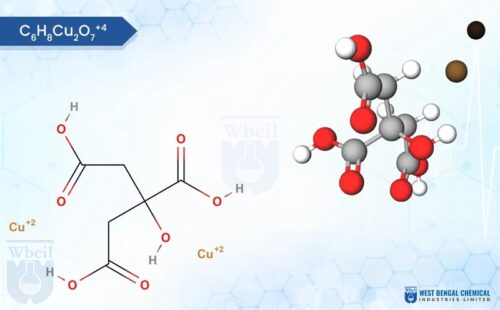
Copper citrate is a copper salt of citric acid with the empirical formula Cu₃(C₆H₅O₇)₂, which identifies it as a coordination complex in which copper ions bind to citrate ligands through chelation. This chelated structure stabilises copper in solution and influences its dissociation behaviour under physiological conditions. The citrate backbone provides multiple coordination sites, which support controlled copper release in formulation systems.
2. Solubility and Bioavailability Considerations
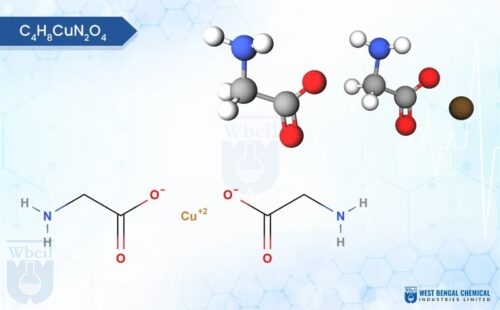
Copper citrate demonstrates moderate aqueous solubility, with dissociation governed by pH and ionic strength. Compared with copper sulphate, citrate forms exhibit improved gastrointestinal tolerability in nutritional contexts due to buffered release properties. Bioavailability differs between copper glycinate, which relies on amino acid transport mechanisms, and citrate, which dissociates via acid-mediated pathways. For pharmaceutical development, this distinction influences dose calibration and pharmacokinetic modelling.
3. Citrate Ligand Relevance in Drug Formulation
The citrate ligand plays a functional role beyond simple salt formation. Citrate can act as a buffering agent and stabiliser in parenteral and oral dosage systems. Its presence may influence the availability of copper ions and their interactions with excipients. In oncology research, the ligand environment affects redox activity and reactive oxygen species (ROS) generation, both of which remain central to the investigation of copper-based chemotherapeutics.
4. Hydrate vs Anhydrous Forms in Development
Copper citrate may occur in hydrated or anhydrous forms depending on manufacturing conditions. Hydrated variants contain defined water of crystallisation, which affects molecular weight calculations and stability profiling. Anhydrous forms provide greater control over the moisture content of high-purity copper citrate for pharmaceutical formulations that require a tightly specified moisture content. Selection between forms depends on formulation route, stability requirements, and regulatory documentation strategy.

Understanding how copper citrate works inside tumour cells is where the science gets genuinely interesting and clinically significant.
Mechanisms of Action of Copper Citrate in Therapeutic Applications
Copper Citrate in therapeutic applications derives scientific relevance from validated copper-dependent tumour pathways that support targeted oncology research.
- Reactive oxygen species-mediated apoptosis: Copper ions participate in redox cycling reactions that elevate oxidative stress within tumour cells. Copper is not evenly distributed across the body — approximately 20% is stored in the liver, and 10% circulates in the blood [3]. This tissue-level distribution matters in tumour biology because cancer cells selectively alter copper trafficking to sustain metabolic and angiogenic demands.
- Cuproptosis and mitochondrial disruption: Cuproptosis is a copper-triggered cell death pathway linked to the aggregation of lipoylated TCA cycle proteins. Copper complexes in lung cancer therapy investigate this mitochondrial liability as a selective anticancer strategy.
- Angiogenesis inhibition through copper modulation: Copper regulates VEGF, lysyl oxidase, and matrix metalloproteinase pathways involved in tumour vascularisation. Moreover, in cancer treatment research, copper is evaluated using both copper-delivery and copper-depletion models to suppress angiogenic signalling.
- Metabolic pathway targeting in tumour cells: Copper availability influences mitochondrial respiration and tumour bioenergetic adaptation. In addition, copper-based chemotherapeutics explore this dependency to impair tumour metabolic resilience.
- Requirement for pharmaceutical-grade copper sources: Preclinical oncology studies require reproducible copper inputs manufactured under validated manufacturing standards. Copper citrate serves as a defined chemical entity suitable for structured evaluation in copper complexes in lung cancer therapy.
Copper citrate doesn’t work alone; preclinical research is now testing what happens when it combines with established chemotherapy drugs.
Synergy with Chemotherapy Drugs
Preclinical NSCLC research explores Copper Citrate for therapeutic applications as a controlled copper source within structured combination-therapy models, at the experimental stage only.
- Copper transport modulation and cisplatin response: Laboratory studies link copper transport proteins such as CTR1 to cisplatin cellular uptake. Experimental modulation of copper homeostasis has been shown to improve platinum sensitivity in resistant NSCLC cell lines [4].
- Paclitaxel resistance and epithelial–mesenchymal transition pathways: Drug-resistant NSCLC models demonstrate association between copper-regulated signalling and EMT marker expression. Targeted copper modulation in preclinical systems correlates with partial reversal of paclitaxel resistance.
- Topoisomerase interference by copper complexes: Certain copper complexes demonstrate inhibition of topoisomerase I and II enzymes in tumour cell systems. This mechanism supports DNA damage accumulation and programmed cell death under laboratory conditions.
- Disulfiram–copper complexes in early translational research: Disulfiram forms active complexes with copper that disrupt proteasomal activity and tumour cell viability. Early translational studies report tumour-suppressing signals in NSCLC experimental cohorts.
- Formulation-grade copper sources for combination protocols: Combination research requires copper inputs with traceable purity, defined specification limits, and compliance with pharmaceutical manufacturing standards. High-purity copper citrate provides a reproducible substrate for the investigation of copper-based chemotherapeutics within regulated development frameworks.
Also read: From Lab to Label: The API Journey from Manufacturing to Market.
Regulatory and Formulation Considerations for Copper Citrate in Oncology
Transitioning copper citrate in therapeutic applications from supplement-grade material to a regulated oncology candidate requires defined pharmaceutical, regulatory, and intellectual property alignment.
1. Pharmaceutical Grade vs Food Grade Standards
Dietary supplement copper citrate does not automatically meet pharmaceutical-grade impurity and trace metal limits. Drug development programmes require IP, BP, or USP-aligned specifications with validated analytical methods and batch traceability. Procurement teams must confirm assay range, residual solvent profile, and heavy metal thresholds before inclusion in investigational drug dossiers.
2. GMP Manufacturing and Documentation Requirements
Copper Citrate in therapeutic applications intended for oncology research must originate from GMP-certified production systems with documented quality management controls. Batch manufacturing records, change control procedures, and validated cleaning protocols become mandatory for regulatory submissions. CDSCO and international authorities expect complete documentation architecture for drug substance classification.
3. India-Specific Regulatory Boundary Considerations
In India, the CDSCO regulatory framework distinguishes between nutraceutical products and scheduled drugs based on intended therapeutic claims. Repurposing copper citrate for oncology shifts the material into a regulated drug substance pathway under applicable schedules. Sponsors must submit investigational new drug documentation before clinical evaluation.
4. Stability and Delivery System Requirements
Inhalation or injectable oncology formulations require accelerated and long-term stability data under ICH conditions. Copper citrate must demonstrate physicochemical stability, be free of precipitation, and maintain assay throughout the defined storage intervals. Formulation scientists must also evaluate excipient compatibility and container–closure interactions.
5. Intellectual Property and Drug Repositioning Landscape
The drug repurposing literature highlights the need for a patent strategy for formulation systems and novel delivery platforms. While copper salts remain known chemical entities, new therapeutic uses may require composition-of-matter or method-of-use claims supported by documented GMP manufacturing compliance.
As research into copper citrate in therapeutic applications advances, the quality and specification profile of the raw material becomes central to credible pharmaceutical evaluation.
Also read: Biopharma SHAKTI Initiative: Why WBCIL Leads the Shift.
WBCIL’s High-Purity Copper Citrate for Research
WBCIL manufactures copper citrate at ≥98% assay purity under WHO-GMP-certified conditions, with batch documentation, heavy metal testing, and residual solvent profiling aligned with IP/BP pharmacopeial standards. The material aligns with WBCIL’s copper citrate specifications, which define assay limits, impurity thresholds, and moisture parameters suitable for regulated research use. This structured quality framework enables consistent raw material input for advanced application and technology development in drug discovery programmes.
Within the broader WBCIL products portfolio, copper citrate is part of a trace element API range designed for pharmaceutical and nutraceutical research. Manufacturing processes follow validated documentation systems with batch traceability and analytical verification. Such infrastructure supports formulation scientists who require reproducible, high-purity copper sources for structured preclinical evaluation.
Final Thoughts
Copper metabolism research continues to expand within structured oncology development frameworks. Copper citrate in therapeutic applications remains under active preclinical and translational evaluation, particularly in combination and mechanistic studies.
For pharmaceutical stakeholders, material purity, traceable specifications, and compliant production standards remain central to credible research progression. Strategic engagement with WBCIL ensures that experimental oncology programmes rest on reproducible, regulator-ready raw material foundations.

- Lung Cancer Therapeutics Market Forecast and Outlook 2026 to 2036
- Cuproptosis: Current insights into its multifaceted role in disease, cancer, and translational/therapeutic opportunities
- Targeting copper metabolism: a promising strategy for cancer treatment
- Nonsmall-cell lung cancer treatment: current status of drug repurposing and nanoparticle-based drug delivery systems
The role of copper citrate in non-small cell lung cancer (NSCLC) research centres on its use as a controlled copper source in preclinical pathway studies. Research models evaluate copper-dependent signalling, mitochondrial stress mechanisms, and modulation of angiogenesis under laboratory conditions rather than in established clinical use.
Synergistic effects of copper citrate and chemotherapy drugs are explored in experimental systems that assess copper transport modulation and oxidative stress pathways. Preclinical evidence suggests combination protocols may influence drug sensitivity, though confirmatory clinical data remain limited.
Formulating copper citrate for inhalation delivery requires particle size control, aerosol performance validation, and pulmonary safety assessment. Stability under controlled humidity and compatibility with inhalation-grade excipients are essential for regulatory dossier acceptance.
Copper-binding agents for lung tumour inhibition act by modulating copper availability, thereby influencing angiogenic and metabolic signalling pathways. Preclinical studies evaluate both copper supplementation and copper chelation approaches depending on tumour biology objectives.
Regulatory considerations for repurposing copper supplements as drugs include reclassification under drug substance frameworks with full GMP documentation and impurity profiling. High-purity Copper Citrate for pharmaceutical formulations must meet pharmacopeial standards and provide validated stability data for investigational use.